A potential rail strike across Canada isn’t the only possible work stoppage in play in the country, eliciting concerns from a top government official.
In a letter to Canadian Prime Minister Justin Trudeau, Alberta Premier Danielle Smith expressed concerns about the strike vote authorization from Canadian National Railway (CN) and Canadian Pacific Kansas City Railway (CPKC) employees, which sets the stage for a possible walkout that is now delayed from its original date set for May 22.
Related Stories
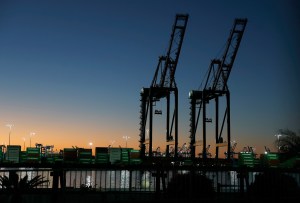
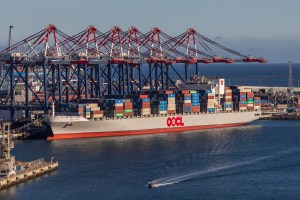
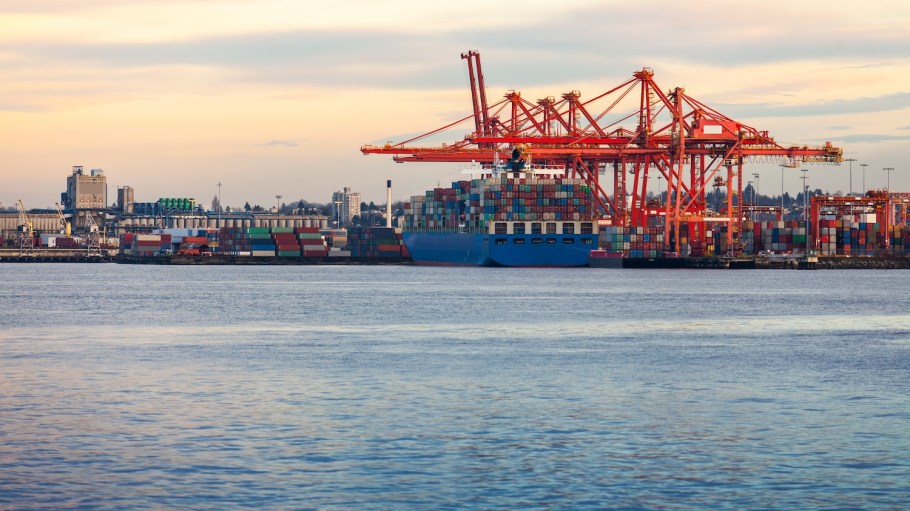
But Smith also referred to possible strike action at the British Columbia ports, where roughly 730 union foremen concluded a 21-day cooling off period with their maritime employers Friday as the parties aim to renew a deal that initially expired on April 1, 2023.
At the end of the cooling period, the Local 514 branch of the International Longshore and Warehouse Union (ILWU) gained the legal right to strike, while the British Columbia Maritime Employers Association (BCMEA) can opt to conduct a lockout of the foremen.
Neither party has conducted a strike or lockout vote required to start either process, nor have they issued a 72-hour notice of intended action. According to the BCMEA, there have been no labor disruptions, and regular cargo and passenger operations at British Columbia’s ports continue uninterrupted.
Such a strike at the ports would mark the second time in a year that Canada’s West Coast gateways would endure a stoppage, if enacted. Last summer, about 7,400 dockworkers at the ILWU went on strike for 14 days before coming to a four-year deal.
That strike didn’t end before disrupting the flow of goods into Canada, with $10.7 billion Canadian dollars ($7.8 billion) worth of goods and commodities being held up or diverted, according to the Greater Vancouver Board of Trade.
“A work stoppage would effectively shut down Canadian logistics networks, disrupting the movement of essential goods throughout North America,” Smith said of the twin labor negotiations. “While we respect the collective bargaining process, we are very concerned about the effects of a work stoppage on Albertans and Canadians as they deal with serious inflationary pressures. The Government of Canada must do everything in its power to support the parties in reaching negotiated settlements.”
In the event of a work stoppage, Smith said the federal government should pull out all stops to terminate it rapidly, including back-to-work legislation if necessary.
The BCMEA filed a complaint with the Canada Industrial Relations Board (CIRB) Friday, asking the federal government to intervene in the impasse.
Canada’s Labour Minister, Seamus O’Regan, has thus far indicated he will resist intervention.
But O’Regan’s concerns about the rail strike reflect that of Smith, having already asked the CIRB to look into which rail services could be deemed as essential, and therefore must be maintained during a labor disruption. O’Regan was most worried about whether such a work stoppage could endanger public safety, particularly since Canada relies on rail to distribute fuel and agricultural products throughout the country.
The CIRB set a deadline for initial submissions and rebuttal of May 31, which means the strike will not take place on May 22 as initially set by the union rail workers.
Teamsters Canada Rail Conference (TCRC), which represents the CN and CPKC workers, shared its disappointment in the CIRB review and the ensuing decision to delay the strike.
“The employers know what our membership thinks of their proposals, and your union will be there to move your demands forward,” TCRC said in a letter to its members. “This recent development is incredibly frustrating, and we believe undermines the entire process. The TCRC will challenge any result that impacts our charter rights, whether it be this dispute or any decision that may hinder future collective bargaining.”
According to the TCRC, all three bargaining groups had signed agreements from CPKC and CN that there were no essential services required to be maintained in a strike or lockout. The union said that these agreements were filed with the CIRB and there has been no dispute of the same since the bargaining process began last autumn.”
In her letter to Trudeau, Smith said shutting a stoppage at both CN and CPKC “would bring our economy to a halt, put Canadians from coast to coast at unacceptable risk, and cause even more damage to Canada’s reputation as a reliable trading partner.”