While a pivotal labor battle among Canadian rail workers and their employers hangs in the balance, the country’s labor minister is stepping aside.
Effective Friday, Seamus O’Regan, stepped down from the role that he has held since October 2021. Canada’s Prime Minister Justin Trudeau appointed Steven MacKinnon in the role in his place. O’Regan said the decision was a personal one.
“Ultimately, my family comes first,” O’Regan said in a post on X. “I need to be a better husband, son, uncle and friend, and this job means, and deserves, a lot of time in order to do it well.”
Related Stories
O’Regan has already played a significant role in the standoff between the union workers and Canada’s two largest railroad operators, Canadian National (CN) and Canadian Pacific Kansas City (CPKC).
He temporarily put a possible strike on hold when he requested that the country’s labor relations board review whether the country’s railroads must continue to transport certain essential goods. O’Regan sent the request among concerns from a coalition of agricultural groups, who wrote him in May saying that even a short-term disruption could lead to weeks of production delays.
The review pushed back potential strike action that could have occurred as early as May 22. The 9,300 rail workers represented by Teamsters Canada could not legally strike until the board finishes the review and makes a decision.
Both CN and CPKC have said they have received guidance from the Canada Industrial Relations Board (CIRB) indicating a decision could be delivered by Aug. 9. From there, the union would have to wait 72 hours before taking strike action.
With O’Regan out as minister, it will be McKinnon’s job now to try to navigate through labor disputes like these, needing to balance the act of keeping businesses operating throughout Canada.
The primary job of Canada’s Minister of Labour is to promote safe, healthy, fair and inclusive work conditions and cooperative workplace relations in federal private-sector industries and “crown” corporations—which are hybrid entities that are regulated by the government but function similarly to private businesses.
The outgoing labor minister has been in the thick of a multitude of logistics-related labor quarrels in the past year alone.
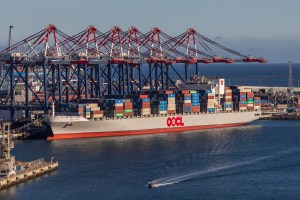
Last July, West Coast port dockworkers went on strike for two weeks before a four-year contract was reached. That work stoppage posed major economic impacts on the Canadian economy, reducing Canada’s gross domestic product by between $530 million and $712 million, and affected $7.3 billion in merchandise shipments.
A second strike took place at Canada’s St. Lawrence Seaway in October, where union workers who operated the lock systems and bridges walked off the job for a week, stalling nearly 100 ships at ports and docks between Lake Erie and Montreal.
In June, Canada’s border agents were threatening a strike, posing a threat to the movement of freight entering the U.S. That strike was averted when a deal was struck and ratified earlier this month.
A group of 730 union foremen at the West Coast ports represented by the International Longshore and Warehouse Union (ILWU) sought to strike earlier this month, but the CIRB found that the union local’s 72-hour strike notice was in violation of Canada’s labor code.
O’Regan said he intends to remain in the country’s legislature as a Liberal Party lawmaker, but doesn’t intend to run for reelection once his tenure is up.