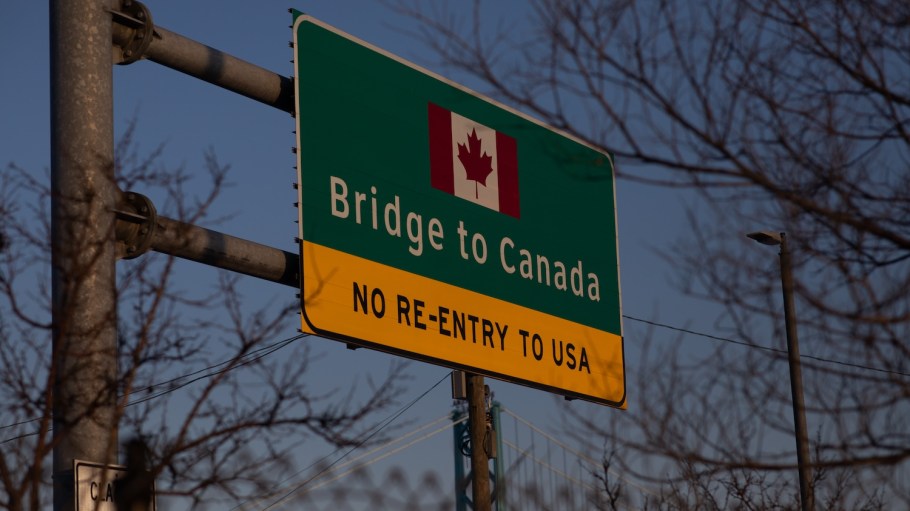
Canada’s borders have gotten a reprieve for a few days from potential strike action that could logjam the transport of goods in the country.
On Friday, the presidents of the Public Service Alliance of Canada (PSAC) and the Customs and Immigration Union (CIU) said the unions agreed to extend mediation with the Canada Border Services Agency (CBSA) through Wednesday. The PSAC and CIU represent 9,500 border patrol agents across Canada preparing the work stoppage.
“We’ve paused all strike action as talks continue to reach a fair contract for workers,” said Sharon DeSousa, PSAC national president. “Our members keep our borders moving, goods flowing and our families safe, and deserve a contract that delivers fair wages, equitable retirement and makes CBSA a better place to work.”
Related Stories
All strike activities have been postponed as the mediation lingers on. A new strike deadline will be set in the coming days, and job action remains possible for CBSA workers if an agreement cannot be reached at the table.
“I’m hopeful we can reach a deal and avoid disruptions at Canada’s borders,” said Mark Weber, CIU national president. “Our members are essential—protecting our borders, preventing auto theft and stopping illegal drugs and firearms from entering Canada—and they deserve a fair contract that treats them with respect and dignity in line with other law enforcement agencies across the country.”
The Canadian government is pleased with the decision.
“To date, discussions have been productive, and we remain committed to reaching an agreement that is fair and reasonable for members of the Border Services Group as quickly as possible,” said Canada’s Treasury Board, which handles countrywide negotiations with unions.
According to the U.S. Department of State, nearly $2.6 billion in goods and services are traded between the two countries every day.
The U.S.-Canada border experienced the effects of a brief strike in August 2021, in which commercial truckers took up to five hours to cross the border, while airports across the country saw major delays.
Union demands have remained unchanged. The agents are seeking higher wages that align with other law enforcement agencies in the country, as well as earlier retirement benefits and more flexible remote work options. Government negotiators have said the pay demands are unaffordable, due to economic conditions and rising public-debt charges.
According to the country’s manufacturing trade association, Canadian Manufacturers & Exporters (CME), any job action would impact international travel, mail and parcel deliveries and disrupt the collection of duties and taxes on goods entering Canada. CME said a strike would be massively disruptive to any commercial traffic and business travel for manufacturers.
“We are very concerned about the impacts that another critical supply chain disruption, this time at CBSA, will have on manufacturers. Extended delays will disrupt operations and production schedules, harming manufacturers, and their workers.” said Dennis Darby, CME president and CEO in a statement. “Once again, manufacturers are being held hostage from circumstances outside their control. Labor-related disruptions impacting the transport of goods are no longer the exception and becoming the rule. We need the federal government to take a proactive approach to preventing these disruptions and protecting manufacturing access to critical supply chain infrastructure.”
While a strike would mean a slowdown of freight, Canada’s border cannot be shut down due to a work stoppage, as 90 percent of front-line border agents are deemed essential workers.
As logistics operations temporarily breathe a sigh of relief at the border, Canada’s other major labor concern took a negative turn Friday, when members of the Teamsters Canada Rail Conference (TCRC) walked away from negotiations with Canadian National Railway (CN).
CN and Canadian Pacific Kansas City (CPKC) rejected a proposal from the TCRC to stagger negotiations with both companies by two weeks.
The walkout is the latest salvo ahead of potential strike action by 9,300 rail workers at CN and CPKC. Workers at the twin railroads initially sought to go on strike as early as May 22, but a national labor board review has pushed it out to July at the earliest due to questions about the nationwide safety implications.
“Staggering the negotiations is a sensible solution that would minimize disruptions and allow all parties to address their concerns in a more structured and productive manner,” said Paul Boucher, president of TCRC in a statement. “CN and CPKC’s rejection of this proposal is a clear indication of how little they care about the economy and the supply chain, as well as their unwillingness to negotiate. Quite frankly, they are using multinational corporations, the Canadian public, and North American supply chains as pawns to further their own greed.”