Canada’s border agents have reached a tentative deal with the Canada Border Services Agency (CBSA), averting a possible strike that would have slowed down shipments into the country.
The Public Service Alliance of Canada (PSAC) and the Customs and Immigration Union (CIU), the unions representing the roughly 9,500 workers at the CBSA, said full details of the tentative agreement will be announced once the ratification kit is available for members Thursday.
Late last week, the unions agreed to extend mediation to Wednesday, further pushing back the strike deadline that was set to begin at 12:01 a.m. on Friday.
Related Stories
“Our bargaining team has been working around the clock to secure the best contract for our members, and this tentative agreement is a testament to their incredible hard work and dedication,” said Sharon DeSousa, PSAC national president, in a statement. “This is a well-deserved victory for our members at CBSA who safeguard our nation’s borders and ensure the safety and security of all Canadians.”
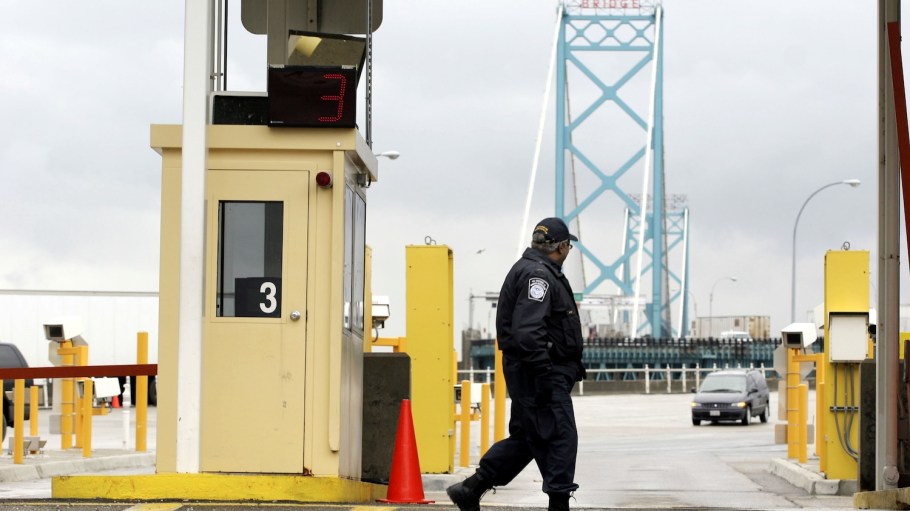
The occurrence of a strike wouldn’t have shut down the U.S.-Canada border, as 90 percent of the workers were essential, but it would have surely made cross-border trade difficult. Shippers trucking freight between the U.S. and Canada would have expected longer processing times and traffic back-ups at more than two dozen border crossings.
For example, major backups would have been anticipated on the Michigan side of the Ambassador Bridge in Detroit, which carries an estimated quarter of all goods that flow between the U.S. and Canada.
Should this tentative agreement be ratified by members, the Canadian government will have reached agreement with 18 bargaining units and covering more than 84 percent of the public service.
The renewed Border Services Group collective agreement will include wage enhancements and other benefits for employees, according to the Treasury Board of Canada. The government would not share details of the tentative agreement.
The Border Services Group is comprised of positions at the CBSA that are primarily involved in the planning, development, delivery or management of the inspection and control of people and goods entering Canada.
“I’m proud of the solidarity our members have shown over that past two years of negotiations,” said Mark Weber, CIU national president. “Our bargaining team couldn’t have won this agreement without the strength and support shown by thousands of members across the country who took action to support our bargaining team.”
A ratification vote will be scheduled in the coming days. Workers have been without a contract for two years.
“This tentative agreement demonstrates that the best agreements are always reached at the bargaining table,” said Anita Anand, president of the Treasury Board, in a statement. “Border Services employees are critical to the safety and security of our borders and this tentative agreement recognizes the importance of that work while remaining reasonable for taxpayers. We are continuing with negotiations for the remaining active bargaining tables and are committed to reaching similar positive outcomes.”
More blank sailings to Canadian ports as possible rail strike looms
With a strike on the border now almost clear, Canada’s labor concerns now shift largely to the country’s railroads, where more than 9,300 union workers at Canadian National Railway (CN) and Canadian Pacific Kansas City (CPKC) are deadlocked in negotiations with the railroad operators.
The Teamsters-represented rail employees initially voted for strike action last month, with anticipation to go on strike May 22. That labor action has been delayed to mid-July at the earliest, as a government labor board reviews whether a strike would spark national safety concerns.
Thus far, the stalemate has spooked shippers, carriers and port and terminal operators alike, with more shipments being diverted toward the U.S.
“Anticipation of the CA strike keeps carriers on their toes with some already taking significant actions to omit, blank, or swap calls into Vancouver into June and beyond,” said maritime intelligence company eeSea, in a Monday blog post. “There are a total of 14 port swaps and diversions away from CA and into U.S. gateway ports confirmed from week 24 onward, as well as three completed since mid-May. Further delay of the strike action and government intervention mean an indefinite extension of measures taken by carriers to predict this impact, creating a persistent shadow of doubt on the weeks ahead.”