As if Canada doesn’t have enough labor concerns on the horizon with a possible strike of its rail workers looming, the country’s border patrol could strike as early as Friday afternoon—potentially stalling the movement of goods entering from the U.S.
The 9,500 members of the Canada Border Services Agency (CBSA) said Tuesday they will commence a work stoppage across the country at 4 p.m. ET if a new contract is not reached. Represented by the Public Service Alliance of Canada (PSAC) and the Customs and Immigration Union (CIU), the border agents have been working without a contract for over two years.
Related Stories
The union announced in late May that 96 percent of PSAC-CIU members who work for CBSA voted to strike.
“We are still hopeful that we can reach an agreement to avoid strike action and any potential delays at Canada’s borders,” said Sharon DeSousa, PSAC national president, in a statement. “But the clock is ticking for [Prime Minister Justin] Trudeau’s Liberal government to get to work on a fair contract for our members.”
PSAC and the CBSA started mediated negotiations with Canada’s Treasury Board on June 3. The union is demanding higher wages that align with other law enforcement agencies in the country, as well as earlier retirement benefits and more flexible remote work options. Government negotiators have said the pay demands are unaffordable, due to economic conditions and rising public-debt charges.
“Negotiation is a process of give and take. The government is prepared to make concessions, but there needs to be movement on both sides,” the Treasury Board of Canada said in a statement. “Canadians expect these outstanding issues to be resolved at the bargaining table swiftly, and the announced labor disruptions undermine the negotiation process. We are disappointed that PSAC has threatened labor disruptions when we are ready and willing to negotiate and reach a fair agreement through good faith bargaining.”
As 90 percent of front-line border agents are deemed essential workers in Canada, the country’s border cannot be shut down. But slowdowns and delays for trucks moving freight between the U.S. and Canada cannot be ruled out due to longer processing times.
Looking at brief strike action by CBSA personnel in August 2021 as a recent example, commercial truckers experienced border-crossing delays of up to five hours, while airports across the country saw major delays.
“Heading into the weekend, shippers should watch for inbound Canadian loads to face higher scrutiny from carrier partners, and for an immediate impact to transit delays,” said Chicago-based Redwood Logistics in a Thursday advisory.
Flexport’s freight market update released Thursday said a five-to-10 minute delay off the normal average crossing time could have a “large cumulative effect” on imports.
Redwood Logistics said the impacts on capacity returning to the U.S. in the next week is “still unknown,” but observed that the disruption could have “at least some impact” on potential inbound Canadian truck supply.
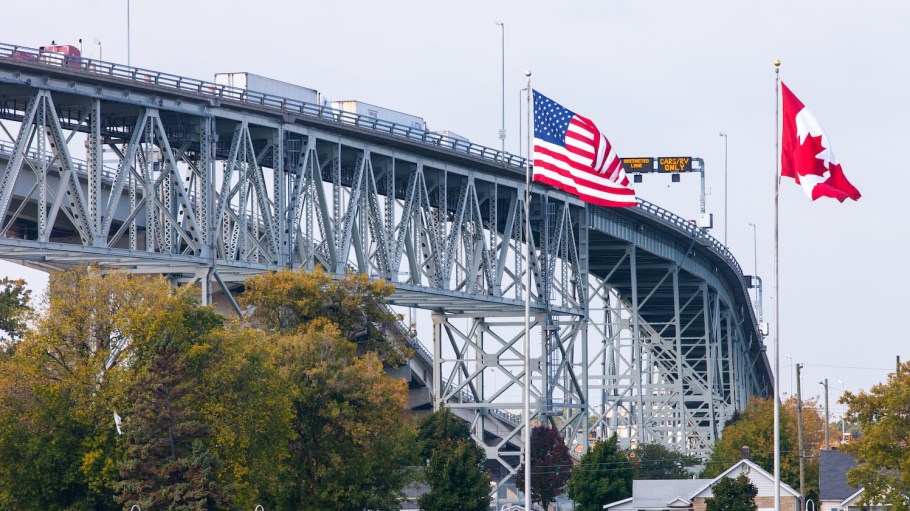
“Because of its high volumes, the Detroit-Windsor crossing will probably feel the most significant impacts of a strike,” Redwood Logistics said. “We’re also helping customers explore a temporary shift to rail transportation, to avoid customs processing at the border.”
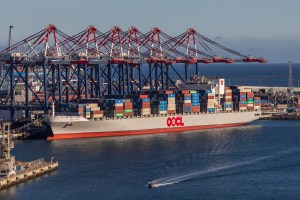
Ocean shipments will generally not be affected unless flagged for inspection, said Noatum Logistics in its own advisory.
According to the U.S. Department of State, nearly $2.6 billion in goods and services are traded between the two countries every day.
The border uncertainty precedes the threat of a walkout by 9,300 rail workers at Canadian National Railway (CN) and Canadian Pacific Kansas City (CPKC) that has been pushed back to July at the earliest.
Negotiations on collective agreements between CN and CPKC and the Teamsters Canada Rail Conference (TCRC) are ongoing. TCRC-represented workers at CN rejected the railroad operator’s offer to enter arbitration, the company said Thursday.
Canada’s Labour Minister Seamus O’Regan stepped in last month to delay the strike by asking the country’s labor board to review whether a work stoppage would jeopardize Canadians’ health and safety.
As part of the delay process, the Canada Industrial Relations Board (CIRB) requested information from stakeholders on the potential impacts of a strike, initially expecting submissions by May 31. However, the deadline for CN and CPKC has been extended to June 14.
Under the Canada Labour Code, a legal strike or lockout cannot occur until the CIRB renders its decision.