While Bed Bath & Beyond charts a comeback under new leadership, its former corporate shell lobbed yet another damages claim against an ocean carrier for allegedly failing to meet service commitments during the Covid-19 pandemic.
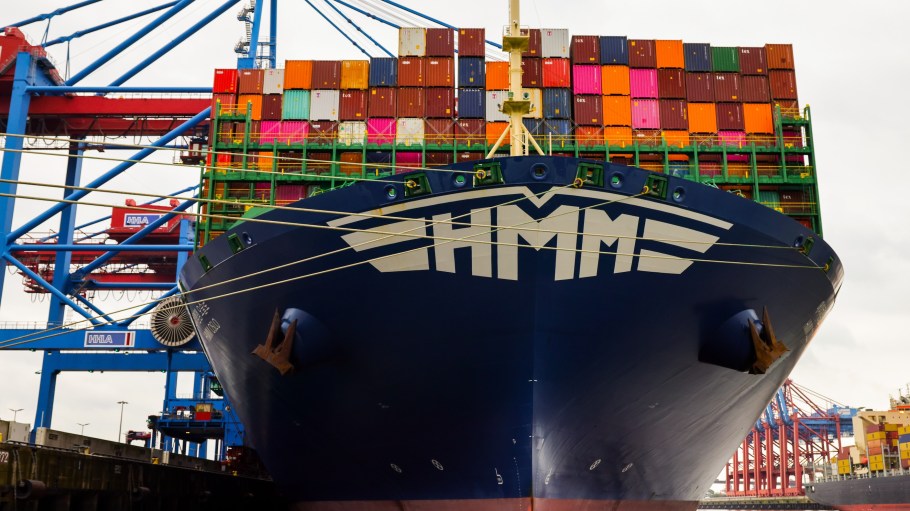
In a complaint filed with the Federal Maritime Commission (FMC) on Tuesday, 20230930-DK-Butterfly-1 Inc.—the entity formerly known as Bed Bath & Beyond Inc.—alleges container shipping company Hyundai Merchant Marine (HMM) violated multiple provisions of the U.S. Shipping Act.
Related Stories
The entity is targeting the South Korean ocean carrier over what it describes as a pattern of service failures, coerced surcharges and punitive demurrage and detention billing during the pandemic-era supply chain crunch.
HMM is being taken to task for steering capacity toward higher-priced cargo on the spot market and charging millions of dollars in fees that the shipper says it could not reasonably avoid amid historic port congestion.
At the core of the complaint are two service contracts covering the 2020-2021 and 2021-2022 shipping years. According to the Dec. 30 filing, the contracts called for minimum quantity commitments (MQCs) of 1,000 40-foot equivalent container units (FEUs) in the first year and 2,000 FEUs in the second, in exchange for agreed rates and defined service levels.
Instead, the shipper claims HMM repeatedly failed to provide the contracted vessel space, leaving Bed Bath & Beyond scrambling to secure capacity elsewhere at vastly higher prices.
In the first contract year, HMM allegedly came up short by more than 60 FEUs. But the shortfall ballooned to more than 530 FEUs in the second, forcing the retailer to absorb more than $9.3 million in incremental costs across the two years, according to the complaint.
Beyond the service commitments, the complaint accuses HMM of conditioning access to space on the payment of peak season surcharges (PSS) and other extra-contractual fees—despite contract language that expressly barred such add-ons unless mutually agreed.
Emails cited in the filing depict a recurring dynamic in which HMM offered limited weekly allocations only if Bed Bath & Beyond agreed to extend or increase PSS levels, sometimes hiking charges from $1,000 to $1,500 per container or offering “supreme” rates approaching $10,000 per box.
Even after paying up the extra fees, the former retailer says performance did not materially improve.
“We are now paying more and getting less,” a Bed Bath & Beyond employee wrote in one exchange included in the complaint.
The FMC complaint also takes aim at nearly $4.7 million in demurrage and detention charges assessed between September 2021 and January 2023. The complainant argues the fees were “not just or reasonable” because they accrued during periods when container pickup and empty returns were effectively impossible due to terminal congestion, chassis shortages and appointment constraints outside its control.
The FMC has increasingly scrutinized carrier practices from that era since the Ocean Shipping Reform Act of 2022 went into law. The legislation, which expands the powers of the commission, was aimed at ensuring U.S. shippers were not unfairly bypassed for service by carriers. Just last month, a U.S.-based logistics firm filed a similar complaint against Cosco Shipping over unfair detention charges and suspended bookings.
The former Bed Bath & Beyond has taken advantage of the FMC’s added oversight. The HMM spat marks complaints against seven ocean carriers in total since April 2023, the month the then-retailer filed for Chapter 11 bankruptcy.
The company has entered similar FMC complaints against carriers including Yang Ming, Orient Overseas Container Line (OOCL), Evergreen, Mediterranean Shipping Company (MSC), CMA CGM and Hong Kong-based BAL Container Line.
All of Bed Bath & Beyond’s complaints have contended that the carriers compounded the retailer’s operational and financial distress throughout the pandemic as shelves went empty and costs soared, ultimately leading to the company’s demise.
Two months after its 2023 bankruptcy, the company sold off Bed Bath & Beyond’s intellectual property to Overstock, before changing its legal name to DK-Butterfly-1 later in the year.
After the IP deal, Overstock renamed itself Beyond Inc. before returning to the original Bed Bath & Beyond Inc. corporate name.
On Monday, executive chairman Marcus Lemonis announced that he would also be assuming the CEO role at Bed Bath & Beyond as the home retailer expands beyond commerce into areas like home services, insurance and financing.
Lemonis said the company would be cutting $25 million in expenses mainly through merger synergies over the next 12 months. The retailer recently acquired The Brand House Collective, formerly known as Kirkland’s, for nearly $27 million in November, with Lemonis saying he expects to pursue more acquisitions and investments in the coming year.
“This is not a turnaround story,” Lemonis said in a letter to shareholders. “It is a rebuild into something structurally better. We will not chase growth at the expense of trust. We will not deploy capital without discipline. We will not sacrifice affordability for short term margin. We will not confuse customers with unnecessary complexity. I am personally accountable for its execution.”