Cargo theft accelerated in 2023, and unfortunately for 2024, the logistics industry should expect more of the same if proper prevention methods aren’t put in place.
As of Jan. 12, preliminary data from cargo theft prevention and recovery solution firm CargoNet counted 224 total instances of cargo theft in December, and 2,806 overall incidents in 2023. Respectively, the numbers marked a 21.7 percent year-over-year increase for the holiday month, and a 57.6 percent annual jump from 2022’s full-year numbers.
Related Stories
“We didn’t see anything slow down,” said Keith Lewis, vice president of operations at CargoNet, noting that annual cargo theft incidents have nearly doubled since 2019. “The whole fourth quarter was consistent with the last couple of years. But December, for some reason, is always the highest. It could be because we get into that euphoric time of the year, where trucks are parked and containers aren’t moving.”
Concluding one such recent high-profile investigation in December, the Kentucky State Police’s Vehicle Investigations Branch shut down an organized cargo theft ring responsible for stealing roughly $10 million in freight over an 18-month span. Officials recovered around $5.2 million in stolen property over that time.
The rash of cargo theft incidents across truck stops, parking lots and warehouses have also extended to individual last-mile delivery drivers, who now have to contend with more common concerns of carjacking on their route.
“There are thefts that occurred over the holidays that people still aren’t aware of,” said Scott Cornell, national practice transportation lead at Travelers. “In the fourth quarter, we almost always traditionally see a bump. The old saying is, ‘We’re not the only ones shopping. The cargo thieves are shopping at the same time.’”
Traditional cargo theft still makes up the majority of incidents in the space, with CargoNet classifying a combined 1,556 occurrences as either theft or burglary. In many of these instances, Lewis said thieves will either enter a parking lot and steal an unattended trailer, or break into one at a truck stop and steal some items out of the back.
But throughout 2023, CargoNet had maintained that much of the year’s growing cargo theft problem stems from ongoing shipment misdirection attacks, also known as “strategic theft.”
Of all the theft classifications studied by CargoNet, the biggest year-over-year jump came via two kinds of strategic thefts. Fraud jumped 404 percent to 373 total incidents, totaling approximately 36 percent of the total dollar amount stolen in 2023, Lewis said.
Fictitious pickups had the second-largest increase, at 386 percent, to 574 theft events. Fictitious pickups occur when criminals use stolen motor carrier and logistics broker identities to obtain freight and reroute it away from the intended receiver.
Lewis said the increase in strategic theft comes amid a natural shift to more digital freight bookings, as well as the continued demand for faster delivery times.
“If you look at how people are doing business now, with online platforms, load boards and apps, we’re moving freight so fast because there’s a limited number of vehicles and a limited number of drivers,” Lewis said. “Sometimes the best qualified person to haul that load is the next phone call I get, regardless of the venue. I’ve got to get this load moved, so I’m going to go out and take a chance. Sometimes it works out and sometimes it doesn’t.”
Taking preventative action
Travelers’ cargo theft investigation team has implemented a three-layered approach to cargo theft prevention, Cornell said. First, they aim to establish low-cost processes and procedures, by opening lines of communication and educating stakeholders about current cargo theft concerns.
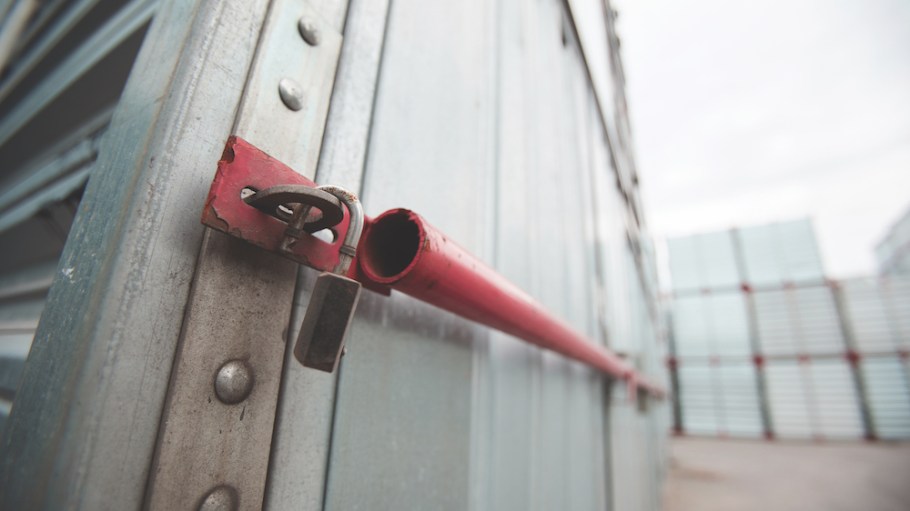
Next, in his dialogue with clients, Cornell talks with shippers, freight brokers and trucking companies alike to get them on the same page about the type of security locks required to reinforce their operation.
Cornell’s third recommendation is to use technology like covert tracking devices or remotely operated locks installed on trailers that can be operated from company headquarters. Despite the focus on technology adoption, Cornell emphasized an even greater importance of establishing these steps in order.
“If you just jump those first two layers and you go right into technology, but you don’t have any good process and procedures to use that technology, you just bought a pretty expensive paperweight,” Cornell said. “Otherwise, you don’t really know how to use it or react with it, you don’t know how to integrate it into your shipping process, or your trucking process. You don’t know how to use it to interact with the drivers when they check in and check out on their breaks.”
In one such example of where transportation intermediaries like freight brokerages, freight forwarders and 3PLs can identify suspicious examples of bad actors, Cornell said companies should access the Federal Motor Carrier Safety Administration (FMCSA) database to determine how many trucks the potential hauler owns. This way, if a trucking company lists that it has only two trucks online, but the contact point claims it can move 10 loads, they are probably lying about their intentions.
“A lot of times, the bad guys will lie about how many units they have when they assume somebody’s identity,” Cornell said. “You can sniff that out. You can see a company that says they move freight everywhere in the country.’ And then you check their inspection record and they’re only being inspected in Southern California.”
Unfortunately, the prevention efforts are not being scaled out quickly enough compared to the acts themselves. So while states like Texas, California and Georgia are among those experiencing the brunt of the major cargo theft events, strategic theft is likely to increase and spread further geographically in 2024, according to Danny Ramon, intelligence and response manager at supply chain visibility, security and risk management solution Overhaul.
“As criminals adapt and improve their methods, the least risky method for theft is a fraudulent or strategic approach,” said Ramon. “While some have been deterred from their favored targets, none have suffered lasting incarceration that would prevent the continued commission of these crimes. These groups have already expanded from SoCal into areas where safeguards are not as prevalent, allowing for more ‘low-hanging fruit’ to be targeted. Major changes in the way business is done will be needed to combat these tactics en masse.”
Calls for federal government intervention increase
There are numerous major task forces across the U.S. that are dedicated to curbing cargo theft, including the California Highway Patrol (CHP) and its Organized Retail Crime Task Force (ORCTF), as well as the Memphis Cargo Theft Task Force. Additionally, groups such as the Florida Highway Patrol, Miami-Dade Police Department and New Jersey State Police operate on cargo theft.
However, Lewis says many of these law enforcement groups are often spread too thin to focus primarily on cargo theft, and are overwhelmed with the current situation. He believes the federal government will need to step up and assist in covering where local law enforcement falls short.
Last May, several U.S. lawmakers called on the Department of Transportation’s Office of Inspector General to create a national cargo theft task force. But in August, DOT Inspector General Eric Soskin stopped short of that goal, only saying that the office would continue to collaborate with the FMCSA on investigating cargo theft fraud schemes.
“We’re going to have to get to that tipping point… we’re going to have that significant, life changing event,” Lewis said. “[Law enforcement] is already backing away from a lot of these because they’re not workable, and they’re not taking police reports on it because they’re calling it a civil matter. Therefore, it doesn’t get reported. So something’s going to have to happen. What that watershed moment is, I don’t know.”

3 tips on cargo safety from Travelers’ Scott Cornell
- Establish low-cost processes and procedures, by opening lines of communication and educating stakeholders about current cargo theft concerns.
- Talk with shippers, freight brokers and trucking companies alike to get them on the same page about the type of security locks required to reinforce their operation.
- Use technology like covert tracking devices or remotely operated locks installed on trailers that can be operated from company headquarters.
This article ran in SJ’s Logistics Report. To download the full report, click here.