Amazon is kicking off the month of February with a stellar earnings report—and a new product debut.
The e-commerce giant surpassed $10 billion in profit during the fourth quarter and officially introduced a new generative AI-powered conversational shopping assistant, Rufus, which launched in beta to a subset of consumers Thursday.
The tech titan’s net sales jumped 13 percent on a constant-currency basis to $170 billion in the year-end quarter, up from $149.2 billion in the prior-year period. The number also exceeded the $166.2 billion expected by analysts polled by LSEG, formerly known as Refinitiv.
Related Stories
The company generated $10.6 billion, or $1.00 per diluted share in net income, during the quarter—up from $278 million in the year-ago period and well ahead of the expectations of 80 cents per diluted share.
The news sent Amazon’s stock up more than 9 percent in after-hours trading on Thursday.
Amazon officially debuted Rufus a month after first previewing its customer-facing generative AI capabilities, which showcased how shoppers could ask questions about the products they were searching for. Rufus will progressively roll out to additional U.S. customers in the coming weeks.
During the fourth quarter earnings call Amazon CEO Andy Jassy touted Rufus’ abilities to help shoppers discover products on its marketplace.
“If you want buying advice like, ‘What should I look for in a pair of headphones?’ or if you are doing purpose buying like, ‘What should I buy for cold weather golf?’ or you want recommendations on the best Valentine’s Day gifts—you can plug in all those questions and get really good answers,” Jassy said. “It’s seamlessly integrated in the Amazon experience that customers are used to and love to be able to take action.”

The company once again touted its fastest delivery speeds ever for Prime members, increasing the number of items delivered either same-day or overnight by more than 65 percent year-over-year in Q4. The firm delivered its billionth package from a same-day site in December. In 2023, more than 7 billion units arrived the same or next day after an order is placed.
“In the U.S., this result is the combination of two things: one is the benefit of regionalization where we re-architected the network to store items closer to customers,” said Jassy. “The other is the expansion of same-day facilities. As we’re able to get customers items this fast, it increases the number of occasions that customers choose Amazon to fulfill their shopping needs.”
According to supply chain consulting firm MWPVL International, Amazon currently operates 53 sub-same-day facilities, which are designed to fulfill orders in less than five hours.
Jassy made it a point last year to cut costs across the company’s fulfillment network, and the efforts are clearly working. Amazon’s regionalization efforts have brought transportation distances down, which has helped lower the online marketplace’s “cost to serve”—or in layman’s terms, the cost to get a product from Amazon to a customer.
“In 2023, for the first time since 2018, we’ve reduced our cost to serve on a per-unit basis globally,” Jassy said. “In the U.S. alone, cost to serve was down by more than 45 cents per unit compared to the prior year. Lowering cost to serve allows us not only to invest in speed improvements, but also afford adding more selection at lower average selling prices (ASPs), and profitably…It’s not hard to add lower ASP selection, it’s hard to be able to afford offering lower ASP selection and still like the economics.”
Jassy said Amazon is “not done” lowering the cost to serve, highlighting several areas of opportunity to lower costs “while also delivering faster for customers.” The CEO said that Amazon’s inbound fulfillment architecture and resulting inventory placement are areas where the company sees an upside in 2024.
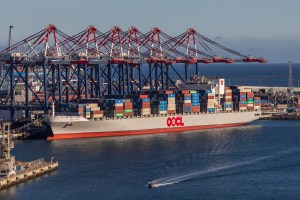
Reiterating the company’s point of view on the Red Sea in December, when the Big Tech firm anticipated no impact on its customers, chief financial officer Brian Olsavsky said the disruptions do not have a material impact estimated in their first quarter guidance.
“We’re just working very hard to make that not back up on customers,” Olsavsky said. “We’re vigilant on that and we’ll work to take steps where we need to make sure that the customer experience is not impacted.”
Across other areas of the business, Amazon said its Amazon Web Services (AWS) segment sales increased 13 percent year-over-year to $24.2 billion, down from last year’s 20-percent growth but kicking up from the past two periods of 12-percent growth.
Advertising saw the highest growth across all Amazon’s segments, jumping 27 percent to $14.7 billion. Third-party seller services came in at 20-percent growth, increasing to $43.6 billion.
North America segment sales increased 13 percent year-over-year to $105.5 billion, while international sales got a 13-percent boost to $40.2 billion when excluding changes in foreign exchange rates.