Amazon had a blowout third quarter driven by 20 percent growth in its Amazon Web Services (AWS) cloud division, all while the e-commerce giant continues to push its limits on improving its delivery and fulfillment network.
Net sales increased 12 percent year over year to $180.2 billion, outpacing analyst projections of $177.8 billion. Net income totaled $21.2 billion, including a pre-tax gain of $9.5 billion from its investment in AI startup Anthropic.
Wall Street was thrilled with the quarterly performance, with Amazon stock popping 13 percent in after-hours trading.
Related Stories
But while the AWS news picked up much of the public interest, as its growth escalated to a pace unseen in 11 quarters, Amazon has quietly been investing $1.9 billion into its delivery service partner (DSP) program this year. CEO Andy Jassy announced in the earnings call that the company has rolled out three-hour delivery in select cities.
That move comes as Walmart has continued to accelerate its own delivery ambitions, Approximately one-third of deliveries from Walmart stores during the late summer were completed in three hours or less, according to the retail giant.
Amazon’s delivery enhancements are perhaps escalating the most in the grocery segment. While 1,000 cities currently offer same-day grocery delivery, this is expected to expand to 2,300 cities by the end of the year. U.S. customers now can order perishable groceries and receive them the same day in as little as five hours.
The online user experience is being improved as well, with Amazon’s debut of a new “add-to-delivery” button exclusively for Prime members that lets customers add items to previously scheduled orders. It’s been used more than 80 million times since its September launch.
The tech titan has already been piling on $4 billion in investments to expand its rural delivery network, which is expected to expand the network’s rural footprint to more than 200 delivery stations.
“We’ve already increased the number of rural communities with access to our same-day and next-day delivery by 60 percent, reaching roughly half of the total communities we plan to expand to by the end of the year,” said Jassy.
But Amazon’s last-mile achievements are being supplemented by investments on the back end as well, as the company continues to optimize its fulfillment capabilities.
“We will continue to improve inventory placement to drive down distance traveled and touches per package,” Jassy said in the call, as the company continues to build out its inbound fulfillment network.
According to Jassy, inbound lead times have been cut by nearly four days compared to last year.
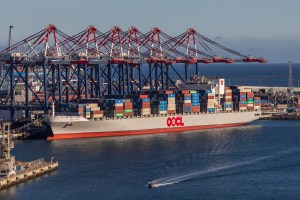
This has coincided with the construction of more inbound cross-dock centers. These are warehouses located near major ports designed to minimize ground transportation expenses and streamline the flow of goods into its wider fulfillment network.
According to supply chain consulting firm MWPVL International, Amazon operates 61 active inbound cross-dock centers as of the first quarter, with another 13 still in development.
“This allows us to be more efficient with our inventory purchasing, which benefits working capital,” said Jassy. “We’re also placing inventory more strategically throughout the network.”
Amazon’s earnings also come after its announcement earlier this week that it would be cutting 14,000 corporate jobs across almost business units.
Jassy said the move was not necessarily financially driven, or AI-driven, but driven by culture, hinting that Amazon hired too many employees in recent years during the peak demand of the Covid-19 pandemic.
“If you grow as fast as we did for several years—the size of businesses, the number of people, the number of locations, the types of businesses you’re in—you end up with a lot more people than what you had before, and you end up with a lot more layers,” Jassy said, emphasizing that there were layers in the company that needed to be removed.
“Without realizing it, you can weaken the ownership of the people that you have who are doing the actual work and who own most of the two-way door decisions,” the CEO said. “It can lead to slowing you down.”
When asked about the company’s robotics investments, with the online marketplace now touting as many as 1 million robots across its fulfillment network, Jassy was mum on details of where they would scale. But he said he expects the robots and human employees would compete each other and work together.
“We have a lot of invention in flight, so I expect that we’ll have more over a period of time,” Jassy said. “You’re going to continue to see us invest very significantly in robotics. It’s going to help on the safety, the productivity, the speed and ultimately some of the cost pieces, which will allow us to continue to improve the customer experience.”