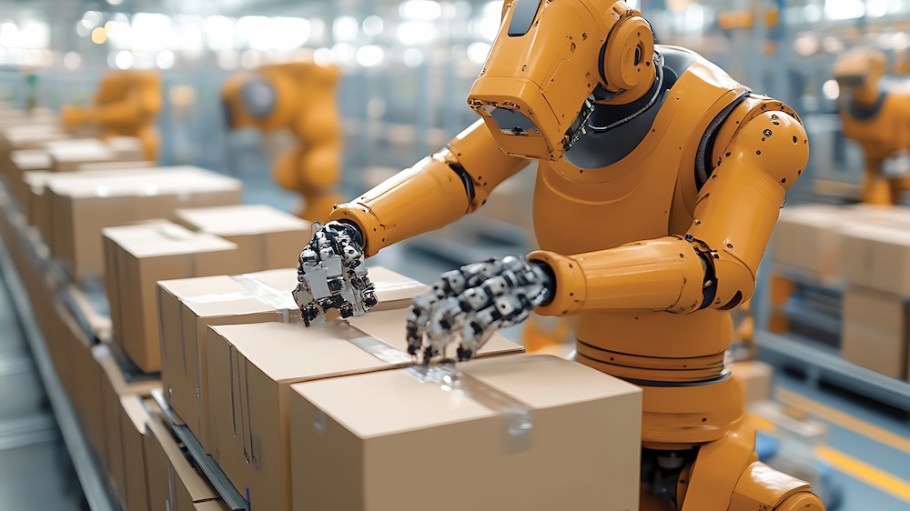
It’s not a question of man versus machine, but rather how far they can go when working together.
When it comes to logistics and technology, automation and humanity are teaming up to get goods loaded, shipped, railed, trucked, stored, sorted, picked, packed and delivered with ever-greater efficiencies.
Artificial intelligence and machine learning are the backbone of such advances, making robots and automation not just faster, but exponentially smarter. This means more autonomous robots that intelligently zip across floors, flying warehouse drones that scan packages and RFID tags from above, and agile super robots that put human limitations to shame.
Related Stories
Warehouse managers suddenly have new “employees” to manage: robots. Garner projects that one in 20 supervisors will be overseeing robots, not humans, by 2030. Federica Stufano, senior principal analyst at Gartner, said that, particularly as robots-as-a-service (RaaS) models, which effectively allow companies to rent robots as part of a subscription-based contract, will only increase the need for humans to oversee robots in the warehouse.
Even so, a hybrid model is the most likely scenario. “Most facilities will evolve into hybrid environments, where managers are overseeing both people and robots together,” said Christopher Smith, CEO of Slip Robotics.
Addressing the industry’s “need for speed,” last mile is the newest arms race, with mega retailers building out their own freight fulfillment technologies. Walmart CEO Doug McMillion claims that one out of three deliveries from the store are now completed in three hours or less. On an August earnings call, he noted agentic AI could be used to create “digital twins” of Walmart’s facilities, “which can help predict or prevent issues before they happen,” he said.
Meanwhile, Target stepped up its own store fulfillment hubs with new sorting technology. “If you ask any of the 2,000 store directors what is going to make or break their day, they will tell you it’s the trailer unload—when a trailer comes from one of our distribution centers,” said Target chief supply chain and logistics officer Gretchen McCarthy. “That sets the tone for the day. These trailers have thousands of SKUs across up to 3,000 cartons, and it’s hard. It drives payroll, it drives potential safety issues and ultimately, it’s not very efficient.”
But is the industry truly seizing the wheel when it comes to technology? Manhattan Associates research shows the majority of transportation leaders believe agentic AI will act for them by 2030, and companies must keep up.
“Eighty-seven percent of respondents anticipate that challenges in areas such as operational visibility, AI adoption and sustainability compliance will intensify, leaving their current transportation management systems struggling to keep pace,” said Bryan Smith, director, transportation management systems at Manhattan Associates. “Failure to act now will expose organizations to rising costs, questions over long-term efficacy, and the risk of falling short of customer promises.”
A report by Inspectorio also showed that the supply chain industry is behind the curve when it comes to technology adoption, especially for areas like sustainability. Companies may have a unique opportunity to pair sustainability goals with AI technology, particularly if they haven’t already begun implementing the systems into the supply chain. However, the company’s data showed that most organizations aren’t there yet. In fact, less than 5 percent of respondents using AI in their organizations said sustainability was a primary use case.
Even though a low adoption rate exists for AI across the supply chain industry, survey respondents were still optimistic and enthusiastic about the future. Eight in 10 supply chain leaders said technological advancements—primarily AI and ML—will have a significant impact on the supply chain within the next five years.

To download SJ’s Logistics Report: The Technology Issue, click here.