
Artificial intelligence-based fashion innovation continues to attract high-profile, deep-pocket investors.
Zelig, an AI-powered virtual try-on and styling startup based out of Los Angeles, announced Nov. 6 that it has raised $15 million in Series A funding. ReStore Capital affiliate Hilco Global led the funding round.
Sandy Sholl, Zelig’s CEO and co-founder and founder of MadaLuxe Group, a major distributor of luxury fashion, said bringing in Hilco Global and other financial partners will increase the startup’s potential.
Related Stories
“We brought on strategic partners that share our vision of permanently changing the way people shop on e-commerce sites. Each partner shares a commitment to sustainability and is dedicated to providing solutions for the future,” she said.
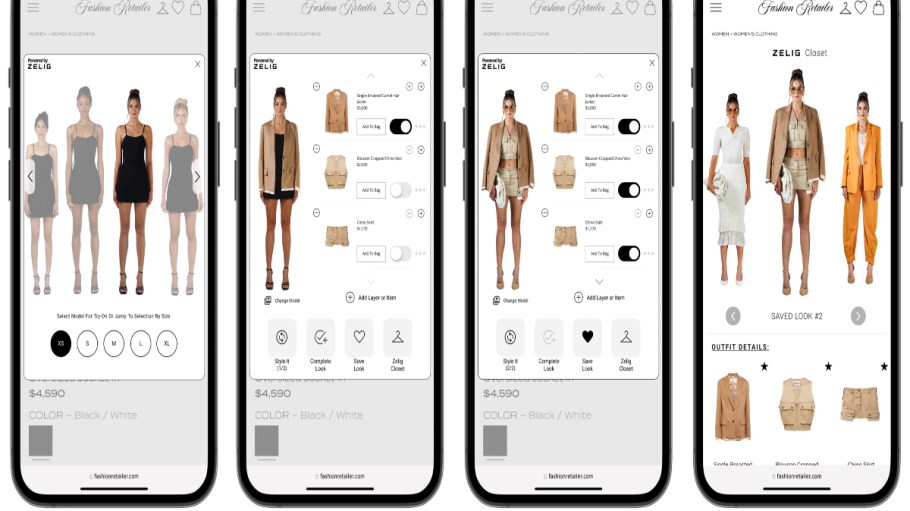
Zelig has not yet released its marquis product, but at launch, it will allow consumers to select a model from a range of photos that feature different body types, skin tones and hair colors. From there, shoppers can see how the model looks in different garments on a retailer’s site.
Sholl said she expects the product to launch in early 2024.
The company noted it has ambitions to later enable consumers to upload a photo and virtually style items using that image. That feature, Sholl said, will be live three to six months after the launch of the original product.
Sholl did not disclose who she expects Zelig’s early customers will be.
Walmart’s Be Your Own Model technology, launched last year, has a similar function, and brands like H&M, Zalando and John Lewis have all experimented with virtual fitting room technologies.
She said Zelig’s differentiator lies with the brand, not the consumer—it will also funnel data about consumers to brands and retailers, which can use that data to further personalize consumer experiences.
Zelig offers fashion retailers a chance to better understand their customers’ shopping journeys, according to the company. Brands can gain insights into how consumers combine and style certain garments and accessories, which could impact how they style items on their sites.
But it will also make marketing even more personal. In a world where, according to McKinsey data, 71 percent of consumers expect a personalized experience from brands, ultra-personalized marketing could enhance the bottom line. According to Zelig, it could also increase average order values.
“Zelig will provide retailers with customized visual data reporting about the shopper, which can be used to further personalize marketing,” Sholl told Sourcing Journal. “For the very first time, retailers will be able to feature the customer’s image of themself or an image of a model who is similar, fully styled, in targeted marketing emails. Zelig technology will track a consumer’s visual shopping journey and deliver data insights that will allow retailers to fully customize the marketing experience.”


