The World Trade Organization (WTO) is betting that artificial intelligence could provide a major boost to global trade in the next 15 years.
In a recent report, the WTO projects that AI could bring about a major increase in trade rates and GDP by 2040—but only if global governments, organizations and entities work to bridge the “digital divides” that exist between low-, middle- and high-income countries through policy and investment.
The organization said that, if deployed responsibly alongside policy, AI could lead to a 34 to 37 percent increase in global trade and a 12 to 13-percent increase in global GDP.
Related Stories
That estimate is based on simulations run in the WTO’s Global Trade Model, which helps the organization map out projections fort he future. The organization said in its report that the positive growth in GDP and global trade dollars would be influenced by several benefits AI could bring about, including lower costs for trade operations. It also noted that AI’s continued progress will allow those deploying the technology to access stronger trade-based capabilities in the future.
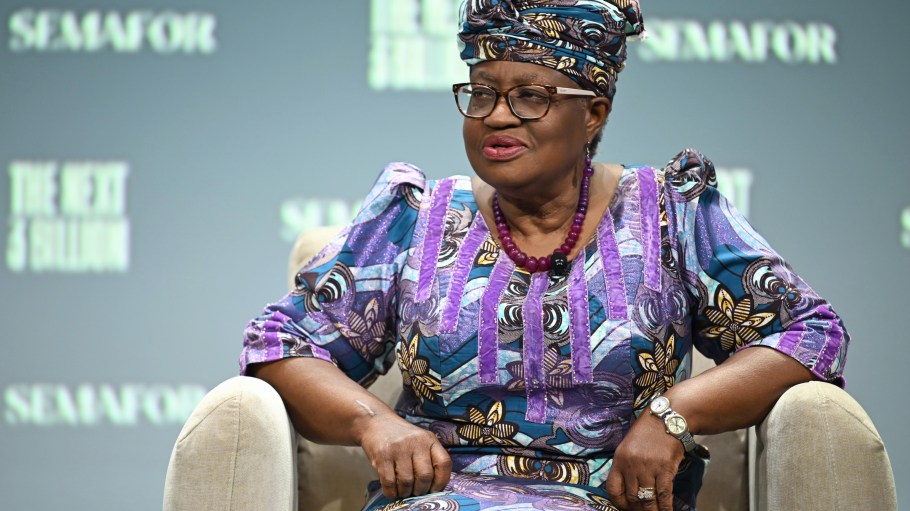
WTO Director-General Ngozi Okonjo-Iweala said the balance between innovation and policy needs to co-exist for global economies to benefit from the true promises of AI.
“AI has vast potential to lower trade costs and boost productivity,” Okonjo-Iweala said in the introduction to the report. “However, access to AI technologies and the capacity to participate in digital trade remains highly uneven.”
That projection is predicated on more favorable trade policy adjustments that would see AI-enabling goods, like electronic inputs, semiconductors and other components more freely available to low- and middle-income countries or policies that create bridges between the knowledge-based resources available in high-income countries and low and middle-income countries. Without those considerations, the WTO said, AI might widen the gap between low- and high-income countries’ trade strategies.
However, the report notes that, if low- and middle-income economies could feasibly decrease the gap between high-income countries’ digital readiness by about half, allowing them to more broadly deploy AI solutions, they could see respective incomes rising by 15 percent and 14 percent.
In a scenario in which low- and middle-income economies narrow their digital infrastructure gap with high-income economies by 50% and adopt AI more widely, these economies are projected to see incomes rising by 15% and 14% respectively.
In order for that to happen, the WTO points to the need for “more predictable trade policies” around AI-related components; the organization noted that “the number of quantitative restrictions applied to AI-related goods has climbed sharply over time.”
The WTO said high-income countries, in particular, are responsible for such barriers. That number could continue to rise if U.S. President Donald Trump imposes restrictive tariffs on semiconductors and parts needed to build robots—or the machines themselves.
It remains to be seen how global trade policy will play out in the next 15 years—or even the next 15 days. But Okonjo-Iweala said the WTO hopes to see the continued growth of global economies based on AI’s promise.
“With the right mix of trade, investment and complementary policies, AI can create new growth opportunities in all economies. With the right frameworks, trade can play a central role in making AI work for all. The WTO is committed to supporting this effort,” she said in a statement.