The recent U.S. and Cambodia tariff agreement was celebrated as a diplomatic win and a sign of renewed engagement. But behind the fanfare lies a harder truth: without enforceable labor protections, this deal risks entrenching exploitation rather than alleviating it. Cambodian workers who power the country’s export economy remain exposed to unsafe working conditions, poverty wages and systematic union suppression. If the United States hopes to champion democratic values through trade, it must pair market access with accountability.
For decades, labor rights formed an integral strand of U.S. foreign policy in both principle and strategy. Through development programs and labor rights initiatives, the U.S. helped advance freedom of association, strengthen independent unions, and deter the worst abuses in global supply chains. These efforts served as a soft-power hedge against authoritarianism, making clear that economic ties should also elevate human dignity. Yet the rollback and fragmentation of such programs has left a vacuum that repressive actors are eager to fill. When monitoring wanes and enforcement fades, workers pay the price first in wages and safety, then in silenced voices and must choose between an empty stomach and their rights.
Related Stories
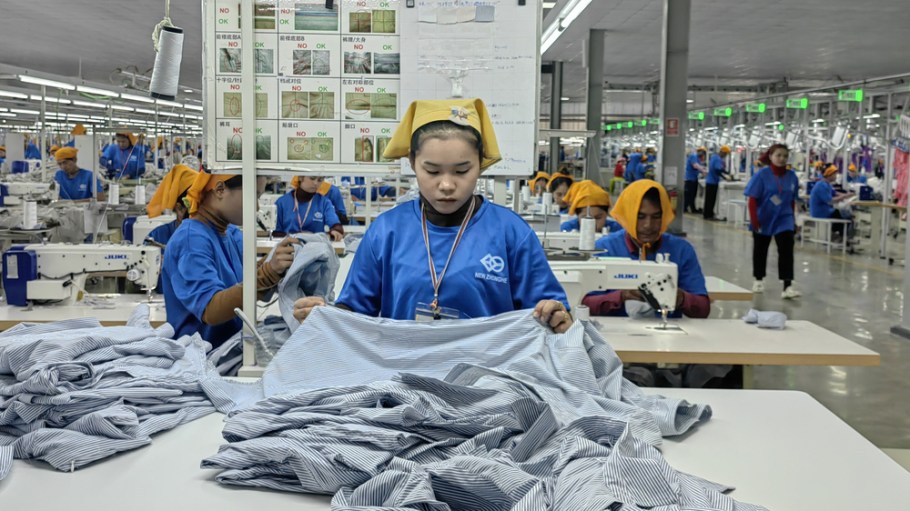
Cambodia illustrates this decline vividly. Union leaders are harassed and arrested, workplaces remain perilous, and bargaining is undermined by intimidation and retaliation. Garment workers, many of them women supporting families on the margins, are forced to choose between keeping their jobs and asserting basic rights. Freedom of assembly and association has deteriorated, while independent civil society confronts shrinking space to operate. In this context, a tariff deal without guardrails is more than a missed opportunity, it is a signal that labor rights can be sidelined to keep trade flowing.
Labor experts and supporters point to a framework agreement accompanying the tariff announcement, but the framework is only as meaningful as its enforcement. Without binding commitments, measurable benchmarks, and penalties for noncompliance, “frameworks” are hollow vessels. And without structured engagement with independent unions, worker rights organizations, and civil society, any reporting or review risks becoming performative rather than protective. Cambodia’s track record shows that progress on labor rights rarely arrives through goodwill alone; it follows from consistent external pressure and credible consequences. The question is not whether the government can uphold international labor standards it is whether the incentive structure makes it worth doing so.
Trade policy should reflect democratic values, not dilute them. That requires reinstating robust labor rights programs with the authority to monitor, investigate and enforce. It means tying tariff benefits to clear, public benchmarks on freedom of association, collective bargaining, anti-union discrimination, occupational safety and health, and grievance remediation. It also means creating transparent channels for workers and civil society to report abuses without fear of retaliation, and ensuring those reports trigger timely, independent review. Promises are not enough; workers need mechanisms that translate rights on paper into protections in practice.
Critics may argue that strict labor conditions jeopardize economic growth or drive production elsewhere. But durable growth depends on stable institutions, fair wages and safe workplaces. When workers can organize and negotiate, productivity improves, compliance increases, and supply chains become more resilient. Conversely, tolerating repression breeds volatility: strikes escalate, reputational risks multiply, and social tensions deepen. Ultimately, the choice is not between prosperity and rights; it is between short-term gains and sustainable development.
Failing to act sets a dangerous precedent. It tells the world that labor rights are optional and undermines U.S. credibility on human rights. It emboldens authoritarian regimes that treat civic freedoms as negotiable and workers as expendable. The U.S. cannot afford this inconsistency. If it wants trade to be a tool for democratic renewal, it must insist that tariff benefits be earned and kept through measurable respect for human dignity.
The path forward is clear. Pair market access with accountability. Restore independent monitoring and enforcement. Bring workers and civil society to the decision-making table. Publish benchmarks, timelines, and consequences. And make it unmistakable: labor rights are non-negotiable.
Cambodian workers do not need symbolic gestures; they need enforceable guarantees and a voice in shaping their future. With principled policy and practical safeguards, trade can be a lever for dignity, not a license to exploit. The U.S. and Cambodia tariff deal can still become a model if the United States leads by example and demands action, not assurances. It is not too late to do what should have been done from the start: align trade with rights, and ensure that the people who make Cambodia’s export economy possible are protected, respected, and heard.
Tharo Khun is program manager for the Center of Alliance of Labor and Human Rights (CENTRAL) and a prominent labor advocate with more than a decade of experience in labor rights. Khun previously worked at the American Center for International Labour Solidarity (ACILS) before joining CENTRAL in 2018.