Voxel announced Tuesday it had secured a $44 million Series B round, led by NewRoad Capital Partners with further participation from Eclipse, Rite Hite, Tokio Marine, MTech, HG Ventures and Whitestone.
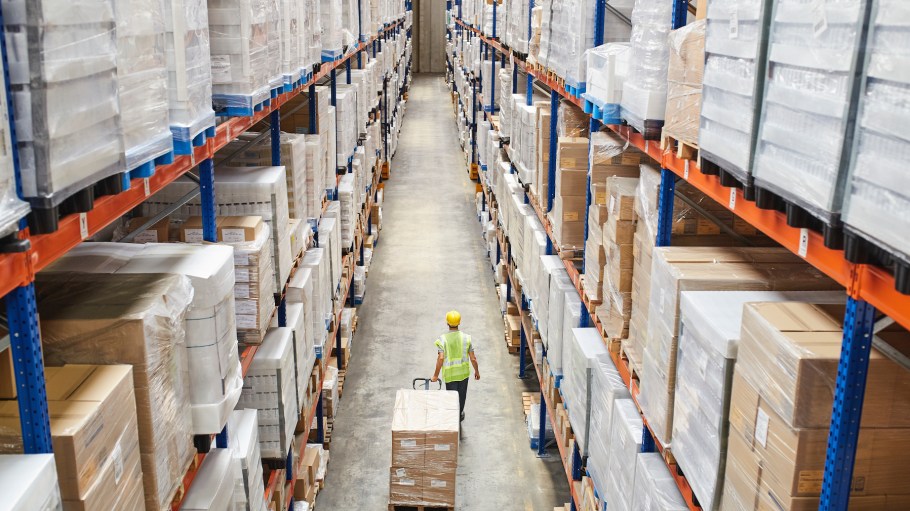
The San Francisco-based startup uses computer vision to help companies identify real-time employee safety hazards in warehouses, at ports and in manufacturing facilities.
Computer vision uses hardware—like cameras, in this case—and pairs their input with an AI algorithm to identify irregularities or violations. In the case of a warehouse, a safety violation could be a forklift operator failing to come to a complete stop, which is identified by the computer vision system and reported back to managers as necessary.
Related Stories
The idea is that, particularly in the case of repeat issues, operators can intervene, lowering the risk of injuries by creating new protocols or adding equipment to help workers complete their work with less strain.
Voxel uses heat mapping to identify hotspots in its customers’ facilities, which helps alert managers to the most pressing zones where injuries might occur, said Vernon O’Donnell, Voxel’s CEO.
“From a heat map perspective, we can see not just where [an issue] is happening in the facility, but when. So, are there specific shifts? Are there specific times of day where this is a significant problem?” he said.
The company, which has now amassed $61 million total in funding, counts Macy’s, Dick’s Sporting Goods and the Port of Virginia among its current customers.
O’Donnell said the team plans to use the money to expand its engineering and go-to-market teams; the company will add eight to 10 engineers, as well as leadership to support them.
On the technical side, those engineers will focus on higher latency, which will result in stronger real-time insights. They will also work to build infrastructure that can support global needs; O’Donnell said that, while Voxel has not begun selling internationally, existing customers have pulled it into markets like Latin America, Europe and Southeast Asia.
Already, Voxel can provide real-time insights about repeated issues in a facility, whether caused by an employee’s physical movement or by the way vehicles and tools are operated. In facilities where Voxel has been deployed, O’Donnell said similar problems present themselves, regardless of the industry.
“The two most common things we see are vehicle safety challenges—no stops, speeding, collisions…and then ergonomics—overreaching, improper bending,” he said, noting that Voxel can help suggest adaptations to lessen the number of issues likely to cause safety incidents in the future.
While that’s important across industries, O’Donnell said retail has been one of Voxel’s fastest-growing sectors because of customers’ expectations—paired with the need to provide a safe, well-regulated workplace.
“[Retailers] have the market pressing them to go faster, to provide goods quicker, to provide better e-commerce solutions, to provide lower-cost goods. If they can’t meet their staffing requirements in order to fulfill their e-commerce deliverables, they lose revenue,” he said, noting that many of Voxel’s earliest adopters were in the fashion, apparel and retail industries.
And as Voxel finds niches in multiple industries, investors seem intrigued by the company’s potential—and its proven results. According to its funding announcement, customers see up to a 91 percent reduction in injuries recorded on site.
Chris Sultemeier, operating partner at NewRoad Capital Partners and former executive vice president of logistics for Walmart, said the company has potential to streamline an already necessary task.
“Voxel is solving a problem every operator understands—how to keep people safe while running complex, high-velocity environments,” Sultemeier said in a statement. “Their platform brings real-time visibility to the places it’s been missing for too long. The team has built something that works, and the market is ready for it.”
And, indeed, the market seems to be ready for it. Though he could not disclose all of Voxel’s clients, O’Donnell noted that the company has closed six deals with Fortune 500 companies in the past four months. For 2025, O’Donnell and team hope to close eight to 10 more of those high-caliber deals.
But above all, O’Donnell said, Voxel’s focus remains clear: protecting workers before injury strikes.
“A lot of companies love to talk about their mission, but ours is to actually save lives. We can help somebody prevent a fatality or a catastrophic injury, and I think it’s incumbent on the entire tech community to start thinking differently on how we do more for these workers that are so critical for the next phase of re-industrialization and the next phase of our economy,” O’Donnell said.