USADF and IAF aren’t as recognizable acronyms as USAID, but they play a role in asserting the United States’ so-called soft power by promoting American interests in Latin America, the Caribbean and the African continent. But just as the U.S. Agency for International Development, which is poised to terminate 90 percent of its programs globally amid the Trump administration’s uncontrolled slash and burn of the federal government, the U.S. African Development Foundation and the Inter-American Foundation are coming under fire, drawing questions from Democratic lawmakers about the limits of the president to govern by executive order.
Related Stories
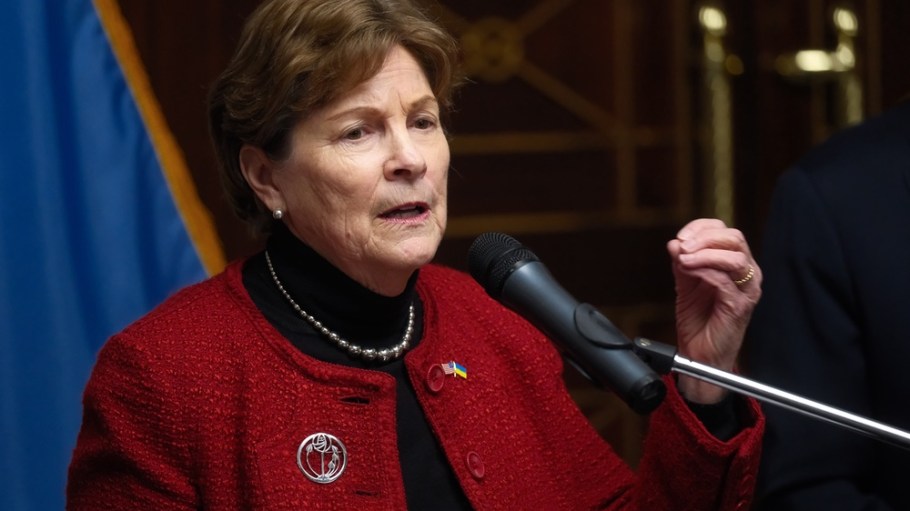
“These entities play a crucial role…by supporting community-driven development, fostering economic growth and strengthening democratic governance,” argued members of the Senate Foreign Relations Committee, including Jeanne Shaheen of New Hampshire, Brian Schatz of Hawaii, Tim Kaine of Virginia and Cory Booker of New Jersey, in a letter to Trump earlier this week. “Moreover, they are statutorily established entities supported by repeated bipartisan appropriations since 1969 (IAF) and 1980 (USADF) and their elimination cannot be effectuated by executive action alone.”
They were responding to a Feb. 19 executive order that eliminated “non-statutory components and functions” of “unnecessary government entities” and reducing their operations and personnel “to the minimum presence and function required by law.” In naming the Presidio Trust, the U.S. Institute of Peace, USAD and IAF, the order directed Russell Vought, head of the Office of Management and Budget, to reject funding and grant requests “inconsistent” with the new bureaucratic regime.
But the statutes’ “unambiguous language” that only an act of Congress can dissolve the organizations aside, IAF and USADF have “clear statutory functions” that must continue as required by law and cannot be overridden by executive order, the senators said.
IAF, they added, is “tasked with cooperation with private, regional and international organizations; strengthening U.S. ties with the Western Hemisphere; international development efforts; civil society inclusion; and democratic institutions.” USADF was created to “strengthen the bonds of friendship and understanding between the people of Africa and the United States; enlarging opportunities for community development; assisting effective and expanding participation of Africans in their development process; and encouraging the establishment and growth of development institutions that are indigenous to the continent.”
Receipients of grants from both programs have included cooperatives of women artisans who were able to use the money to build capacity, improve production and market their traditional handicrafts to larger, international audiences, including, in the case of a group in Ghana, to Macy’s department stores. USDAF has touted its ability to “do development differently” by leveraging a community-led approach to foster African enterprises and entrepreneurs who improve lives and livelihoods, including by promoting food security. IAF helped fund civil society organizations that promote inclusive economic prosperity, integrate migrants, fight corruption, protect the environment and sustainably manage natural resources in what it calls a “smart and highly cost-effective manner.”
That Congress has repeatedly appropriated funds for these organizations, including $45 million for USADF and $47 million for IAF in the most recent appropriations bills for fiscal year 2025, is another sticking point. Along with IAF’s and USADF’s permanent authorization, the regular approval of annual appropriations for both entities, as enacted by Congresses and presidents of both parties, including during Trump’s first term, constitute an “ongoing authorization of the agencies’ functions that remains in force,” the letter said.
“Eliminating or effectively preventing IAF or USADF from carrying out their missions would not only be illegal, but would undermine U.S. leadership in the Western Hemisphere and across the African continent, creating a vacuum that adversarial powers would exploit to expand their influence and undermine congressional intent,” it added.
Democrats from the House Foreign Affairs Committee, led by Gregory W. Meeks of New York, sent their own letter protesting USDAF’s elimination. It, too, cited a U.S. statute that “makes explicit” that the organization can only be dissolved by an act of Congress.
“Eliminating this agency—or reducing its activities in an effort that would effectively eliminate it—would undermine U.S. leadership in the region and create a vacuum that adversarial powers would exploit to expand their influence, and undermine congressional intent,” the letter said. “If your administration believes changes to the mission or funding levels of USADF are necessary, such proposals must be submitted to Congress for legislative consideration, as required by law.”
Writing on X last week, Meeks didn’t mince words by calling out what he said was Trump’s “reckless destruction” of the federal government. He said that billionaire (and X owner) Elon Musk’s Department of Government Efficiency, or DOGE, was working to dismantle agencies “solely to cut taxes for billionaires.” The executive order is the “latest example of Trump’s overreach,” Meeks said before adding, “Trump is not a king.”