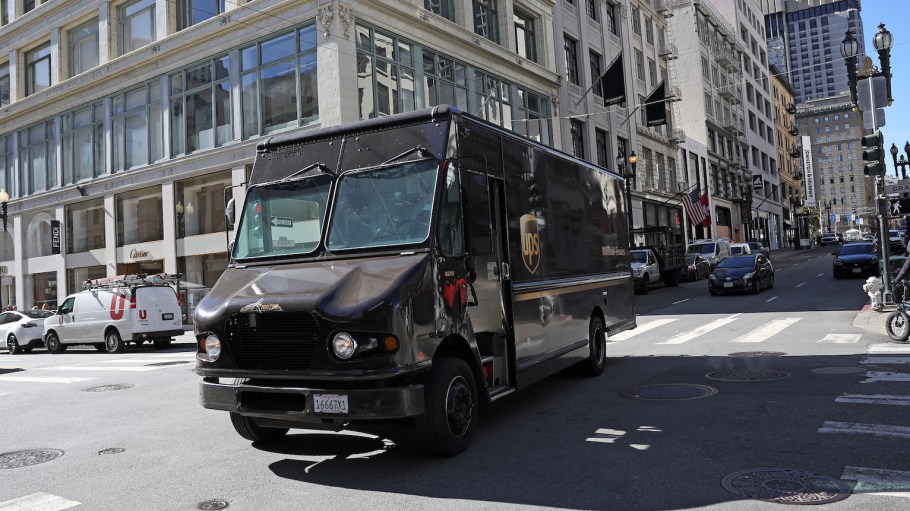
The Teamsters unanimously rejected the latest contract UPS offered, reigniting the chances that America’s biggest parcel carrier will see hundreds of thousands of workers strike on Aug. 1.
The current UPS-Teamsters contract, which applies to more than 340,000 full- and part-time UPS workers, expires July 31. But the union said it demanded UPS submit its “last, best and final offer” by July 5. The Teamsters said it needed time to ratify the new contract, which includes distributing the deal to union members and holding a vote.
Related Stories
After more than two months of sound bite-heavy negotiations, no additional contract talks are scheduled.
UPS workers in the Teamsters union have already authorized a strike should the talks break down. It would mark the first since 1997 when 185,000 UPS employees walked off the job for 15 days. A 340,000-worker walkout, however, would be the largest single-employer strike in U.S. history.
The labor negotiations with UPS could spell opportunity for the logistics giant’s rivals.
Although chief competitor FedEx said last month it didn’t see any immediate benefit from the uncertainty and turmoil surrounding the UPS-Teamsters negotiations, chief customer officer Brie Carere said the company had “a lot of great conversations with legacy UPS customers” as talks dragged on without producing a new deal.
Satish Jindel, president of shipping analytics software provider and consulting firm ShipMatrix, told CNN that UPS was able to recapture 90 percent of its business in 1997 after the strike ended. But he said that total would be closer to 70 percent today when companies have more options in the form of FedEx, the USPS and Amazon.
Macy’s, a UPS customer, didn’t reveal the percentage of packages it delivers through the shipping carrier, but said it’s ready for whatever lies ahead.
“At Macy’s, our experienced teams have successfully navigated through supply chain disruptions in the past and are confident in their ability to flex and pivot as needed,” a Macy’s spokesperson told Sourcing Journal. “In the event of a strike, we have contingency plans in place to mitigate any impact to our customers.”
A strike affecting UPS, which commanded nearly one-quarter (24 percent) of America’s total parcel volume shipped last year, per Pitney Bowes Parcel Shipping Index data, has significant implications for the supply chain.
Both the Teamsters and UPS accused each other of walking away from the negotiations.
“This multibillion-dollar corporation has plenty to give American workers—they just don’t want to,” said Teamsters general president Sean O’Brien in a statement. “UPS had a choice to make, and they have clearly chosen to go down the wrong road.”
UPS said it was proud of its “historic” offer, saying it builds on the company’s “industry-leading” pay. The shipping giant called on the union to return to the negotiating table.
“We have nearly a month left to negotiate. We have not walked away, and the union has a responsibility to remain at the table,” UPS said in a statement. “Refusing to negotiate, especially when the finish line is in sight, creates significant unease among employees and customers and threatens to disrupt the U.S. economy. Only our non-union competitors benefit from the Teamsters’ actions.”
The negotiations seemed to take a positive turn on Sunday, when UPS finally agreed to ditch the two-tiered 22.4 wage classification. The Teamsters have long said the system was unfair to lower-paid junior “hybrid” workers, who often deliver packages on weekends and do the same work as higher-paid full-time drivers.
The union also said it reached a tentative agreement to establish Martin Luther King Jr. Day as a full holiday for the first time and end unwanted overtime on drivers’ days off. But despite these wins, O’Brien insists union members will not work past July 31 unless the Teamsters have a firm deal, including higher wages, signed, sealed and delivered.
In May, Deutsche Bank estimated that a driver reclassification would cost UPS roughly $140 million, less than 0.2 percent of the company’s current cost structure. The Teamsters would burn through their $346 million strike fund, the funds set aside to replace paychecks when workers walk out, in three weeks if the UPS employees go on strike, according to the bank’s research.
Union workers represented by the Teamsters remain active in other labor battles, expanding picketing to a fourth Amazon warehouse in San Bernardino, Calif. on Monday. That strike comes after 84 delivery drivers and dispatchers formerly contracted at the e-commerce giant are calling on the company to honor the union and protect their safety in extreme temperatures.