President Donald Trump’s increased U.S. Immigration and Customs Enforcement (aka ICE) raids are poised to have a broader impact than initially anticipated.
In just six months back in office, Trump has drastically reshaped the political landscape. Among the most controversial moves from the 79-year-old leader is the ramp-up of deportation policies and the intensified presence of ICE, a shift already sowing fear across industries dependent on immigrant labor and threatening the stability of key supply chains.
Related Stories
“We’re seeing policy whiplash that’s creating operational chaos,” Loren Locke, a business immigration attorney and former U.S. Department of State consular officer, told Sourcing Journal. “This instability makes it impossible for businesses to plan long-term investments or really changes of any kind.”
While Trump insists his crackdown is focused on “criminals,” the numbers tell a different story.
According to a CNN analysis of ICE records from October through the end of May, more than 75 percent of those booked into ICE custody during fiscal year 2025 had no criminal convictions beyond immigration or traffic-related offenses. Fewer than 10 percent were convicted of serious crimes such as murder, assault, robbery or rape, undermining Trump’s repeated claim that ICE’s efforts are about public safety.
Adding insult to injury, ICE—operating under Trump’s direction—has started heavily targeting undocumented immigrants working in essential sectors like agriculture, hospitality and food service. Although Trump had briefly ordered ICE to halt arrests, enforcement operations resumed shortly afterward.
“The President has been incredibly clear. There will be no safe spaces for industries who harbor violent criminals or purposely try to undermine ICE’s efforts,” Tricia McLaughlin, a spokeswoman for the Department of Homeland Security, told CBS News last week. “Worksite enforcement remains a cornerstone of our efforts to safeguard public safety, national security and economic stability. These operations target illegal employment networks that undermine American workers, destabilize labor markets and expose critical infrastructure to exploitation.”
With ICE raids back in full swing, the fashion industry—along with many others—is likely to feel the ripple effects, particularly when it comes to the growth of regenerative agriculture.
In recent years, fashion brands like Patagonia, Kering, The North Face and Eileen Fisher have integrated regenerative practices into their supply chains to boost sustainability. These efforts involve reducing chemical inputs, minimizing tillage and improving soil health, cornerstones of the industry’s push toward a more sustainable future.
However, as ICE continues to target farmworkers—and with an estimated 283,000 undocumented immigrants employed in agriculture, according to the Center for Migration Studies of New York—the future growth of regenerative agriculture remains uncertain.
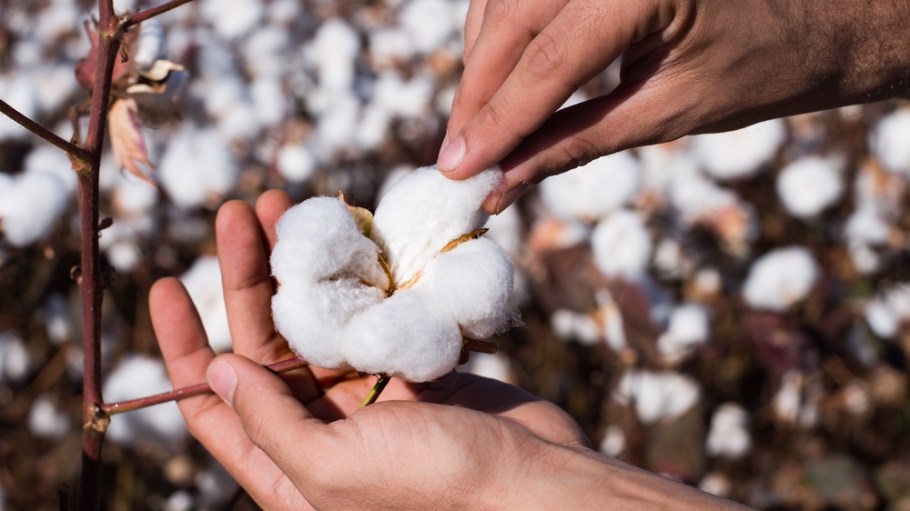
“Unlike conventional farming operations that rely more on mechanization than manpower, the sustainable methods used in regenerative cotton operations benefit from the farmworkers’ special expertise,” Locke said. “Immigration enforcement actions could drive away experienced farmworkers and could do so at points in the cotton season that are particularly devastating to the outcome. It is just unrealistic to think that farmers could replace their current farmworkers on the fly with willing U.S. workers with adequate skill.”
Better Cotton—the world’s largest cotton sustainability program, which operates in 22 countries including the U.S. and accounts for 22 percent of global cotton production—echoed Locke’s sentiment, but noted that the fallout will likely have a “relatively low impact on the U.S. cotton sector [which is ranked as the fourth-largest producer worldwide, according to Mordor Intelligence] when compared to other commodities like fruit, vegetables and dairy.”
A representative from Better Cotton added that most U.S. cotton farms now rely on foreign nationals who come to the U.S. temporarily to perform seasonal agricultural labor, aka H-2A workers. Through this program, farms are able to meet labor demands while maintaining protections for U.S. workers’ wages and working conditions.
Still, it’s far from a permanent solution. According to the U.S. Department of Agriculture, H-2A workers are not allowed to stay for longer than one year, and the approval process can take up to three months, posing additional logistical challenges.
“Whether they have current U.S. work authorization or not, individuals employed in agriculture—including those on H-2A visas—retain significant legal protections under federal law,” Locke said. “But ICE raids can create a climate of fear that effectively nullifies these protections, as many become too afraid to report violations or assert their rights.”
Javier Palomarez, founder and CEO of the United States Hispanic Business Council (USHBC), warned that a decline in domestically produced cotton could also force the U.S. to look to international suppliers like India, Brazil, Mexico and Australia, all of which are facing tariffs under Trump’s revived trade policy and “further complicate brands’ ability to secure sustainable fiber.”
“If ICE crackdowns intensify and deter or remove large numbers of farm workers, fashion brands that have committed to sustainable sourcing may struggle to obtain a sufficient amount of U.S.-grown regenerative cotton, potentially pushing them back toward conventional cotton or international sources with less transparent labor standards,” Palomarez told Sourcing Journal. “Prices may also rise, and businesses would likely struggle to find workers to fill the void. The associated uncertainty and resource shifts would not benefit consumers or businesses whatsoever.”