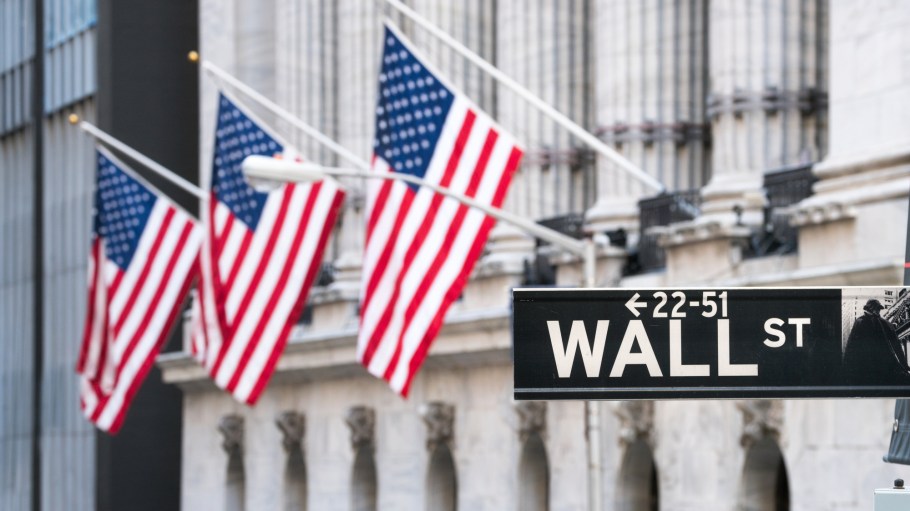
President Donald Trump’s “Liberation Day” tariffs looked very little like freedom on Wall Street on Thursday, where shocks are disliked and uncertainty is hated.
Even though Trump telegraphed the move well ahead of time, investors didn’t think he would really do it.
The president has extolled the virtues of tariffs, threatened to impose them and actually hit some friends and foes with higher duties earlier this year, occasionally walking them back.
Related Stories
But the sweeping broadside against globalism that Trump unfurled on Wednesday surprised almost everyone. The liberation—by Trump’s way of thinking of the U.S. economy—included a new 20 percent tariff on goods from the European Union, a 34 percent tariff on China and a 46 percent levy on Vietnam, all on top of existing duties.
If that tariff regime sticks, it will break or completely reinvent the global supply chain sooner rather than later.
Investors weren’t keen to wait around and see how serious Trump is or how long it will take for the import-dependent retail and fashion companies to reorient.
The S&P 500 fell 4.8 percent to 5,396.52—the worst drop in the market since COVID-19 sent the world home.
The list of fashion and retail companies getting hit much harder—with declines more than 20 percent—included:
- VF Corp., down 28.7 percent to $11.68.
- Capri Holdings, down 23.6 percent to $14.99.
- Kohls Corp, down 22.8 percent to $6.64.
- Victoria’s Secret & Co., down 22.6 percent to $14.87.
- Gap Inc., down 20.3 percent to $17.84.
In beauty, The Estée Lauder Cos. was down 15.3 percent to $58.19, while Coty Inc., dropped 7.8 percent to $5.21 and Ulta Beauty Inc. just beat the market, falling 3.9 percent to $367.76.
The day’s strongest fashion player was the off-pricer Ross Stores Inc., which was down just 0.9 percent to $131.21. Ross, which caters to the value crowd and can soak up inventory directly from other retailers, is a stock that plays well when the economy is in trouble.
Dylan Carden, an analyst at William Blair, said in a research note that there would be “few places to hide” if the duty regime held.
“The April 2 tariffs seem purpose-built to hobble the apparel industry, with the highest tariffs targeting regions that in aggregate are the source of 50 percent of apparel imports,” Carden said.
The analyst said merchandise costs would likely increase by 30 percent overall and that “companies will have to eat a fair share” of that hike.
While one of the intents of the tariffs is to rebuild the American manufacturing sector, Carden sees that as “a dim hope.”
“The skilled labor and infrastructure necessary for such a move has not existed in the U.S. at any meaningful scale since the 1980s and would take time and capital that few are likely inclined or able to spend,” he said. “We would look for some potential carve outs in the days to come. The bigger hope would be that larger trading partners reliant on the U.S. start lowering their own tariffs to allow the U.S. some headline wins to lower theirs.”
But the analyst also said that “such a scenario is near impossible to game out from the current vantage.”
So, who knows?
In the meantime, fashion veterans are bracing themselves.
Mickey Drexler, former chief executive officer of Gap Inc., J.Crew and now CEO of Alex Mill, said the tariffs would fuel apparel inflation that “will be beyond the acceptable inflation rate if the companies are to maintain earnings or growth or value.”
“And there are three or four companies I think that might not survive this,” Drexler said. “I won’t mention them, but they’re very successful companies.”
That leaves a lot hanging on what comes next as the geopolitics of an economic reset with the world take hold.
“President Trump, he’s too smart,” Drexler said. “There’s an end game here that he’s playing.”