Heimtextil is betting that the future of fabric looks messy.
Centered on the theme “Craft is a verb,” the annual trade show’s trends forecast for the 2026/27 season signals a paradigm shift in the textile industry.
Building on the groundwork laid last year and developed in collaboration with the curators of Alcova, an itinerant design platform and exhibition series, these trends explored the productive tension between the precision of artificial intelligence (AI) and the intuitive nature of traditional craftsmanship.
Related Stories
“With a foot in both Milan and Miami, Alcova has become a barometer for where design is headed—and how it’s being redefined by the latest currents,” reads the show’s editorial letter. “If 25/26 viewed trends as cyclical rather than linear—echoes of past desires resurfacing through new technologies and shifting cultural contexts—then 26/27 will expand that experiment.”
Rather than viewing technology and manual skill as opposing forces, the new season introduces the concept of the “techno-craftsman”—a creator who uses digital tools as an extension of the traditional toolkit to achieve unexpected, experimental results. The partners emphasized the “mindful use” of AI—viewing it as a source of “relief and inspiration” that complements human creativity.
AI is no longer a black-box threat to collaborators (see: humans) that allows for a level of complexity previously unreachable; when traditional craftsmanship reaches its physical limits, AI provides the “impulses” needed to push through.
Why it matters: Companies can remain competitive by embracing the “field of tension” between efficiency and intuition.
“The Heimtextil Trends 26/27 illustrate how AI will change the textile industry and, in combination with craftsmanship, opens up new perspectives,” said Olaf Schmidt, vice president of textiles and textile technologies at Messe Frankfurt. “They provide the industry with impulses for sustainable production methods, innovative cooperation models and the development of future-proof business strategies.”
The trends forecast explored a dynamic “field of tension” where high-tech artificial intelligence and traditional craftsmanship don’t compete but instead merge to open new creative perspectives. That core concept redefines the design process as an active, ongoing collaboration between algorithmic precision and human intuition, per the partners.
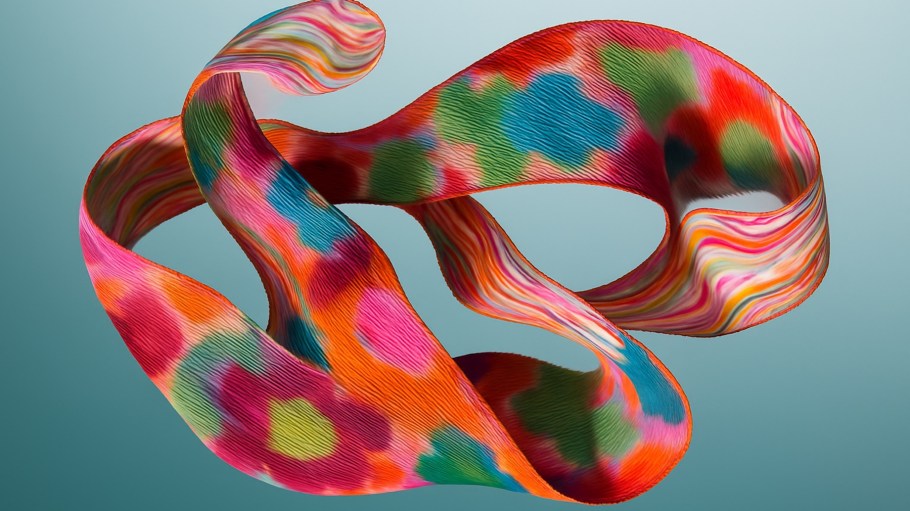
On that note, the color palette of “Craft is a verb” runs from grounded earth tones to intentionally jarring, screen-like brights. Shades like sand, clay, soot, olive and bark lean into a natural, material feel—then get “punctured” by sharp synthetic pops such as acidic green, digital lilac and bright “screen blue.” The result reads less like calm neutrality and more like a designed clash meant to grab attention.
The following six trends shaping the craft-meets-AI look showed up again and again on the trade show floor as designers mix digital tools with hands-on making—appearing sometimes smoothly and often with visible friction.

The “re: media” trend sees patterns move back and forth between sketchbook and screen: hand drawings get digitized, then retranslated into jacquards or embroidery. Expect glitchy references—pixelated gradients, “broken” visuals and digitally altered linework that still (even if slightly) shows the hand.
If the machine generates, then the maker finishes, per the “visible co-work” trend. This is where AI outputs become raw material for craft—think digitally guided embroidery on linen, 3D-knitted patchwork or generative motifs applied to traditional bases.
The third trend, “sensing nature,” sees designers use software as precisely that: a tool, not a technique. Digital solutions act as “translators” for the natural world, turning complex, irregular biological structures—such as the surface of the ocean or lichen patterns—into algorithmic textile grids and decorative motifs.
To balance the “flawless perfection” of AI, the fourth concept—dubbed the “playful touch” trend— emphasized crafted irregularity (which is, conveniently, the fifth trend). Think fabrics with knots, visible seams and asymmetrical finishes celebrating the “unruly” nature of handcraft. Small decorative details, such as a neon element on a linen blanket, serve as deliberate, joyful interruptions to functional design.
Finally, the “uncanny valley” trend leans into the machine rather than hiding it—deliberately showcasing the inner workings (such as wires and coils) as visible design details.
“What surrounds us each day should provoke, raise questions and invite conversation,” said Joseph Grima, co-founder of Alcova. “That’s why our focus is on projects that anticipate trends rather than chase them.”