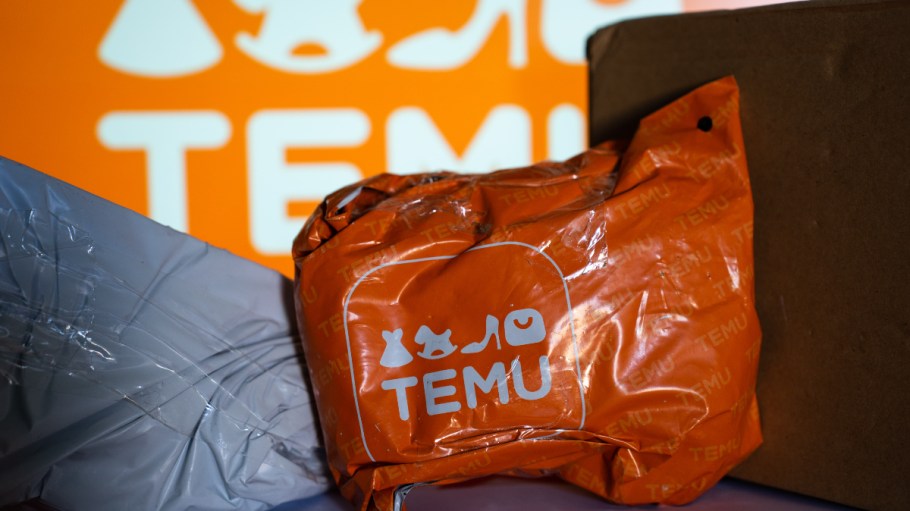
Temu has stopped sending one-off, direct-from-China packages to consumers in the United States.
The company has long spent time setting up U.S. logistics infrastructure and working to onboard what it calls “U.S. sellers”—and now it’s leveraging both against a trying global trade backdrop.
“All sales in the U.S. are now handled by locally based sellers, with orders fulfilled from within the country,” a Temu spokesperson told Sourcing Journal via email. “Temu has been actively recruiting U.S. sellers to join the platform. The move is designed to help local merchants reach more customers and grow their businesses.”
Related Stories
Notably, Temu’s decision does not mean that it will only work with U.S.-based merchants to serve U.S. consumers. While it has been looking to onboard U.S. sellers for more than a year, many of the sellers with U.S. inventory are based in China and have been shipping products into the U.S. en masse to provide faster shipping—because items were stored domestically, they could be fulfilled quicker than shipments inbound from China.
Until the beginning of this month, consumers had the option to purchase items from marketplace sellers storing inventory in China or in warehouses in the U.S.
But President Donald Trump’s tariff and trade strategies have introduced a new reality, which gives local warehousing a different advantage: consumers don’t have to pay duties on packages shipped domestically.
On May 2, Trump collapsed the de minimis provision on packages shipped into the U.S. from Hong Kong and China, subjecting the low-value parcels to import duties or a flat tax, depending on whether the parcels were shipped privately or via international post. Temu used that exemption to import goods en masse to U.S. consumers.
The marketplace’s latest move means that, rather than the consumer paying the import duty on direct-from-China parcels, sellers on Temu’s marketplace will be responsible for paying duties on imported inventory, which is then stored in the U.S. and shipped to the consumer duty free.
Temu announced last month that it would increase the base cost of items on April 25 to account for incoming tariffs. But last week, consumers started to see an “import charges” line item on products coming from China—and, according to internet chatter, they weren’t happy about that additional cost.
Juozas Kaziukėnas, an e-commerce expert who has long tracked Temu’s movement and model, said that last week’s strategy likely tanked consumers’ interest in Temu.
“Temu first raised prices, then added an ‘import charge’ which, in total, raised prices on direct-from-China goods by as much as two to three times. I think this caused a massive hit to transaction volume,” Kaziukėnas said.
By suspending direct-from-China shipments, Temu has cut U.S. consumers’ access to a considerable number of sellers. Kaziukėnas said that U.S. consumers are now “left with a smaller catalog, but one without a shocking price increase.” Prices, he noted, could change once sellers run out of inventory imported prior to Trump’s 145 percent tariffs on Chinese goods.
The local-to-local model Temu has instituted in the U.S. has been in the works for at least a year—and it has started inking logistics deals to expand local delivery in Europe, the Middle East and Africa. But Kaziukėnas is skeptical that Temu’s most favorable sellers have started shipping goods to the U.S. for domestic fulfillment, which could impact consumers’ interest in the platform.
“[This decision] leaves Temu without shocking ‘import charge’ fees at checkout but with most of its best sellers gone. No surprise it’s been weeks since Temu turned off ads to drive new users—Temu today is worse Temu,” he said. “Temu has been preparing for this for over a year by growing domestic stored inventory, but most of its best sellers were not locally stored.”