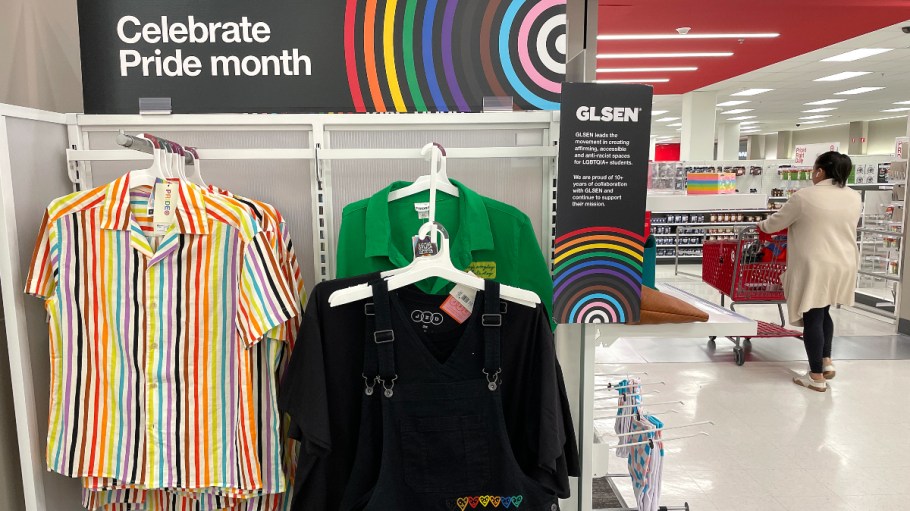
A far-right legal group founded by a former Trump advisor filed a shareholder lawsuit against Target Corp. over its Pride collection Tuesday.
The complaint, filed in federal court in Florida on behalf of shareholder Brian Craig, alleged the retailer made “misleading representations” about its environmental, social and governance (ESG) and diversity, equity and inclusion (DEI) policies—namely that it did not account for the risk of an anti-LGBTQ backlash to its Pride collection.
Related Stories
America First Legal (AFL) filed the lawsuit with co-counsels Boyden Gray PLLC and Lawson Huck Gonzalez PLLC. A self-described “long-awaited answer to the ACLU,” AFL is led by Stephen Miller, a former senior advisor to then-president Donald Trump, with Gene Hamilton, a former counselor to the attorney general during the Trump administration, serving as the group’s general counsel. The organization, which focuses on a slew of conservative causes, regularly targets LGBTQ rights, often relying on inaccurate, inflammatory language, including characterizing books about trans people as “vulgar gender-extremist books” and characterizing gender-affirming care endorsed by the medical establishment as “irreversible chemical castration and genital mutilation.”
The lawsuit echoed this sentiment, contending that “no rational board of directors or management of a retailer with a core customer base of working families” would have approved Target’s 2023 Pride campaign. The allegedly non-family friendly products AFL cited includes kids’ clothing with rainbows, T-shirts emblazoned with the statement “Trans people will always exist!”—one of several items Target ended up pulling—and swimsuits designed for trans women who have not had gender-affirming surgery.
AFL also echoed the Satanic Panic around designer Erik Carnell’s Abprallen label, which produced three items for Target, referring to it repeatedly as a “Satanist-inspired” brand. The erroneous conflation of Abprallen’s independent work—which does in some cases feature occult imagery—and its Target products led many conservative pundits to inaccurately claim the store was selling Satanic Pride merch.
“I am, believe it or not, not a Satanist,” Carnell wrote on Abprallen’s Instagram story in May. “Satan isn’t real, and because he isn’t real I can mould and shape him to fit my art, I can use him as a metaphor for the very few items I carry depicting him.”
Though Target ended up pulling Abprallen’s Pride merch, it does continue to sell apparel featuring Satanic imagery via its “Stranger Things” merchandise line, including a children’s T-shirt with a demon head and the words “Hellfire Club.” The shirt is a reference to the hit TV show’s fourth season, which saw a Dungeons and Dragons club—nicknamed the Hellfire Club—become the target of fearmongering and violence in the series. The T-shirt is displayed prominently in Target’s “Stranger Things” shop and has not yet inspired any boycotts.
In addition to this year’s Pride collection, AFL took aim at Target’s broader ESG and DEI initiatives, asserting that it “engaged in the odious and illegal practice of race-based hiring” by aiming to increase representation of Black employees. It also pointed to the company’s goal of ensuring 100 percent of suppliers had policies and programs to advance gender equity.
The complaint erroneously claimed Target set a goal for a “majority of certain collections” to be made by LGBTQIA+ creators and brands. It cited two pages in the company’s 2022 ESG report, neither of which mentions such a goal. In one case, Target touts how 59 percent of its Pride assortment was designed with and by LGBTQIA+ creators and brands. In the other instance, it asserts that at least 51 percent of its suppliers are owned, controlled and operated by women, BIPOC, LGBTQIA+, veterans or people with disabilities.
AFL also took Target to task for speaking against North Carolina’s 2016 bathroom bill. The legislation, which required trans people in government and public buildings to use the bathroom labeled with the gender that doesn’t match how they identify, was repealed a year after it passed amid a corporate backlash that cost the state $3.76 billion, according to an Associated Press analysis at the time. Target’s public stance did prompt conservative criticism, however. According to Insider, sales fell nearly 6 percent in the following three quarters compared with the prior year.
Since 2016, conservative animus toward the queer community—particularly transgender people—has grown, with state legislatures introducing a record number of anti-LGBTQ+ bills this year. Whereas North Carolina’s bathroom bill prompted wide outrage and boycotts, a similar policy in Florida quietly went into effect last month.
This elevated animosity toward the queer community really began hurting corporations this year, most famously Bud Light, which partnered with a trans woman. The collaboration inspired a widespread conservative backlash, and resulted in a nearly 30 percent drop in sales at the beer brand.
AFL’s lawsuit argued that Target should have been “on notice” to the risk of customer boycotts given its experience in 2016 and Bud Light’s experience a month earlier. The complaint notes a long list of companies and brands to face similar Pride backlashes this year, including Kohl’s, The North Face and Walmart—AFL points out later that Walmart did not see the stock declines the Minnesota-based retailer experienced.
“Essentially a handful of shareholders were upset over the Pride merchandise itself, and the fact that there was a backlash over it gave them the opportunity to file this lawsuit with the help of America First,” Derek Jacques, principal owner of The Mitten Law Firm, told Sourcing Journal. “While the impetus for the lawsuit might seem frivolous, it is not without merit. Behavior seen as reckless could be interpreted as misleading, which essentially could be the way a court or jury sees it.”
Given Target has released Pride collections with little trouble in the past, “the outcome of releasing the line this year could be viewed as an unforeseen circumstance as opposed to a reckless decision,” Jacques said. On the other hand, “it could be seen as equally true” that the 2023 political climate “was warning enough” of the backlash Target experienced.
“If the lawsuit is successful, other risk-averse retailers and brands may shy away from pride-related merchandise,” Jacques added. “This would essentially amount to a shadow banning of LGBTQAI+ friendly products in major stores and a significant blow to the gains that have been made toward acceptance and equality.”