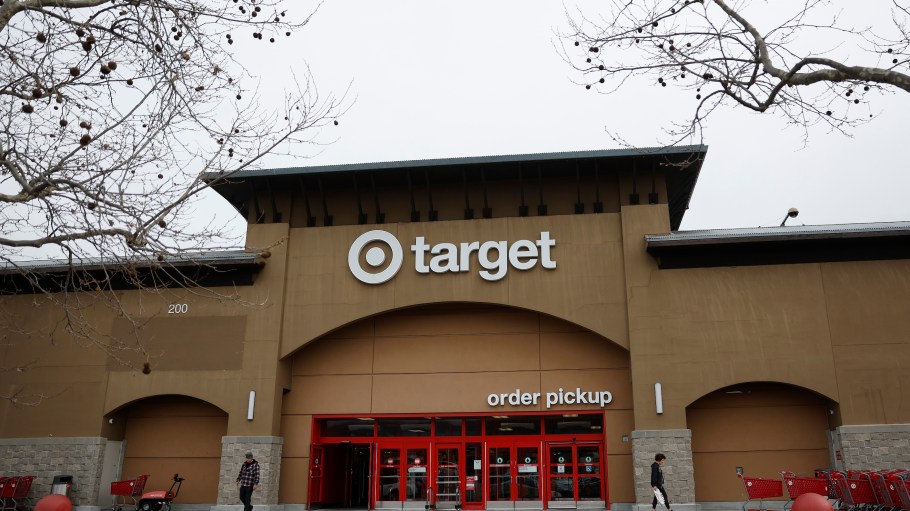
Target CEO Brian Cornell is resigning as the mass merchant continues to be weighed down by declining sales and dampened consumer perception, with the company replacing him with chief operating officer Michael Fiddelke effective Feb. 1, 2026.
The retail giant has seen comparable sales decline six out of the last nine quarters, with store foot traffic declining in lockstep.
Fueling the fire against Cornell, many have attributed recent traffic dips in 2025 to the Minneapolis-based retailer’s backtracking on its DEI initiatives earlier this year, which resulted in boycotts and led to accusations that the company was capitulating to President Donald Trump’s targeting of DEI programs in the public and private sectors.
Related Stories
Wall Street did not seem to like the news, with Target’s stock falling more than 7 percent in Wednesday trading. According to a June survey of 51 investors by equity research firm Mizuho Securities, 96 percent polled favored an external hire for Target’s next CEO.
Sales trends were strongest in the company’s digital channel, where comparable sales grew 4.3 percent, with Cornell highlighting the “notable” strength in same-day delivery powered by Target Circle three sixty, which grew more than 25 percent in the quarter.
Although Cornell’s tenure has been criticized heavily in the years after Target’s pandemic boom, the company scaled its supply chain significantly since his start in 2014, particularly in supporting the growing customer demand for same-day delivery and curbside pickup.
In late 2017, the company acquired same-day delivery service Shipt for $550 million in cash, which enabled gig workers to serve as the backbone for the company’s burgeoning online delivery network.
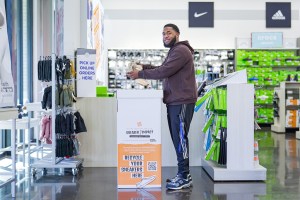
Under Cornell, Target’s stores have been leveraged to cut fulfillment costs for the mass merchant and bolster online sales, with the retailer fulfilling more than 96 percent of total sales in each of the last three years.
During the Wednesday earnings call, Fiddelke said that the company is currently testing individual stores in the Chicago area to further understand how each location is best suited to fulfill online orders.
“We’ve made some pivots and said some stores are built to fulfill—they’ve got a big backroom, and we can put a lot of pack stations in the back. They’ve got a manageable level of in store business, and they can support that digital demand in a market super well,” Fiddelke said. “For some other stores on the digital fulfillment side, we might say, ‘Shut your pack station down and sit this one out.’ That allows you to focus exclusively on the Drive Up [curbside pickup] business, and importantly, the in-store experience.”
Fiddelke said the retailer expects to use the Chicago learnings and apply them to 30 to 40 more markets by the end of 2025.
Cornell didn’t just see stores as the way to fulfill online purchases. Since early 2023, Target has also invested $100 million in expanding its network of downstream sortation centers to 15 locations, which are positioned to help with last-mile delivery.
These facilities have enabled the retailer to increase the number of packages delivered per route, as more Shipt drivers were able to use larger vehicles like high-capacity vans to pick up online orders.
Delivery speeds have continued to accelerate in an era where every top retailer feels the need to compete with Amazon’s nationwide logistics network. As of May, Target’s own click-to-deliver speed was nearly 20 percent faster than the year prior, which doubles the 11 percent faster delivery speeds experienced throughout 2024.
As the company looks to keep up the delivery momentum under Fiddelke as the incoming CEO, it is now stocking its shelves with more expensive merchandise within its “frequency categories,” which include essentials and food and beverage.
While total inventories at the end of the second quarter increased 2.2 percent to $12.8 billion, units saw a “low-single-digit decline” versus the year prior, reflecting higher product costs than a year ago driven by tariffs and other pressures.
“Obviously, the straight cost impact of tariffs will be with us as long as the tariffs are with us. To build on our inventory position, because I do think that’s an important point, we set out a goal to make sure we liked our inventory position as we exited Q2, and we achieved that goal,” said Fiddelke. “That growth is all coming from investment in our frequency categories. And you’ve heard me say consistently, getting more in-stock is a key goal of ours. Some of that inventory investment is in direct support of that goal.”
For the second quarter, Target’s net sales were $25.2 billion, 0.9 percent lower than the prior-year quarter, on net income of $935 million, down 21.5 percent from $1.2 billion generated a year ago.
When Fiddelke helms the CEO role next February, Cornell will transition to executive chair of the board of directors.