After months of uncertainty, the ambiguity has finally given way to relief.
People gathered at Galle Face in Colombo late last month to cheer the inauguration of the newly elected Sri Lanka president Anura Kumara Dissanayake, and business leaders were rapidly taking stock.
After months of stalling on major decisions, the general opinion among factory owners and apparel manufacturers in Colombo was that the elections went off “much smoother than expected,” and a note of cautious optimism has been creeping in despite lingering concerns.
Related Stories
Given the precarious economic conditions the island nation has suffered over the last two years—bankruptcy, an uprising that removed then president Gotabaya Rajapaksa from office in July 2022, the harsh realities of the International Monetary Fund’s conditions in exchange for a loan, the huge foreign debt, the steep decline in the value of the Sri Lanka rupee—the concerns are not misplaced.
There were more than 40 candidates for the position, including Ranil Wickremesinghe who has seen the country through the last two years of transition, and opposition leader Sajith Premadasa. “We have never seen a transition that has gone so smoothly,” Yohan Lawrence, secretary general, Joint Apparel Association Forum (JAAF) told Sourcing Journal. “There was concern there would be over zealous supporters, but It’s been one of the most positive elections—with an incredibly smooth transition of power,” he said. JAAF was quick to issue a statement in support of the new president. The organization noted that the new president’s “commitment to transparency, good governance, and sustainable economic development aligns with the Joint Apparel Association Forum’s (JAAF) goals of promoting ethical practices and fostering long-term growth in the apparel industry.”
The new President’s vision for Sri Lanka is centered around creating a fair, just, and inclusive society, with a strong focus on eradicating corruption and uplifting the lives of ordinary citizens. We look forward to working closely with the new President and the government to ensure the continued success of the apparel sector,” Lawrence said. The role of the apparel industry has been crucial in these hard years when foreign reserves have all but disappeared. Apparel exports account for more than 40 percent of the country’s total exports, and provide jobs to more than a million people. Many of the manufacturers are also now being run by second or third generation—and the president’s Janatha Vimukthi Peramuna (JVP) has the support of younger voters.
The hope that his coalition of Leftist groups, will make good on its promise to ease the economic burden and iron out corruption. Among the expectations are that the promises to bring down tax on some food items and differentiate between the IMF led focus on external and internal debt. However, the stability that the new president is promising may be a little premature, analysts told Sourcing Journal. Shortly after being sworn in, the president dissolved the parliament. He announced general elections for the country on November 14.
At this time his party only holds three seats out of 225 in parliament and it is important to have a majority in parliament to help decision making and support for the policies he hopes to implement. In his first address to the nation, president Dissanayake was pragmatic, and counseled patience, noting that change that was being sought but it will take time. He emphasized the importance of achieving stability and confidence in the current economy. Putting to ease the fear that the loan from the International Monetary Fund that is helping the country through the crisis may be reneged upon, he said: “We plan to begin negotiations with the International Monetary Fund immediately and proceed with activities related to the extended credit facility. Additionally, to advance our debt restructuring program, we are negotiating with relevant creditors to expedite the process and secure necessary debt relief. We are confident that we can gain the support of both the people of this country and the international community, and we believe that through this collective support, we can achieve success.”
The overwhelming concern—about corruption—was not sidestepped either. “We are launching a permanent program to build a unified Sri Lankan nation that respects diversity, fully ending the era of division based on race, religion, class, and caste. We have already taken significant steps to appoint efficient and honest officials to oversee these initiatives,” he said.
Yet, many factory owners are conscious of the fact that there are months of further negotiations ahead. Not only for the next tranche of the money expected from the IMF, but also in the process of negotiating reforms so that the pressures on the citizens are less severe. “We’re not quite out of the woods yet,” a manufacturer said, asking not to be named, “since the general election is important and it’s hard to say exactly which way it will go. A lot depends on the next couple of months.”
However, it is clear that the country has been working its way out of the deep bind of the last several years. The World Bank predicted GDP growth of 2.2 percent for Sri Lanka in 2024, a big step up after two years of negative growth. The apparel sector, which has seen factories shutting down and others working at far lower than capacity in the last year have been seeing a return of business. “Many of the factories have been working at capacity in the last few months,” a manufacturer said. According to figures from JAAF, the apparel sector crossed the $3 billion mark in cumulative export earnings for the year by August, with apparel export revenue up by 22 percent year on year in August.
This included 22.9 percent year-on-year growth of exports to the US, 18.84 percent to the European Union, 17.4 percent growth to the United Kingdom, and other markets by 30.91 percent for the month. The focus on sustainability has also been continuing, manufacturers told Sourcing Journal. Earlier this week, Hirdaramani Apparel became the first organization in the country to have its Net-Zero Science Based Targets officially approved by the Science Based Targets initiative (SBTi). As part of this commitment, Hirdaramani has set ambitious near-term and net-zero targets applicable to countries within its global footprint, which include Bangladesh, Sri Lanka, and Vietnam. Labor leaders are also hoping that things will change for workers at the factories.
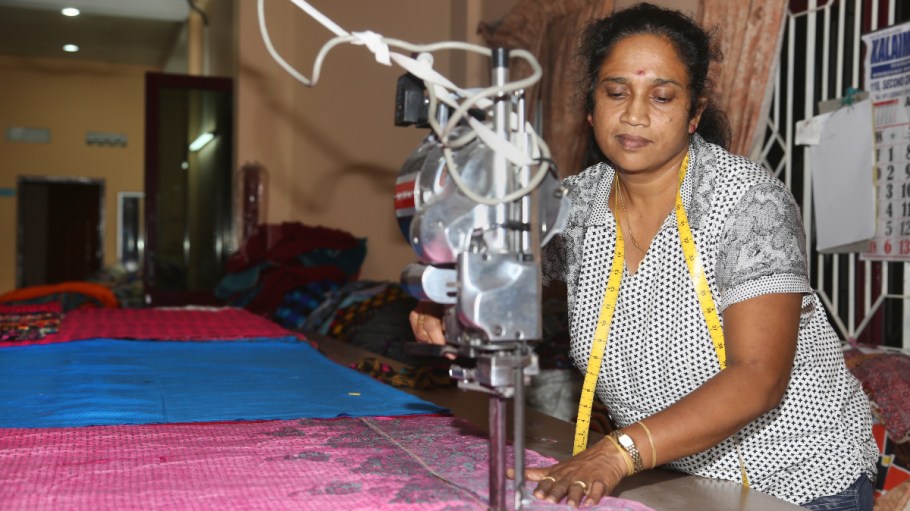
President Dissanayake has pledged to increase Sri Lanka’s income tax-free threshold, as well. Labor leaders said that they expect more of a reprieve for workers—many of whom have gone under the poverty level as the Sri Lankan rupee lost value against the dollar, and inflation swept the nation. The president’s plan to exempt food items from the 18 percent value-added tax would help, they said. More than two thirds of apparel workers are women, , and several said that they drew inspiration from the fact that the president immediately appointed Dr. Harini Amarasuriya as prime minister. As the third female prime minister of the country, she represents a role model for women, they said.
Within a week of coming into office, the president has begun to put into practice some of his campaign promises in which he spoke about the outrageous burden on the public from taxes and living expenses. Price cuts in fuel prices were announced on Sunday and starting midnight on Monday bus fares were reduced by 4.24 percent.
Manufacturers in the apparel industry were pleased with the fact that container charges have been decreased by 4 percent as well, in response to the reduction of diesel prices.
Officials of the International Monetary Fund (IMF) met with the president on October 2 to discuss the are crucial lending from IMF.