SAP keeps going deeper on what’s shaping up to be the hottest AI trend of this year: agentic.
Last year, the technology giant announced it had created Joule, an AI agent trained to handle particular tasks inside the SAP ecosystem. But this week, at SAP Sapphire, it upgraded Joule’s promise further, by announcing 40 individual agents, each designed to handle specific functions. The agents, most of which are set to be available by the end of 2025, can perform a variety of tasks; one handles sourcing and procurement, while another creates and manages quotes and still another orchestrates stock and handles in-store inventory details.
Related Stories
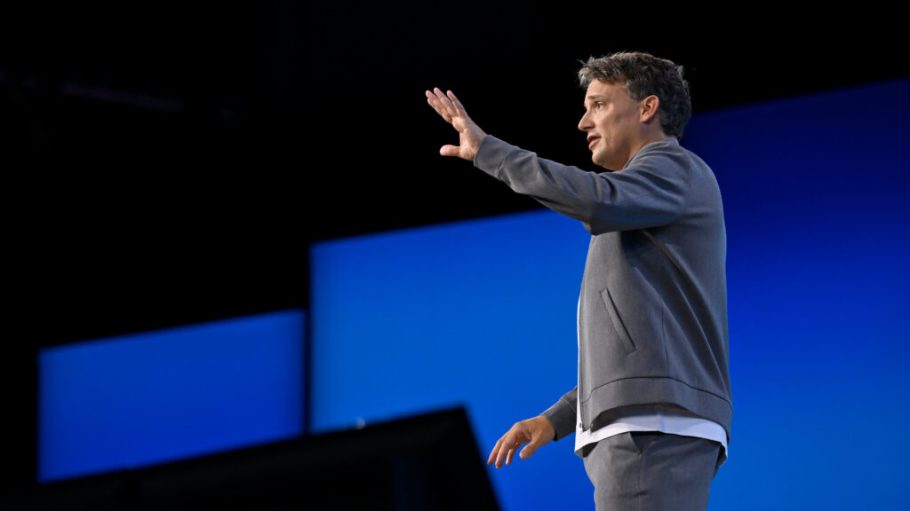
Christian Klein, the company’s CEO said, “At SAP, our goal is to make every end user 30 percent more productive.”
Though agentic’s capabilities are shaping up to make a large impact on the retail, fashion and apparel industries, many companies have struggled to adopt sweeping AI systems, instead opting for one-off, test-and-learn style implementations.
That’s particularly true on the supply chain front, SAP experts told Sourcing Journal.
Etosha Thurman, chief marketing officer, finance and spend management at SAP, said procurement leaders have shared targeted strategies, rather than looking at the broader landscape.
“There’s AI in play for one thing this year, or maybe two, but it is much more conservative than I imagined,” she said.
Balaji Balasubramanian, president, chief product officer for SAP customer experience and consumer industries, said that sentiment seems to creep into the backend operations of retail, as well—much of the industry’s obsession with AI has been fixated on personalization, rather than on demand forecasting, inventory management and other functions, despite the fact that a variety of providers offer such solutions.
“It’s been, historically, very heavy on the marketing personalization part, and less on the interconnectivity and tying into all the customer operations,” Balasubramanian said. “It’s changing; it needs to change, otherwise [retailers] will end up overpromising and under delivering.”
Balasubramanian said retailers’ tepid approaches to AI—despite a lot of talk—is likely fueled by three main concerns: they don’t know what to expect as technology proliferates rapidly; they worry about the security of proprietary data in non-proprietary systems and they feel that many systems operate in a black box, failing to explain the “why” behind their recommendations and decisions.
Those apprehensions have led to a more siloed approach, which compounds on an existing problem for retailers: siloed data. SAP contends that its “everything, everywhere” approach to agentic—bolstered by this week’s announcement that it would partner with Perplexity to pull in unstructured data—can help companies break out of that cage.
The idea is that by removing excessive applications and unifying customers’ data, the company can unlock new possibilities. SAP executives noted that prospect is particularly important in the midst of global trade uncertainty.
Dominik Metzger, president, chief supply chain officer of SAP supply chain management, said the power of generative and agentic AI is that they can handle tasks like manifest reconciliation for logistics, route optimization and more, which could free operators up to focus on more important decisions, like whether to send shipments by air or container ship to meet deadlines on tariffs.
Many of those processes aren’t happening autonomously today. SAP isn’t asking its users to relinquish all control over their systems; Joule shows end users the various steps they can take, then lets them decide what best fits the needs of the business. Once users get used to that approach, Metzger said, he expects them to more readily rely on the technology to make operations more efficient. Still, he argued, it’s important that the system be able to show the work that went into the decision it made.
“The next step that we take is…to bring in that element of explainability—so let the algorithm automate a decision, but allow you, with the help of generative AI, to understand the black box much better,” he said.
Balasubramanian said he believes that approach, paired with consumer demands and a healthy dose of competition, are slated to change the way that brands and retailers adopt technology in the next six to 12 months. He said that’s particularly true when considering the propensity for disjointed systems to have an adverse impact on customers—for instance, if a personalization tool pushes a notification to a consumer advertising a product, just for it to be out of stock where they want to purchase it. Connecting front-end and back-end systems can help avoid scenarios like those.
Thurman said unifying the data behind retailers’ systems excites her because it can analyze data sets that have never been taken as a unit.
“We’re harmonizing data from procurement and HR and customer experience, the sales and marketing function, ERP and supply chain on the same data fabric,” she said. “What patterns are we going to find? That possibility just blows my mind.”
While SAP is working to help clients integrate end-to-end business systems powered by AI, it also has an eye toward the not-so-immediate future. In addition to the various agentic and systematic AI upgrades it’s focusing on for shorter-term success, the technology provider announced it has minted a partnership with Nvidia and Neura Robotics in an attempt to equip humanoid robots with business knowledge.
Nvidia announced earlier this year that it would leverage digital twin technology to train robots in its Omniverse, bypassing the costs and hassle associated with training robots in a physical warehouse or store. Now, SAP is joining in on the fun; it will work with Nvidia to give Neura’s humanoids a baseline for business knowledge, which will allow them to make decisions based on a variety of data and knowledge points, rather than simply following direct programming orders.
While the technology is still likely a ways away from being fully realized—let alone integrated—experts noted that it remains a space to watch as retailers implement digital systems for success.
Subramanian imagines that humanoids could, several years from now, be deployed not just in warehouses and distribution centers, but also in stores.
“The back of the store always has a mini warehouse to some extent. Today, those are all…human-managed operations,” he said. “You could use [humanoids] for everything from cross-talking, to pulling inventory, to finding the right rack or bin and putting [items] in there, understanding it and updating the system.”