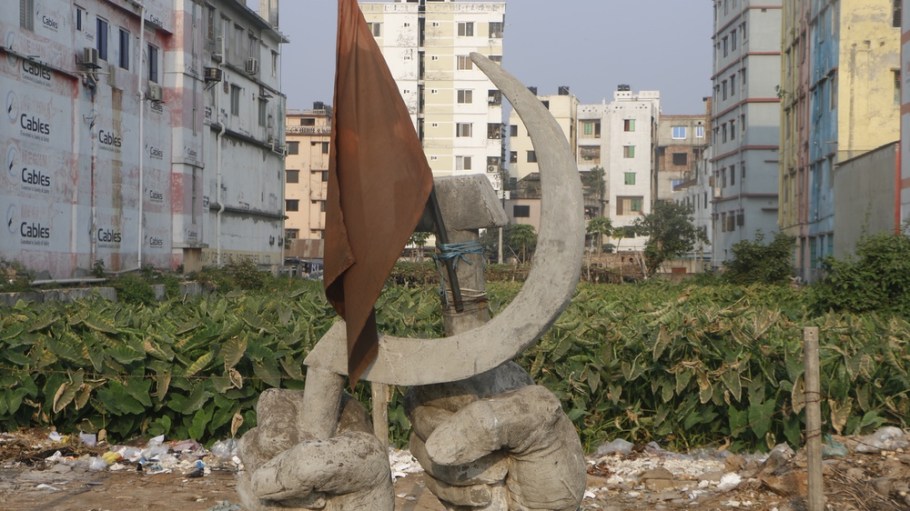
It was on the morning of April 24, 2013, when the multi-factory building known as Rana Plaza imploded on the outskirts of Dhaka in Bangladesh. The collapse, which killed more than 1,130 garment workers and injured and maimed thousands more, took place in mere minutes, but its impact has continued to reverberate over the past 12 years through the industry-wide reckoning that became the Accord for Fire and Building Safety in Bangladesh, the binding agreement between brands and trade unions that later evolved into the International Accord on Health and Safety in the Textile and Garment Industry, now extended into Pakistan.
Related Stories
But labor organizations that were witness signatories to the Accord, including the Clean Clothes Campaign, Maquila Solidarity Network and Worker Rights Consortium, warned in February that conditions could “backslide into disaster.” The vast safety improvements that the Accord has driven in the ensuing years, they said, are “under threat” from factory owner intervention through the the RMG Sustainability Council, or RSC, which has managed the Accord’s inspection and monitoring duties since 2020 under a tripartite system that allows seats for the Bangladesh Garment Manufacturers and Exporters Association. It’s this “partial control,” the organization said, that was weakening the RSC’s effectiveness.
While the Accord Secretariat and the RSC declined to comment at the time, they would later write to their nearly 220 signatory brands—including H&M Group and Zara owner Inditex—to reassure them that the issues raised by the memorandum “have been a matter of attention…for quite some time.” The letter, which was not meant for public distribution but was forwarded to Sourcing Journal by the RSC, said that the credibility and effectiveness of the Accord’s Bangladesh program can only be implemented properly without undue interference by any party—whether brand, union or industry—to prevent RSC staffers from conducting independent assessments and actively resolving complaints.
Forged in the immediate aftermath of the Rana Plaza collapse, the Accord has been held up as an exemplar of a code of conduct that doesn’t rely on voluntary declarations and legal non-liability. Despite resistance from the government and factory owners—including legal opposition that led the Accord Secretariat to cede its Dhaka-based office and staff to the RSC and move to the Netherlands—the agreement had over the course of a decade facilitated some 56,000 fire, electrical, and building safety inspections and resolved over 140,000 safety issues at more than 2,400 garment factories. Among the keys to its success, labor groups said, is the Accord’s ability to blacklist factories that refuse to remediate safety violations and prevent them from selling goods to signatory brands.
The Clean Clothes Campaign, Maquila Solidarity Network and Worker Rights Consortium said, however, that the RSC has “consistently failed” to enforce the withdrawal of export permissions known as utilization declarations from standards-violating factories, allowing them to continue to ship goods globally, including, allegedly, to Accord brands.
“If a factory is made ineligible under the Accord, it’s failed every step of the escalation to make a remedy and it’s so dangerous for workers that no Accord brands are allowed to buy there anymore,” Ineke Zeldenrust, international coordinator at the Clean Clothes Campaign, previously told Sourcing Journal. “They are death traps. That’s the only conclusion you can draw.”
She revealed later that the Clean Clothes Campaign’s research found that non-Accord brands, such as Edinburgh Woollen Mill, Ardene and New Yorker, which have been contacted for comment, were also sourcing from these unsafe factories. Zeldenrust said that it was of “utmost importance” that they sign the Accord immediately and “start caring about the safety of their workers.”
The Accord Secretariat and the RSC, in their joint statement, said that the escalation protocol can only be “adequately implemented” if “all parties stick to their commitments.”
“Despite a letter provided by industry representatives affirming suspension of UDs, factories made ineligible are sometimes found still exporting,” they said. “This is cause for concern and will require the RSC and International Accord to review the effectiveness of the UD suspension measures to effectively prevent brands from doing business with ineligible factories.”
But the organizations defended the decreasing number of terminations—which the labor groups claimed is the result of “weakened” escalation processes—by saying this was due to the additional resources the RSC has invested into “intensifying factories’ capacities to remediate, thereby reducing the number of escalations” across the protocol’s three stages.
“Key measures to strengthen the remediation process have included: T&CVI capacity building workshops for factories and their providers, inclusion of as-built review before the pre-T&CVI stage, clearer communication on remediation requirements at the close of inspections and the introduction of stage 1 meetings to tackle non-compliances at an earlier stage,” they said, using an acronym for testing and commissioning verification inspections. “Moreover, the RSC has intensified its attention on factories in stage 2 with expired escalation timelines but remediation progress rates above 90 percent. This allows factories demonstrating overall willingness and cooperation to avoid escalation to stage 3 and provides for close supervision by the independent RSC chief safety officer.”
No explanation, however, was given for the much-delayed boiler safety program, which has left five in six Accord-covered factories without “meaningful” inspections of the explosion-prone apparatuses. The RSC said it has worked with the Accord Secretariat to develop unspecified “key performance indicators” for the program, which it’s “on track” to meet. They also said in order for the boiler program to be implemented across all Accord-covered factories, it’s important that all Accord brands “remain committed to the Bangladesh Safety Agreement and that the necessary resources remain in place to expedite this program.”
This could prove another problem: Though signatory brands are supposed to support their suppliers’ ability to make repairs or upgrades, such as through loans or increased orders, the money ultimately comes from the suppliers themselves. With tariff turmoil in the United States that could place as much as a 53 percent levy on Bangladeshi imports, increasing the squeeze for manufacturers who expect to have to share the duties with their buyers, there’s little bandwidth for extra expenses.
Even at the proposed 37 percent tariff rate, the BGMEA expects an average “duty burden” of $250 million per month unless it’s withdrawn. This could see roughly one-fourth of Bangladesh’s 4,000 garment factories struggle to survive, it said.
As it stands, most legal cases tied to the Rana Plaza collapse remain unresolved, with many survivors and relatives of the deceased still waiting for restitution, the Bangladesh Legal Aid and Services Trust said Tuesday. The legal organization also called the 250,000 Bangladeshi taka ($2,057) that the Bangladesh Labour Act provides to the families of deceased workers “neither reasonable nor sufficient.” It said that the law must be amended to ensure appropriate compensation for workers who are injured or killed in workplace accidents, with an eye toward future earnings, estimated medical expenses, dependents’ costs and post-accident psychological trauma.
While Zeldenhurst said it appears that many of the issues the Clean Clothes Campaign, Maquila Solidarity Network and Worker Rights Consortium raised were “grounded and are being addressed,” the lack of mention of a change in governance structure remained concerning.
“Our memo has amply shown that the BGMEA, whose leadership was closely intertwined with the previous government, has had an adverse effect on the effectiveness of the RSC in the past five years and this is why we remain concerned about the division of seats in its governance where employers, brands and unions all take up one third, instead of a 50-50 split between business and labor,” she said. “This remains unaddressed.”
Both the Accord Secretariat and the RSC said, however, that “meaningful industry involvement” in the program is “essential for the success of the program and its long-term sustainability,” especially if the RSC is to become a sector-wide regulatory body.
“It is recognized that effective governance of the RSC is not without its challenges and requires good faith participation of all,” they added. “The Accord signatories fully support the RSC management to address and push back any unacceptable influence on its processes. The governance issues pertaining at the RSC have and will be on the agenda of the Accord Steering Committee.”