Having proper certification in the fashion and home design industries has become impossible to ignore.
With the increasing presence of regulations requiring greater transparency and protection of the whole supply chain, reliable models for production and due diligence are critical. No singular, industry-wide certification standard has emerged, but many have become commonplace in helping businesses and consumers make more thoughtful purchasing decisions, helping to bring visibility to both the social wellbeing of workers and the environmental impact on the creation of goods. Thus, brands and retailers are increasingly eager to be “certified” (or have their products “certified”), proving to consumers (and governmental agencies) that the items on their shelves are ethical and sustainable and to B2B partners that they have mitigated risks and done their due diligence.
Related Stories
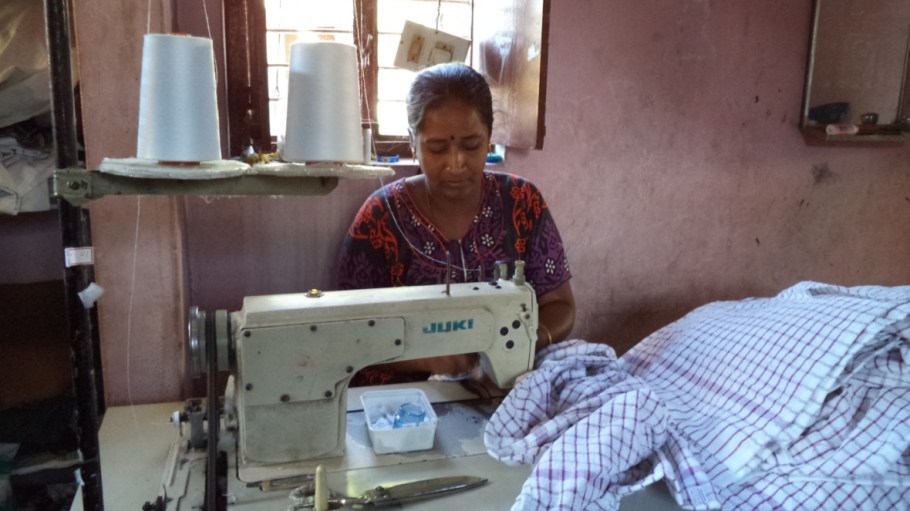
Many certifications and due diligence approaches fall short of reliably or effectively evaluating modern supply chains, failing to offer the same protections for workers operating outside of the central factory, in homes or informal workshops. This type of production—which ranges from skilled artisanal labor to tasks like sewing pom-poms onto winter hats, stringing bead jewelry or sorting ocean-bound plastics so they can be recycled into packaging or products—is often performed by women. Some estimates suggest that anywhere between 40 to 70 percent of fashion production alone is subcontracted, in part, to home-based workers. Additionally,according to Research & Markets the value of the sector was $752.2 billion in 2022, and is projected to be worth as much as $1.2 Trillion by 2028.
Nest, a nonprofit that works at the intersection of artisan production and brand sourcing, understands the limitations of existing factory certifications. With this in mind we developed and launched the Ethical Handcraft Social Compliance and Certification Program, the first independent assessment and certification program to improve transparency and ensure the wellbeing of workers operating outside of regulated factories.
Building this program and the accompanying consumer-facing Nest Seal of Ethical Handcraft was no small task: it took two years of industry alignment with major corporations, as well as collaboration with workers’ rights organizations, and other standard-setting bodies to ensure our model was globally applicable and provided meaningful transparency and accountability mechanisms to enact systemic change. What resulted was an open-source Standard (a regulatory framework of 100+ requirements) for evaluating home-based labor.
A corresponding on-site program was also developed, that assesses current social compliance practices and coaches business leaders toward sustainable improvement to ensure artisan businesses or factories with artisanal or home-based labor have the tools and knowledge to integrate these new practices. These Standards have been adopted by many global brands and companies often overturning decades old “no homework” policies that made work impossible for women where gender discrimination, familial responsibilities or a rural location made factory work impossible.
Through this program, handcraft businesses are certified against the Nest Standards, ensuring that artisans and handworkers within their supply chains have safe and equitable work environments. When this is verified and meets a required level of compliance, the goods carry a consumer-facing Ethical Handcraft Seal which can now be found on products at Pottery Barn, Target, West Elm and Patagonia, among others.
Certification offers something to both brands and consumers. Consumers can trust that a third-party certifying organization has performed a rigorous examination of a business or supply chain and feel confident in their purchase. Brands can communicate the successful certification of their suppliers or vendors validation of their ethical commitments and values. This can also align brands and suppliers together in a like-minded community of production partners.
Per Fashion Revolution, consumers increasingly demand to see certifications. But, consumers and corporations alike may find it difficult to navigate the complex steps of a certification. Opaque processes and a multitude of self-assessments models make understanding the evaluation criteria behind any certification difficult to comprehend.
We must be careful that the complexity of existing systems does not cloud their purpose. During our development of the Ethical Handcraft Program, we learned many lessons that we believe are important to share to ensure the industry does not return to models that limit transparency or put workers at risk.
- Certification linked to self-assessments weakens compliance systems: Relying solely on self-assessments has been proven to be ineffective, especially when connected to sourcing or buying opportunities, since they are often completed with a fear of losing sales opportunities. Self-assessments without education about compliance expectations also lead to responses that are more prone to inaccuracy due to interpretation, language barriers, cultural norms, and more. Utilizing a third party to certify a supply chain or product ensures that the evaluation is fair, unbiased, and standardized and ensures worker voice is a part of the verification process.
- Systemic problems are perpetuated: When compliance information is self-disclosed or not gathered in its entirety, systemic issues often get further entrenched. For example, while the vast majority of artisan businesses believe they are paying fair wage, using time bound data collected as they progress through the program, Nest discovered that when piece rate wages are calculated using proper methodology, 79 percent of these businesses had wage gaps and were paying artisan workers below minimum wage.
- Duplication is not good for the industry: Companies creating their own standards or multiple organizations publishing different standards for the same setting deflate the value of standards for the entire sector, creating a race to the bottom. Duplication also causes fatigue which is magnified at the worker level, where many businesses do not have full compliance teams or resources to invest in various assessments or audits. Collaboration is key, and working together to scale effective models is essential.
- Education and rigor are critical: Social compliance is a relatively new concept rarely expected from informal supply chains. For this reason, reaching an appropriate level of due diligence simply requires education, time, and investment. Quick fixes or “easy” assessments do not serve or support the transfer of knowledge and the building of new systems and processes that can be sustainable and carried into the future.
As fast fashion and disposable goods have become the norm and corporations look for ways to maximize the bottom line, an alternative way of thinking and buying has emerged and the demand for handcrafted products has risen. Studies have shown that consumers are willing to pay more for handmade goods, both globally and in the United States This trend is accelerating rapidly, driven by younger consumers who prefer to purchase from transparent and ethical retailers. In fact, according to Nest’s The State of the Handworker Economy report, three in four consumers stated they would prefer to buy handmade products over machine-made goods.
While it is tempting to move quickly to respond to consumer trends, we must be careful not to cheapen the purpose or impact of our regulations and compliance processes. Handcraft, as well as other kinds of handwork and informal labor, are a fundamental source of employment for women around the world. Nest believes in the power of craft to advance gender equity and economic opportunity for women, which is why we have designed a comprehensive suite of programs, including the Ethical Handcraft Program, to support craft‐based enterprises. When artisan business leaders are given the information and tools they need to grow and sustain their businesses, the positive impacts ripple out into improved outcomes for their workers, their families, and their communities.