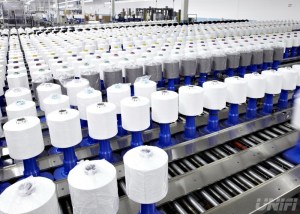
The demand environment in retail remains weak, with manufacturing inventories entrenched in a just-in-time mode.
Economists at Wells Fargo on Wednesday noted in a report that “manufacturers have been disciplined about not overproducing into a weakening demand environment…..The new playbook is to only take on inventory and ramp up production as needed.”
The economists also noted that demand in the manufacturing sector has “stagnated for much of the past two years.” They cited the ISM new orders index, which was below 50 for 16 consecutive months between September 2022 and December 2023. A level below 50 is a typical sign that new orders in the manufacturing sector were contracting. In addition, data for both industrial production and durable goods orders also were pointing to a contraction in the sector last year.
Related Stories
One key factoid is that inventories by stage of manufacturing show that the post-pandemic build has occurred in inventories of materials and supplies. That’s not a surprise, given that input manufacturers were caught flat-footed during the worst supply chain crisis in recent memory, the economists concluded.
The good news is that while input suppliers remain in just-in-case mode, that has likely helped goods manufacturers source inputs at a quicker pace. Evidence of that is the supplier deliveries index, which has been below 50 for 18 or the last 19 months, a sign that delivery times for orders have been getting shorter.
“The discipline of manufacturers coupled with a supply chain that has ample capacity to ramp up means that producers have placed themselves in a nimble position, with the ability to increase production as demand warrants and move it to customers at speed,” the economists concluded.
But the economists also noted that the upshot of any rebuilding that gains serious momentum could have a disruptive impact that spikes up GDP. They don’t foresee any dramatic inventory shift as manufacturing demands remain constrained, but said the “remarkably orderly pattern in inventories over the past year or so warrants an extra measure of vigilance” for a surprising abrupt change.
Change is something that has been dogging retail since 2020. The COVID-19 pandemic impacted the supply chain in more ways than one. And the lessons learned from too many shortages during the pandemic led to an overstocking of goods.
Consumers during the 2021 holiday shopping season were told to shop early to avoid getting caught empty-handed. Retailers amped up efforts to meet consumer demand, only to find themselves flat-footed with too much capacity or an over-supply of goods when customers—in the wake of rising inflation—shifted gears and changed their shopping patterns.
Amazon was the first to report a $3.8 billion loss in April 2022 when it posted first-quarter results. While inflation headlined its conference call, investors also learned that efforts to to ramp up fulfillment capabilities to meet consumer demand during and post-pandemic left it with excess fulfillment and transportation capacity that it now needed to grow into.
One month later, Walmart’s softer-than-expected first-quarter earnings were in part due to a sales slowdown in non-essential categories, such as apparel. Walmart was left with an inventory increase that was 32 percent higher than planned, which led to aggressive rollbacks in prices to stimulate sales. Inventory was so high, in part, so the discounter could avoid stock-outs due to shipping capacity constraints that had it aggressively buying in advance of consumer purchases.
Then came the unplanned shift in consumer buying habits. But this shift also came at a time when supply chain disruptions cause delayed receipts of goods—think holiday and winter merchandise—that arrived after the season was over when consumers were now focused on spring and early summer.
Target also found itself needing to right-size its inventory assortment, with the initial focus on its home mix. It said in June 2022 that it was taking markdowns, removing excess inventory and even cancelling orders. But by the time August rolled around as the two discounters posted second-quarter results, Walmart was in the process of cancelling billions of dollars in fourth-quarter orders to get back on track. And Target slashed $1.5 billion in upcoming “discretionary” receipts to try to fix its inventory problems.
Clearing out excess inventory was the key theme in 2022. And when retailers couldn’t clear out the goods fast enough, they were forced to cancel new orders because they had nowhere to store in-coming merchandise. Supply chain disruptions have since eased, and what remains unclear is the state of consumer spending.
The April Consumer Confidence Index fell for the third consecutive month in April, falling to 97 from a downwardly revised 103.1 in March. Both components of the Index also fell, with the Present Situation Index declining to 142.9 and the Expectations Index falling to 66.4. The latter reading often signals a recession is on the way when it is below 80. Because confidence has retreated further, manufacturing demand is like to stay within its current holding pattern.
Dana M. Peterson, The Conference Board’s chief economist, said elevated prices for food and gas dominated consumers’ concerns, along with politics and global conflicts as distant runners-up. Should those concerns ease, spending too could kick back up.