As events around the world marked World Refugee Day on Friday, the critical role refugees play in the $1.5 trillion global fashion industry hovered just below the surface.
Across Asia, there were gatherings, quiet reflections, and discussions among workers and labor rights activists. Commemorations unfolded, though unacknowledged by governments and factory owners who are legally barred from hiring refugees (but often do so anyway due to low wages and labor availability).
The 2025 World Refugee Day theme, “Solidarity with Refugees,” was observed in cities throughout the region. In Bangkok, one notable initiative, “A Stitch in Time,” curated by art therapist and exhibition organizer Gerda Liebmann, set an example of the possibilities to help while highlighting the stories of Vietnamese refugees through embroidery.
Related Stories
“It started as a project for a U.S. brand,” Liebmann told Sourcing Journal. “It was a unique way to make labels—using extraordinary embroidery. Refugees learned a skill, found new ways to express themselves, and discovered potential livelihoods.”
She emphasized it was not only therapeutic but also a financial lifeline for communities in limbo.
“Record numbers of men, women and children—over 122 million people worldwide—have been uprooted from their homes, but their ability to find safety and support is threatened as never before, said Filippo Grandi, United Nations High Commissioner for Refugees. A powerhouse in global garment production, Asia is also at the forefront of the refugee crisis.
Turkey remains the world’s largest refugee-hosting country, with more than 2.9 million Syrian refugees as of late 2024, according to the International Organization for Migration (IOM). These numbers have come down slightly in the past months due to voluntary returns and secondary movement.
Bangladesh had more than one million Rohingya refugees as of Dec. 31, 2024, according to a government-UNHCR fact sheet, with Cox’s Bazar continuing to house a majority of these.
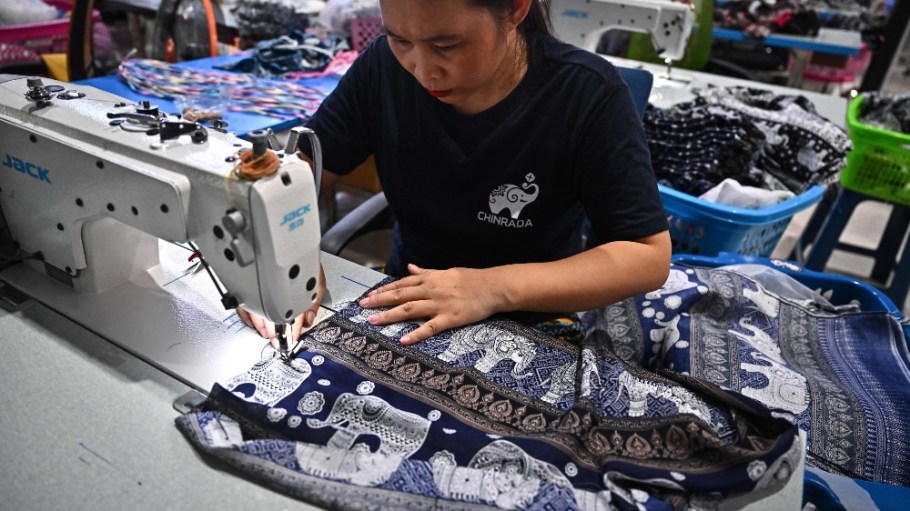
Meanwhile, Thailand has an estimated 82,400 Myanmar refugees in camps as of November 2024, according to UNHCR. The Mae Sot area where more than 450 garment factories are located and a key industrial zone near the border, is home to an estimated 210,000 Myanmar migrants working in factories, agriculture, and services. According to local estimates, 60,000–80,000 work in the garment sector. Nearby Phop Phra and Mae Ramat have also been seeing a growth of refugees.
While grassroots efforts like Liebmann’s project offer meaningful change on a small scale, global fashion brands have also been engaging.
Fast Retailing, parent company of Uniqlo, partnered with UNHCR to mark the day at the Osaka Expo, in Japan. Koji Yanai, group senior executive officer spoke about the importance of the engagement: “Fast Retailing has worked with UNHCR since 2006, starting with clothing donations for those displaced by conflict or disaster. We’ve since expanded to include education, vocational training, and employment in our stores. Most recently, we helped launch the Displacement Film Fund,” he said, adding that Uniqlo has donated 100,000 euros (approximately $116,000) to the fund since its founding in January 2025, combining storytelling with support for displaced filmmakers.
The event also marked the third anniversary of Uniqlo’s Peace for All charity T-shirt project in which more than 43 collaborators have helped sell 7.19 million shirts, generating 2.16 billion Japanese yen ($14.92 million) in donations as of April 2025.
Four new designs were released on June 20 by Koji Yakusho, Ichiro Suzuki, Kashiwa Sato, and Akamai Technologies. A public exhibition at the UN Pavilion in Osaka ran until June 22.
“The private sector must play a key role in addressing displacement, which has reached unprecedented levels worldwide,” Yanai observed, reflecting a sentiment being expressed keenly in speeches in the region.
However, many manufacturers across the region said that their hands were tied because the governments still prohibit refugees from working legally—something activists call a dehumanizing policy.
“It’s not about giving refugees special benefits. The right to work is the bare minimum they deserve,” Hafsar Tameesuddin, co-secretary general of the Asia Pacific Refugee Rights Network told Sourcing Journal. “Keeping refugees in camps—it is like feeding the animals in a zoo, it is very dehumanizing. We have to take collective responsibility to make this happen.”
Naiyana Thanawattho, executive director of Asylum Access Thailand, emphasized the risks:
“Refugees are often exploited. Many aren’t paid and are afraid to speak out. If they complain, they risk arrest. They work in inhumane conditions, and it’s incredibly hard to get them help.”
Union labor leaders in the area said that it was hard to know exact numbers, as many refugees were undocumented, but often they earned less than half the minimum wage. One way to help would be to have a more focused refugee labor inclusion in ethical supply chains. Some brands have quietly launched pilot programs involving verified refugee workers in Jordan and Turkey, but the pace of progress is slow.
Bangladesh, the world’s second-largest garment exporter with $45 billion in exports, faces similar challenges. Over 1.1 million Rohingya live in crowded camps near Cox’s Bazar or Bhasan Char, making up 77 percent of all displaced Myanmar nationals globally.
“You have to you have to keep in mind that many of these host communities are in a kind of hard- pressed situation themselves,” said Bangladesh ambassador to Thailand, Faiyaz Murshid Kazi at a discussion forum. ”It is a common fact that most of the refugee hosting countries are least developed countries of the world themselves. They share a disproportionate burden of the refugees, so for them to be expected to deliver on all these requirements is difficult.”
“There is also the situation of working legally,” he observed. “You have to find ways to absorb the refugees. If you look at Bangladesh it is informal economy is 80 percent of our entire economy. When we have such a high degree of informality in our own economy, isn’t it kind of difficult to absorb these excess people without any kind of substantive investment or help coming from other countries? We have to keep this in mind. I don’t want to sound apologetic or defensive, but this is just the reality. There are 230,000 students, how do you absorb them in our economy?”
Displaced and migrant workers within countries are equally much the issue.
“The situation is equally urgent inside Myanmar,” said Leon de Riedmatten, executive director, The Border Consortium. “Today, more than 3.5 million people are internally displaced across the country, including over 1.1 million in southeastern Myanmar alone, an unprecedented scale of displacement. Yet current funding for humanitarian assistance remains drastically insufficient. Tens of thousands have already fled across the border into Thailand, and without sustained support, these numbers may grow. Facilitating self-reliance for refugees in Thailand would reduce dependence on humanitarian aid and enable greater support for urgent needs within Myanmar.”
Issues related to wages and legal loopholes are a big concern for refugees across the region. Activists pointed out that international agencies, and brands needed to take concrete action, and not just wait for governments to act. These could include establishing legal work pathways for refugees, enforcing wage parity and labor inspections, guaranteeing freedom to unionize regardless of legal status, among others.
While definitive solutions remain elusive, needing more collaborative action, Hafsar Tameesuddin noted that change could very well start with ‘perception’—starting with the way refugees are portrayed on social media and in conversation.
“There’s a geopolitical silence we don’t want to break,” she said. “But, we’ve also become a lazy generation—we don’t want to do the homework. There’s a dangerous narrative that refugees threaten national identity. That needs to be challenged. Yes, there are bad actors—but generalizing and writing off entire communities is unfair. It is easy to spread misinformation and target refugees.”
Calling for an alert, she said, that as the complex of solutions were worked out, it was important to keep in mind that refugees could well be stitched into society with more work options, and with more tolerance and a focus on a positive approach.
”Hate is easier to spread than love,” she said, calling for a change of narrative.