Federal legislators are answering the industry’s calls on organized retail crime prevention and punishment.
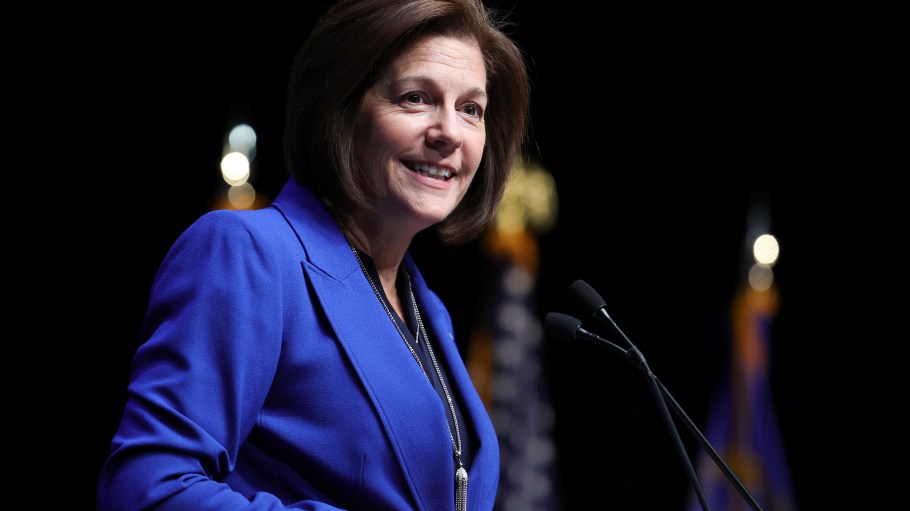
Senators Chuck Grassley (R-Iowa) and Catherine Cortez Masto (D-Nev.) reintroduced the Combating Organized Retail Crime Act on Thursday, their third attempt at introducing retail crime-related legislation at the federal level.
The bipartisan bill is also co-sponsored by Marsha Blackburn (R-Tenn.), Amy Klobuchar (D-Minn.), James Risch (R-Idaho), Jacky Rosen (D-Nev.), Bill Cassidy (R-La.), Martin Heinrich (D-N.M.), Ted Budd (R-N.C.), Bill Hagerty (R-Tenn.), Lindsey Graham (R-S.C.), Steve Daines (R-Mont.), Mark Kelly (D-Ariz.), Katie Britt (R-Ala.) and Ted Cruz (R-Texas).
Related Stories
It seeks to create an Organized Retail and Supply Chain Crime Coordination Center under the Department of Homeland Security (DHS). That center would bring together local law enforcement agencies and representatives throughout the retail industry. The bill also advocates for the development of new tools meant to streamline investigating and doling out punishment to organized retail crime perpetrators, as well as to find the stolen goods and cash associated with thefts and illegal resale transactions.
Cortez Masto said she has seen firsthand the negative impact organized retail crime can have on a state, and said that, this time around, Congress needs to take action on the issue.
“The rise in organized retail crime has left businesses scrambling, and it is time for Congress to pass this bipartisan legislation to help law enforcement agencies keep our communities safe,” she said in a statement.
Cortez Masto isn’t the only one who wants to see action taken; the bill has garnered broad support from industry organizations like the National Retail Federation (NRF), the Retail Industry Leaders Association and the American Trucking Associations, among others.
David French, the NRF’s executive vice president of government relations, lauded Grassley and Cortez Masto for their decision to bring the legislation back to the Senate.
“ORC is occurring across the retail enterprise—supply chains, bricks-and-mortar stores, warehouses and online—with stolen product sold for a profit, oftentimes to fund other crimes,” French said in a statement. “The Combating Organized Retail Crime Act of 2025 will align efforts within a new Organized Retail and Supply Chain Crime Coordination Center to ensure that resources and information-sharing will be available across local, state, federal and private-sector partners to bring cases and prosecutions against organized theft groups. This legislation is an important step to help prevent ORC from infiltrating local communities across the country.”
Third-party logistics giant UPS has also put its support behind the bill; Michael Kiely, the company’s president of global public affairs, said the bill could help companies keep up with the myriad ways thieves are upgrading their game.
“UPS supports the Combating Organized Retail Crime Act as it provides the necessary resources and coordination to protect the movement of American goods throughout our country while safeguarding the integrity of our national supply chain from rail to road, to retail,” Kiely said in a statement.
According to the federal bill, more than 30 state laws have been passed since 2022 in an effort to prevent retail crime. New Jersey was one of the latest to sign a bill upping the ante on punishments for perpetrators, and two additional states seem to be looking to join that group.
In Nevada, Governor Joe Lombardo has put his support behind a sweeping Senate bill called the Safe Streets and Neighborhoods Act, which includes provisions related to retail crime. The bill would lower the threshold for a felony charge to $750, down from $1,200 and would impose stricter penalties for repeat offenses.
And in Maryland, both chambers of the state legislature passed the Organized Retail Act of 2025, introduced by Delegate Karen Toles with the support of delegates Robin Grammer, Wayne Hartman and Chao Wu. Now, that bill has been sent to Maryland Governor Wes Moore’s desk for final signature. If the governor signs the bill, it will take effect in October, and will allow prosecutors to merge multiple retail crime convictions, regardless of the county the crime occurred in.
The Maryland Retailers Alliance lauded the bill making it through the legislature.
“Retailers across Maryland have been sounding the alarm on organized retail crime for years,” Cailey Locklair, president of the organization, said in a statement. “This law is a game-changer. It finally gives law enforcement the ability to treat organized retail theft as the serious crime it is, rather than a series of unrelated incidents.”