New York’s Fashion Workers Act has taken on emerging technology—specifically artificial intelligence.
The bill, S2477B, focuses on establishing labor protections for models and creators in the fashion industry in New York. Though it previously passed the state Senate, it has not passed the state Assembly.
On Wednesday, legislators amended the bill, sponsored by Brad Hoylman-Sigal, a Democrat for New York’s 47th Senate District.
Related Stories
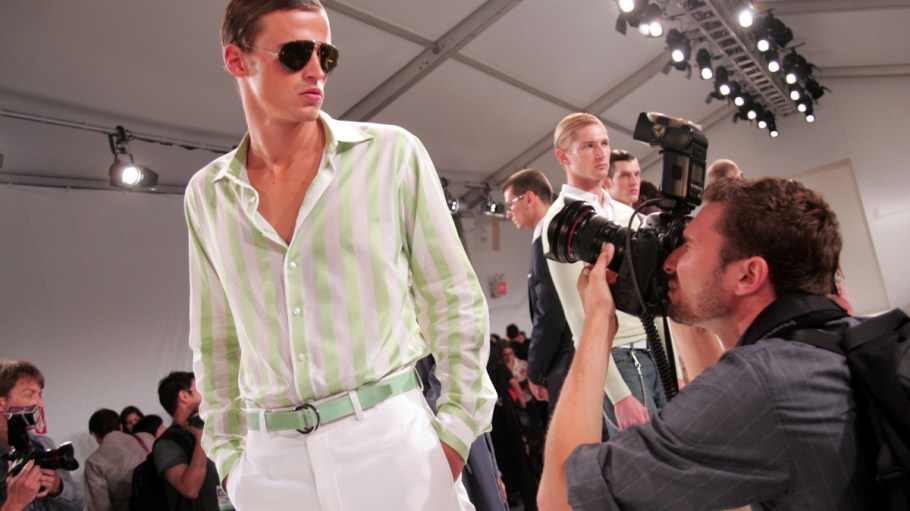
The amendments would protect models from brands, agencies and other entities from unauthorized use or alteration of their digital likeness, said Sara Ziff, the founder and executive director of the Model Alliance, in a Wednesday press conference.
“The new AI provisions define a digital replica and require that management companies and brands obtain clear, written consent to create or use a model’s digital replica, detailing the scope, purpose, rate of pay and duration of each use,” Ziff said. “They prohibit management companies and brands from creating, altering or manipulating a model’s digital replica using AI without clear written consent from the model, and prevent management companies from holding power of attorney over the model’s digital replica.”
Ziff said the updates reflect a timely, key update to the bill, since previous iterations of the bill did not account for the impact AI would have on the fashion industry.
Some models have already seen firsthand how AI can affect their livelihoods and personal images. Shareen Wu, a Taiwanese-American model who walked in a runway show for Michael Costello, accused the designer of digitally altering an image of her wearing Costello’s dress. She said Costello removed her face from the image to replace it with a white woman’s face.
“Having my face white-washed without my knowledge or consent was dehumanizing, and I never want another model to experience this power dynamic or helplessness over their own image,” Wu said during the press conference, noting that she never received an apology or financial compensation from Costello.
If passed, the bill could impact a large swath of New Yorkers. Hoylman-Sigal noted that in New York City, the fashion industry employs more than 180,000 people and contributes $11 billion in wages to the economy.
The state Senator said that he wants to see both of the state’s legislative chambers pass the bill by the end of the current legislative session.
“Models, who are the essential workers fueling this industry, are too often underpaid, overworked or exploited by the very management agencies that claim to represent them,” Hoylman-Sigal said Wednesday. “We want to make sure that all models are protected from having their digital replicas used without their consent, because everyone should have the right to control their own image, especially when their livelihood depends on it.”
Debate around labor ethics—particularly in creative industries—continues to swirl as AI evolves. Levi Strauss caught backlash for saying it would test a program that would supplement human models with AI for more representation; meanwhile, Selkie has been chastised by consumers for using the technology to help design products.
To date, brands and retailers face few legal guardrails around the use of generative AI—importantly, issues over copyrighting AI-aided art and content remain murky. Ziff said as the technology continues to evolve, further regulations on modeling and creative industries could become necessary.
“To be clear, there is so much more to learn about how AI is impacting fashion workers, and greater regulation will likely be needed,” she said. “We see these provisions as a necessary first step toward establishing baseline protections around transparency and consent for the use of generative AI.”