New York State wants companies to disclose technology’s impact on job loss.
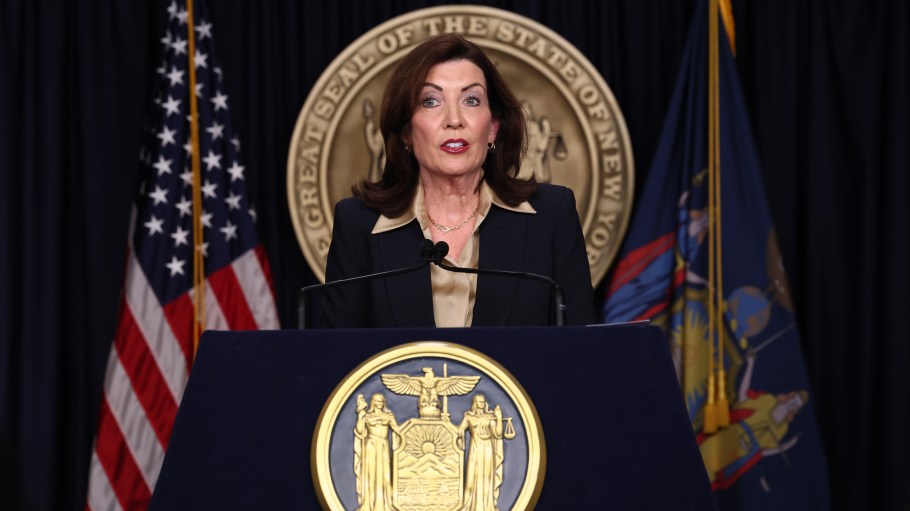
During her State of the State Address in January, Governor Kathy Hochul proposed that employers should be required to indicate whether artificial intelligence and emerging technologies were part of the reason for mass layoffs or facility closures when filing paperwork in line with the state’s Worker Adjustment and Retraining Notification (WARN) Act. Doing so, she contended, would allow the state to better understand AI’s impact on employees.
Related Stories
While that proposal has not seen formal legislative activity, Bloomberg reported that the state has quietly introduced a way for employers to disclose exactly that. Now, when employers file a WARN notice, they can check a box that is meant to show whether the action taken by the company has resulted from “technological innovation or automation.” If an employer indicates that technology played a role in the decision, they are directed to a second screen that prompts them to name the specific type of technology that brought on the action.
Bloomberg reported the function went into effect in March, without announcement from the government; to date, state records indicate that no employer has disclosed technological impact as a reason for closures or layoffs.
The state’s action comes at a time when legislators in many states, including both New York and California, have proposed AI-related bills meant to protect residents from the sweeping functions of large AI systems. In New York, legislators just passed the Responsible AI Safety and Education (RAISE) Act, which awaits signature from Hochul. The legislation is meant to prevent the world’s largest AI companies from having a hand in disasters. A similar regulation, passed by legislators in California, was ultimately vetoed by Governor Gavin Newsom.
Still, more state regulation is spawning constantly, just as experts predicted at the outset of the year.
While New York’s AI-related WARN Act disclosure is not legally required by companies, it could indicate that the state has an interest in protecting its workers from adverse effects of technology. Already, labor unions, like the United Brotherhood of the Teamsters and the International Longshoremen’s Association (ILA), have taken a vested interest in preventing the integration of technology that would trigger job loss for members. According to Pew Research Center data from 2023, nearly one-third of Americans said they believed AI would hurt workers’ outlook more than it would help.
Today, there is an absence of federal-level legislation on AI, particularly when it comes to workers’ rights, so legally binding contracts constraining AI implementation onslaught by unions seems to be a path workers in some industries are willing to take. Experts previously told Sourcing Journal that such action could be a catalyst for future legislation and worker protections.
Still, even if New York brings forth formal legislation related to WARN disclosures, states’ rule on AI could be in jeopardy.
Republicans’ “big, beautiful bill” includes a provision that would prevent states from enacting regulations that pertain to “limiting, restricting or otherwise regulating artificial intelligence models, artificial intelligence systems or automated decision systems” during a 10-year period that begins the day the bill is enacted. The provision has drawn major criticism from legislators, but it would limit the reach of states in creating patchwork-style legislation to plug gaps left behind by federal legislators’ inaction on AI-based technology, even as other jurisdictions create mandates about it.