In the past, brand partnerships were seen as monumental cultural events—think 18th-century royals lending their names to luxury goods or icons like Babe Ruth fronting tobacco campaigns in the 1930s. They were rare moments that generated headlines and shaped consumer trends.
Fast-forward to the digital age. Collaborations have become an industry in themselves, with influencers, celebrities and corporations teaming up on a near-constant basis.
While that might sound like a win from a profit standpoint, oversaturating the market with high-profile campaigns has its downside, according to Dave Mayer, a senior partner at global brand consultancy Lippincott.
Related Stories
“Any collaboration is only as good as the benefit that it delivers to its customers. Initially, that’s boosted by novelty (I mean, we are designed to seek new experiences for the dopamine hit and social recognition that comes from being early adopters),” Mayer told Sourcing Journal. “However, as collabs become more common, the novelty wears off. At this stage, the underlying value proposition—meaning, the tangible benefits and relevance to consumers—becomes the primary factor determining their excitement.”
Nowadays, brands are locked in an arms race to launch the hottest campaign with the flashiest star, hoping to grab attention and drive sales. But with collaborations dropping in a near-constant cycle, there’s little time left for thoughtful curation, and that rush to stay relevant can make campaigns more prone to missteps or outright controversy.
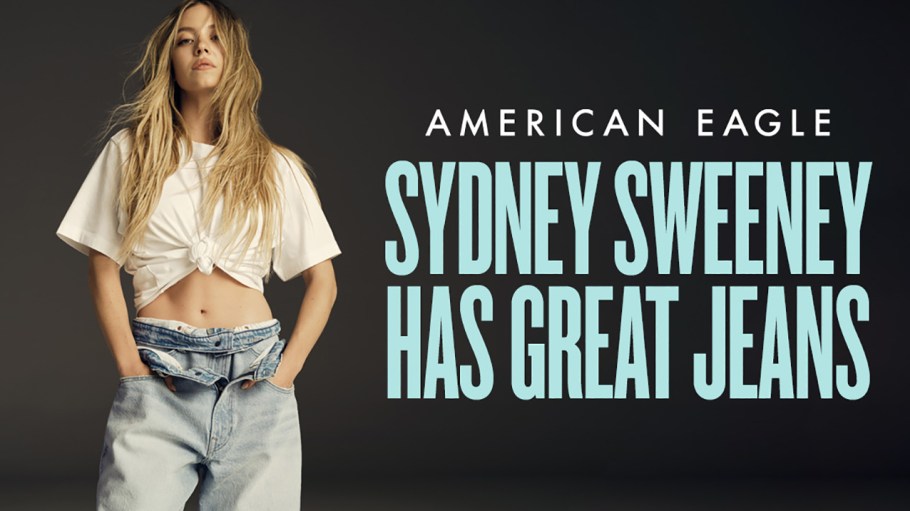
Take, for example, American Eagle’s (AE) Fall 2025 campaign featuring “Euphoria” star Sydney Sweeney. In one of the promotional videos for the campaign, Sweeney says, “Genes are passed down from parents to offspring, often determining traits like hair color, personality and even eye color. My jeans are blue.” A voiceover then states, “Sydney Sweeney has great jeans.”

Almost immediately after the campaign went live, fans across social media tore apart the wording, posting comments like: “This is what happens when you have no [people] of color in a room. Particularly in a time like this…this ad campaign got so caught up in this ‘clever’ play on words and this stunt the [people] in the room missed what was so blatantly obvious to anyone not White.”
The backlash wasn’t confined to just social media, though.
According to AI-powered geospatial insights company Pass_by, AE’s in-store traffic decline accelerated in the wake of the controversy. For the week of Aug. 3–9, visits were down 8.96 percent year-over-year, following a 3.9 percent drop the previous week.
“When a collaboration goes wrong, the cost is more than just wasted media spend. Trust erodes, acquisition costs climb and retargeting pools shrink,” Joseph Perello, founder and CEO of performance-based creator marketing platform Props, told Sourcing Journal.
“AE’s Sydney Sweeney campaign shows a different risk. After decades out of the cultural spotlight, the brand staged a provocative return. Investors cheered, with AEO shares spiking nearly 24 percent,” he added. “Yet the sales data told another story. Early analysis showed little impact on demand or in-store traffic. The campaign generated headlines, political commentary and trading frenzy, but not sustainable consumer behavior. It serves as a reminder that shock value may stir markets in the short term, but it rarely builds long-term brand equity.”
AE hasn’t cut ties with Sweeney, and in Perello’s estimation, the campaign’s unfortunate subtext could amount to a blip on consumers’ radar.
However, there are instances when brands’ handling of collabs gone wrong could prove critical.
If history is any guide, companies that cling too tightly to a controversial figure risk deeper financial fallout. Adidas learned that lesson in 2022 when it severed its nearly decade-long partnership with iconoclastic creative Kanye West following his antisemitic remarks. The breakup reportedly cost the sportswear giant around $247 million in lost sales. Other partners including Balenciaga and Gap quickly followed suit in severing ties, also suffering fiscal blows.
Lost sales don’t always stem from a poorly executed campaign or a celebrity scandal; they can also be driven by the players behind the brand itself.
In 2024, Lululemon founder and former CEO Chip Wilson drew sharp criticism for controversial remarks about the company’s customers and marketing direction. Wilson, who resigned in 2013 after infamously blaming a yoga pants recall on the size of women’s thighs, resurfaced in a Forbes interview to slam Lululemon’s diversity and inclusion efforts. He accused the brand of becoming “like the Gap—everything to everybody,” and dismissed ads featuring models he claimed were “not inspirational.”
“I think the definition of a brand is that you’re not everything to everybody,” Wilson told Forbes. “You’ve got to be clear that you don’t want certain customers coming in.”
While the company didn’t suffer an immediate collapse in sales, its performance in the Americas showed signs of strain. Net revenue in the region grew just 4 percent in 2024 compared to the year prior, with comparable sales flat in the fourth quarter and down 1 percent for the full year, according to a Lululemon press release, suggesting a slowdown in what remains its most critical market.
All in all, it was a relatively modest ding in sales for Lululemon. More recently, though, retail giant Target proved that the way a company represents its values can have bigger consequences.
In 2024, the retailer—long praised for its Pride merchandising—reversed course, announcing it would sell Pride-themed apparel and home goods for adults only “in select stores, based on historical sales performance.” It was a drastic shift for a chain that had featured such items widely across its U.S. locations for more than a decade.
The move was compounded by fresh backlash this year after Target announced it was winding down certain diversity initiatives, saying it needed to “stay in step with the evolving external landscape”—namely, the Trump administration’s crackdown on Diversity, Equity and Inclusion (DEI)—while still claiming a commitment to “inclusion” and “belonging,” according to an internal memo from chief community impact and equity officer Kiera Fernandez.
The consequences were swift. Coupled with mounting tariff pressures, Target acknowledged that customer boycotts tied to its DEI retreat had dented performance. Quarterly sales fell 2.8 percent to $23.85 billion, missing Wall Street’s $24.23 billion expectations and down from $24.53 billion a year earlier. On Wednesday, following the company’s earnings announcements, 11-year CEO Brian Cornell announced he would step down as the company works to steady itself amid ongoing backlash and wavering consumer loyalties.
Amid the upheaval, Target and Ulta Beauty announced this week that they will not renew their shop-in-shop partnership once the current agreement concludes in August 2026, a move that’s likely to dampen in-store traffic and weaken a program once touted as a key growth driver.
“The increasing polarization of values has made it more difficult for mass market brands to embrace collabs with other brands that may have characteristics that alienate a subset of their audience. This polarization—particularly along the conservative to liberal spectrum—has fractured collaboration opportunities into distinct pools where political values must align as a prerequisite,” Mayer said.
“So, a mass-market retailer like Target is largely limited to collaborating within a similar market space and cannot easily engage with brands strongly identified with either progressive or conservative ideologies without risking audience backlash,” the consultant added.
Whether it’s a tone-deaf executive or a poorly executed campaign, the bottom line is that consumers aren’t rejecting collaborations altogether. But brands will pay the price for inauthenticity.
Younger shoppers in particular want partnerships to stand for something bigger, whether that’s innovation, sustainability, inclusivity or “even just joy,” as Alexis Quintal, CEO and founder of Rosarium PR & Marketing Collective, put it.
“The real business value today lies in how intentional and authentic the partnership feels to the consumer,” Quintal told Sourcing Journal. “When brands treat collaborations as short-term stunts or cash-grabs, fatigue can set in. But when they focus on shared values, storytelling and creating something consumers couldn’t access otherwise, the return on investment (ROI) remains strong.”