Los Angeles garment workers and local apparel manufacturing businesses put down their picket signs for the last time following the final vote on the Downtown L.A. 2040 Community Plan, otherwise known as DTLA 2040.
Unanimously passed by L.A. City Council on Thursday, the plan to redirect the growth of Downtown L.A. has been hotly debated for the past 10 years, and has seen almost as many iterations. But following a prolonged period of protests and negotiations, workers and businesses of the Fashion District will see many of the key provisions they fought for codified into law.
Related Stories
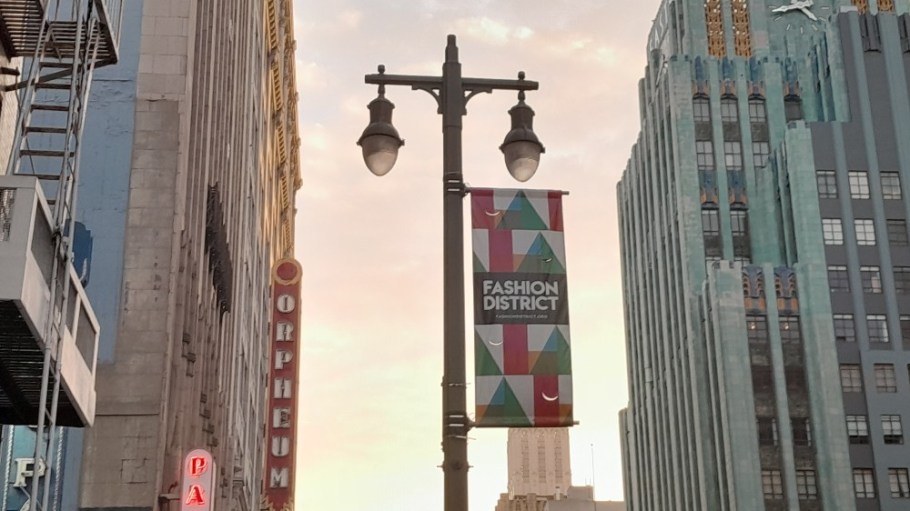
Spanning about 100 square blocks, the Fashion District is home to thousands of apparel and footwear factories, along with fabric mills, trims manufacturers, design studios, warehouses and retail storefronts that employ some 45,000 people. The DTLA 2040 Plan aimed to repurpose or convert some of that property—which, from an outsider’s point of view, might appear decrepit or unused—into housing, as well as hotels and other revenue-generating new business.
After engaging with workers, manufacturers and advocacy groups for the first time about two years ago, the City Council Planning and Land Use Management Committee (PLUM) relented on some of the more aggressive measures of the plan following a series of hard-fought battles and votes. Recently, PLUM attempted to retake some of the ground it ceded, pushing to lower the Floor Area Ratio (FAR) production space requirement for buildings in certain sections of the Fashion District, despite the plan’s seeming finalization last year.
But the area’s advocates have pushed back at every juncture, successfully fending off many of the rezoning proposals they say could have displaced them and dismantled the engine of L.A.’s second-largest economic driver.
The DTLA 2040 plan, which will now become official, includes a complete prohibition on new hotels within the Fashion District and a ban on the conversion of viable industrial space into luxury lofts across several key streets.
Protections will be instituted to protect the displacement of garment businesses in existing buildings, and new construction will be mandated to include manufacturing space in one of the District’s subsections. Freight elevators and loading bays that are essential to fashion manufacturing operations will be protected by law. New-housing building incentives will be given to property owners who dedicate 50 percent of their property space to manufacturing activities within a certain subsection.
Finally, a task force will be established to study what kinds of resources and trainings are needed to foster industry growth and garment work jobs.
The Garment Worker Center (GWC) and its members have shown up en masse throughout the legislation’s winding proceedings over the past two years, and a coalition made their way to City Hall again on Thursday to lend support to the plan they helped amend.
“There is No Fashion District Without Garment Workers,” their signs read.

“We commend City Council for including our recommendations in the DTLA 2040 Community Plan. Garment workers and local garment businesses organized diligently to have their voices heard and included in the City’s plans,” said GWC executive director Marissa Nuncio after the vote.
There’s still “much work to be done at a local level in regards to bolstering an industry that has called the Fashion District home for over 130 years,” she added. “We look forward to working with the City and various stakeholders to continue supporting the garment industry and the thousands of highly skilled workers who call L.A. home.”
Following the victory, GWC campaigns director Daisy Gonzalez told Sourcing Journal that the group is solidifying its plans for 2025.
“Outside of land use and zoning, we look forward to developing worker-focused programs with the city in the new year, particularly our work with the Economic & Workforce Development Department (EWDD) on the Garment and Fashion program and on producing more goods locally through the Alliance for Responsible Apparel Manufacturing and Purchasing (ARAMP),” she said.
These initiatives, which will launch sometime next year, “will bolster the industry locally via upskilling, brokering manufacturing space, and beyond,” she added. “ARAMP will also support the growth of the local industry by certifying and connecting ethical manufacturers with institutional procurement. In tandem, they will both help grow local manufacturing and even help meet its climate change goals.”
GWC believes it will have a new ally: lifelong L.A. resident Ysabel Jurado, who handily unseated disgraced incumbent City Councilmember Kevin de León in November’s election. The 34-year-old tenant rights lawyer and political newcomer will now represent District 14, which includes the Fashion District.
“She at one point volunteered with the Garment Worker Center, has family connections to garment work, and seems to have a good open line with us, so we’re very enthused about that,” Jonathan Coleman, GWC’s communications manager, said. Jurado was sworn in last week.
Speaking to the passage of DTLA 2040 and the developments of recent weeks, Mary Price, founder and creative director of Made-in-L.A. label Ocean+Main, said it feels “amazing to have a seat at the table.”
“It’s been two years. I know we really did not think it was going to take this long” to see the sector’s needs recognized and reflected in the plan for the future of Downtown L.A., she explained.
Manufacturers, brands and garment workers have paid a price for the government’s prolonged ignorance to the robustness and viability of the fashion industry in L.A., Price said. “We didn’t exist two years ago, from their point of view.”
In the absence of protections—and in the face of myriad hurdles, from the pandemic to economic headwinds and fluctuations in demand—the Fashion District has seen many recent casualties. Buildings sold for development. Rents raised. Manufacturing businesses shuttered. Jobs lost.
Price’s primary sewer, who runs his own contracting business out of a building nearby, is in danger of losing his workspace as his building has been sold to a developer. Landlords are following the money, she said. “But at least to have these protections in place, it will hopefully keep our core relatively safe for now.”
“They’re taking us seriously,” Price added—and though it’s taken far too long, she believes the sector will soldier on.
“This is an $11 billion industry that employs all these people. We’re doing what we can to future-proof this industry and not see it all offshore,” she said. “Just to be visible, finally, is a huge win.”