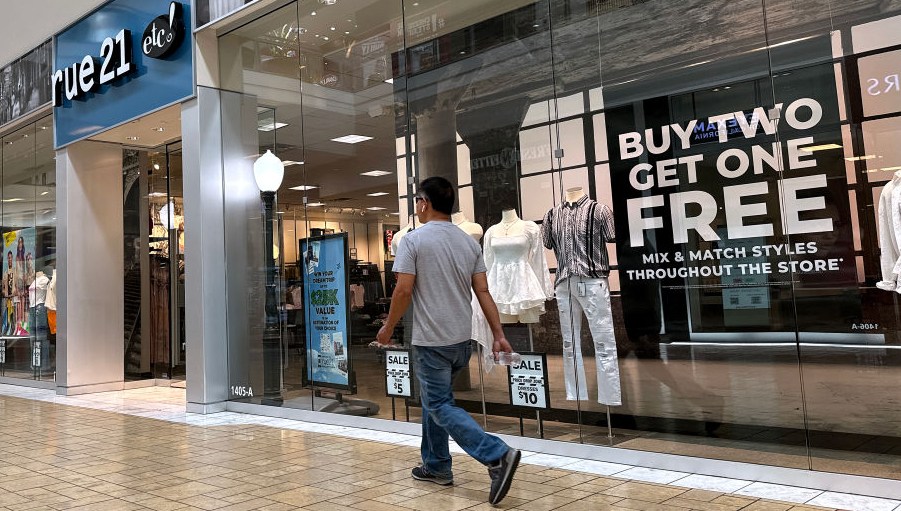
Brand values have taken a backseat to price and value in the fight for consumers’ wallet share, as worries about costs and inflation rise.
While media coverage has highlighted retail boycotts over issues like diversity, equity and inclusion (DEI), geopolitics and trade wars, the hype may be overblown, according to a new study from Kearney Consumer Institute (KCI).
“Despite the broad hype around boycotts, consumers do not seem to be increasingly voting with their wallets,” said KCI lead Katie Thomas, who led the research, on Wednesday. “Consumers are feeling the pinch right now—money is tighter, time is tighter—and they will shop how, where, and as it best suits them.”
Related Stories
While 39 percent of surveyed shoppers said they’d boycotted a brand within the past year—and 68 percent believe that brands should voice their values—only half of respondents said they’d completely stopped shopping with a brand that didn’t align with their politics or social outlook.
“Many consumers are prioritizing the price/value equation over values-based purchasing decisions, with eight out of 10 consumers admitting that shopping according to their values is more expensive,” Thomas said. Ease and accessibility are also inhibitors for many, with 71 percent of survey-takers saying shopping based on values is sometimes or usually less convenient.
Seventy-nine percent of shoppers think it’s less important for a brand to express its values than to deliver quality products and meet experiential expectations. And when asked about the critical criteria informing their purchasing decisions, values-based factors barely broke the top five.
Good quality (69 percent), fair price (63 percent), reliability and durability (46 percent), and good selection (22 percent) all ranked higher on consumers’ list of priorities than domestically or locally made (20 percent), sustainability (10 percent), DEI commitments (6 percent), labor practices (5 percent), and brand politics (5 percent).
“Too often, the corporate value proposition is disjointed from the brand values, which may put out high aspirational promises to the consumer,” Thomas said of the results. “Taking a values-first approach without focusing on the fundamentals risks losing the consumer.”
However, the analyst found it notable that certain values carried greater weight than others. “We were surprised to see ‘locally made’ outstripping sustainability and brand trust among consumer priorities,” she said. Within the U.S., 28 percent of consumers claim that they’ve purchased a product that was made in America, though only 2 percent to 3 percent said that product was apparel.
Low ratings for social and political factors like DEI commitments, labor fairness and brand politics “point to the relatively minor role of consumer activism, or consumers shopping by their values,” she surmised. “We’ve seen underperforming companies try to place blame on boycotting and other external values-based factors for their suffering, when in reality these factors are affecting everyone.”
Shoppers are definitely reining in spending to some degree, but the reasons they’re voicing for walking away from the register—values, boycotts, politics and tariffs—may not be accurate. Instead, Kearney’s analysis underscores a reality where “longer-term fundamentals,” like premium pricing without premium quality or innovation, poor merchandising and selection, and lack of differentiation from other brands are the factors often driving consumers away from stores.
In any case, values are a value-add, not an end-all-be-all, for most, the research concludes.
“Values should come out of a desire to do it for the company, not because of how
the consumer might perceive them,” Thomas said. “For companies whose clear values connect well with their value proposition—whether around elevated basics, clinical skincare, or grown/sourced locally—brand values illustrate the consumer reality that less is more.”