
Still regaining lost ground from elections and dealing with economically troubling times, Asian countries—including Myanmar, Bangladesh and Thailand—now face the crisis of the conflict between the U.S and Iran.
As the Iranian supreme leader Ayatollah Ali Khamenei, was killed during the operation by Israeli and U.S. strikes early Saturday morning, the uncertain future of the regime in Tehran has brought further confusion in the region, as issues related to shipping, oil and energy come center stage once again.
Related Stories
The chaos is apparent in countries across the region, emerging in different ways.
In Karachi, Pakistan, protesters tried to storm the U.S. consulate following the strikes on Iran, and at least eight people have been reported dead, according to local news services.
“It seems we’re bracing for a long-term disruption,” a manufacturer in Vietnam told Sourcing Journal.
The Vietnamese Ministry of Foreign Affairs (MoFA) issued a statement expressing “deep concern” over the escalating conflict and its threats to global peace and stability. An urgent missive to import-export and logistics associations noted that the conflict in the region could create a “high-risk environment for transportation, global supply chains and trade activity.”
Among the warnings listed were the prices of consumer goods and fuel—which could be expected to become more volatile, and impact exports. Global trade and transport could well be another area of volatility affecting delivery schedules as well as costs due to increasing freight charges.
In Thailand, where the post election government has just taken seat last month, a special meeting was called on Monday, taking into account the impact on trade—especially how fuel prices and energy costs are anticipated to change the economic structure, and impact consumers as well as exporters.
“The tumultuous developments in West Asia have further added to the challenges faced by Indian textile and apparel exporters,” Ashwin Chandran, chairman, Confederation of Indian Textile Industry (CITI) told Sourcing Journal. “Considering the narrow margins under which textile and apparel exporters operate, any escalation in the cost of logistics and insurance significantly raises operating costs, and affects the ability to meet contractual obligations as well.”
A meeting called by the Department of Commerce on Monday in New Delhi brought stakeholders together to address the situation.
Manufacturers noted that it has been a roller coaster ride the last few months—with the steep 50 percent tariffs on India, imposed by the U.S, the subsequent agreement between the U.S and India to reduce tariffs to 18 percent, struck down by the U.S. Supreme Court earlier this month.
India’s garment trade with the UAE and other Gulf countries, which has been an important area of diversification and growth, is being seen as another point of concern.
“It’s hard to say which way the industry is going, and with energy costs now very much in question—depending on how the conflict plays out, we’re looking at a replay of geopolitics, and their impact on business,” a manufacturer in New Delhi noted.
Analysts across Asia are taking stock and it is clear that higher energy costs and shipping delays will be the first casualties. Market volatility, inflamed by the risk for the region, is hard to gauge, even as the stock exchange in UAE was closed down for two days, including Monday and Tuesday, as the situation is being assessed.
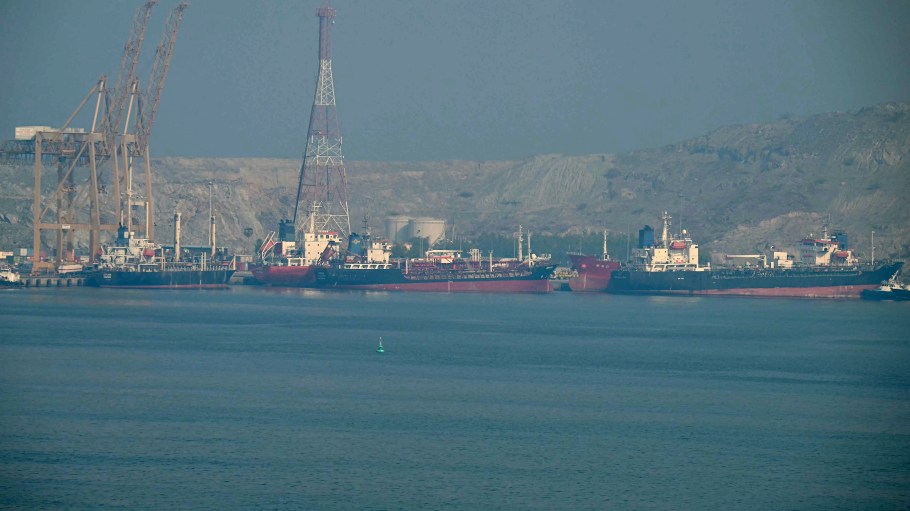
Oil prices shot up over the weekend as the situation has escalated. Analysts in the region said that this could increase as the shipping routes were likely to remain a challenge. As the conflict puts a hold on the Strait of Hormuz, which is essential for global shipping, the expectation of delays and increasing prices is being understated, economists in the region said.
In Bangladesh, business heads said that tensions are escalating once again.
“The conflict is likely to affect the industry in several ways,” Faisal Samad, director, Bangladesh Garment and Manufacturers and Exporters Association (BGMEA), told Sourcing Journal. “The transit time for cargo is likely to be affected—ships will have to be rerouted and are likely to take a longer time to reach Europe. The Strait of Hormuz is a very important waterway. Energy prices may shoot up, increasing costs for transport—it will lead to more pressure for competitive pricing and for the industry to absorb these costs.”
If the conflict continues, Samad noted that consumers and buying power would be deeply impacted as well.
However, like many of the exporters in the region who are expressing fears that this may well be a business disruptor for the entire region, the worry about further volatility is being taken with the stoic measures of the post-Covid era.
“Let’s hope for the best,” said Samad.


