Fashion brands in the United States, United Kingdom and European Union sourcing garments in India are canceling orders, delaying payments, soliciting discounts and failing to account for rising labor and material costs, according to a new survey of nearly 200 suppliers across seven of the South Asian nation’s states.
The numbers, gleaned from July to December, paint an alarming picture of an industry under duress. Some 44 percent of respondents, for instance, reported brands insisting on discounts after the contracts were agreed upon, while 53 percent said they’ve received cancellations in the middle of production. Another 52 percent said that buyers don’t adjust for increased prices of inputs like fabric, and 81 percent said any uptick in minimum wages was ignored. One-third (33 percent) of those polled said they had their payments held back by three months or more. Half of the suppliers reported brands quoting a large order size before reducing it—and keeping the cost per item unchanged.
Related Stories
“[Our contract said] ‘payment terms may be subject to change based on internal policies,’” one supplier was quoted as saying. “What does that even mean? It means that they can delay payment whenever they want. And if we protest, they will say, ‘We will reconsider working with you in the future.’”
While Dev Nathan, the Institute of Human Development professor who co-authored the study for the British nonprofit Transform Trade, said he’s hard to surprise, he admitted he was taken aback by how entrenched these unfair purchasing practices were. They’re better—but just barely—than brands’ actions at the height of the Covid-19 pandemic, when 80 percent of the same manufacturers said they experienced canceled orders, 70 percent saw delayed payments by more than three months and 49 percent fielded demands for price reductions on orders placed before the disease reared its head.
All of these, he said, can result in significant repercussions for manufacturers who may wind up selling their goods below what it costs to make them. This isn’t conjecture: More than half (54 percent) of respondents reported having to undercut the price of their production for one or more of their contracts. A burgeoning number also said they’re being increasingly forced to pony up for quality checks by brand-appointed purchase agents, third-party audits and even the hotel and transportation expenses of visiting representatives.
“I have been doing research on global value chains for quite a long while now,” he said. “I knew these actions existed, but we’ve never done a large enough study to get an idea of how pervasive they are and with what impunity they are being practiced.”
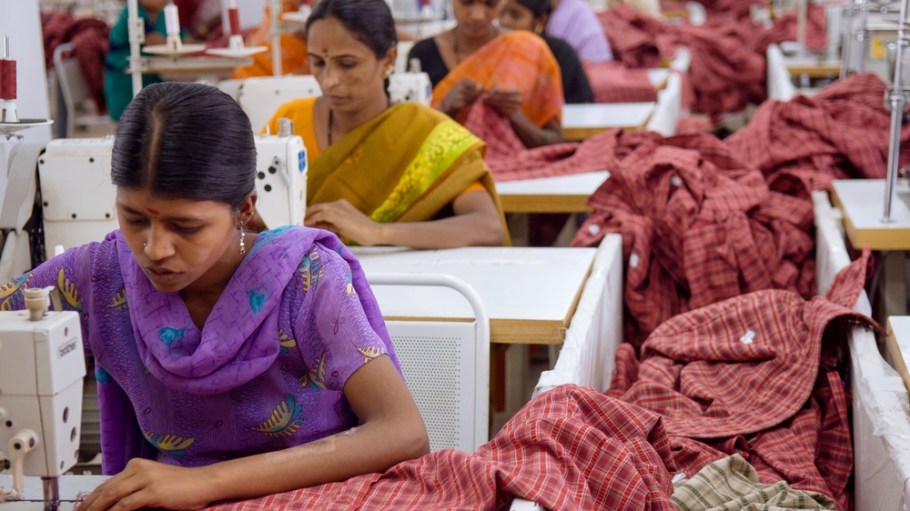
While Nathan didn’t interview garment workers directly, since they weren’t the focus of the study, suppliers reported bumping up working hours (77 percent), the number of contract workers (64 percent) and production targets (58 percent) to cope with sudden contractual changes. What happens next is that workers—most of them women under the age of 35—are seen as almost disposable units of labor. “There’s this burning out, what we call the ‘mining of the body,’” he said. “And then they get thrown out, and they go into even worse-paid work, like in an unregistered workshop or at home because they still have families to support and children to raise.”
Even so, 90 percent of the surveyed manufacturers said they avoid resorting to legal action when their buyers breach their agreements, saying that it would be too expensive or too risky reputationally. The potential loss of business is also why, unlike Transform Trade’s previous study of Bangladesh’s sourcing landscape, suppliers were hesitant to name and shame the offending brands. The industry in India is smaller, they reasoned, making it easier to suss out potential whistleblowers.
“There is a fear of retaliatory action if the brands come to know who named them,” Nathan said. “One manufacturer had a sign in his factory that read, ‘The Buyer is God.’ So, we did not press manufacturers to name brands. As researchers, our interest in any case was to establish the extent of unfair contracting practices by brands, an analysis which does not require naming them.”
What’s evident, however, is that poor commercial practices persist despite their growing awareness—and efforts by Cascale and other multi-stakeholder organizations to nip them in the bud. That the research took place before the imposition of additional 10 percent tariffs by the Trump administration—with the potential for more—can only be expected to exacerbate these trends.
“The need for governments and international organizations to take action to ensure fair purchasing practices and decent conditions of work could not be more urgent,” said Mark Anner, dean and distinguished professor at the Rutgers School of Management and Labor Relations, who has conducted extensive field research of global supply chains, including in India, where he found that the real dollar price paid by U.S. buyers tumbled by nearly 63 percent from 1994 to 2017. He had only one word to describe this extreme contraction: “predatory.”
“This research indicates that manufacturers continued to be squeezed by brands and retailers,” Anner added. “They are squeezed on price, squeezed on order size and squeezed through payment delays. And we know from prior research that this squeeze is transferred to workers through increased production targets and working hours [and] reductions in real wages.”
Those seeking change in the industry—such as the Sustainable Terms of Trade Initiative, a consortium of national and international trade groups—have called for model contract clauses, underpinned by the United Nations Guiding Principles on Business and Human Rights and the OECD Guidelines for Multinational Enterprises on Responsible Business Conduct, that will provide suppliers with some manner of recourse when brands terminate orders. They would also include buyer obligations such as setting reasonable deadlines, paying prices that can sufficiently uphold responsible business conduct and making accurate—and steadfast—forecasts about requirements. But change has been slow.
“I use the term monopsony to describe this,” Nathan said. “Monopsony is when there are a few buyers and lots of sellers. It’s the other side of monopoly, when there are a few sellers and lots of buyers. Competition among garment manufacturing companies and countries has grown over the last few years—Africa, for example, has also gotten into manufacturing garments—so that means that brands have greater bargaining power.”
Transform Trade has thrown its support behind calls in Britain for a garment trade adjudicator, similar to what it already has in the groceries sector, to ensure that brands selling to the U.K. market adhere to a statutory code. The EU’s directive on unfair trading practices in the agricultural and food supply chain, it says, can further act as a model for a directive banning unscrupulous buyer behavior in the apparel industry.
“There’s a lot of voluntary work around purchasing practices, and we just don’t have the regulation that actually keeps [brands] to it,” said Hilary Marsh, garment policy advisor at Transform Trade. “The way it works with groceries is that it’s its own entity, and it does its own investigations based on complaints that can be shared anonymously. So that helps with the issue of suppliers not wanting to speak up and [identifying] who they are.”
Having that kind of watchdog mechanism in place is even more critical during a time of economic volatility, she said. It’s one thing to voluntarily take the high road when “things are good,” it’s another when tumultuous conditions impinge upon a company’s bottom line. Creating regulation with real teeth, on the other hand, could help redress a buyer-supplier power imbalance that has continually stoked exploitation.
“Usually, the first people to be harmed in that are the garment workers, and the risk is put down to the manufacturers,” Marsh said. “There was a big spark in public recognition and public outcry around what was suddenly very visible during the pandemic of these practices happening. And they’re still happening. It is the way of the business.”