To say that child labor is pervasive in India’s agricultural industries is to undersell the issue.
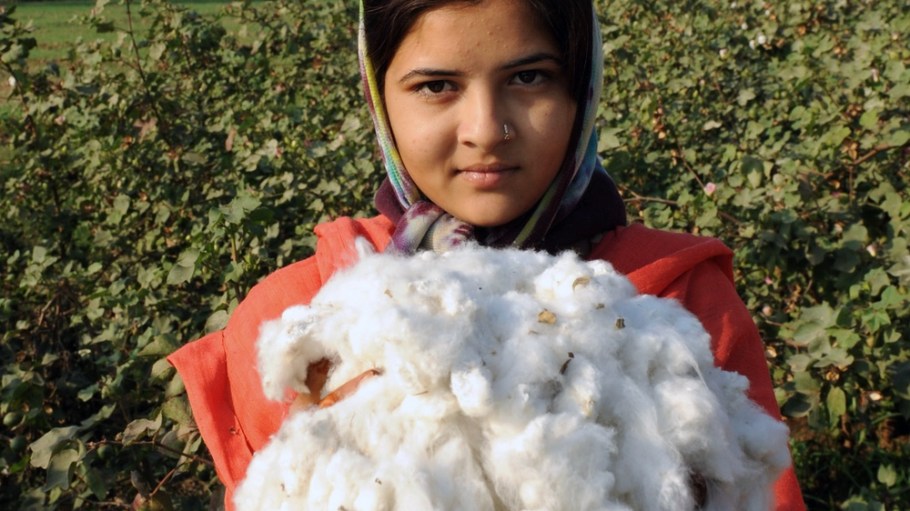
In January, the New York investigative nonprofit Transparentem connected some of the world’s largest fashion brands—among them Gap Inc., H&M Group and Zara owner Inditex—to cotton farms in Madhya Pradesh that illegally employed children younger than 14, including some who were involved in mixing or spraying synthetic pesticides linked to chronic health issues such as reproductive damage, neurological effects and cancer. Even organic growers were not exempt from conduct that appeared deeply ingrained.
Related Stories
Earlier this month, the International Labour Organization, together with the government of Telangana, convened the 16th Annual Meeting of the Child Labour Platform in Hyderabad. At the end of it, they launched the Child Labour Platform Programme, which will take a “area-based approach, tailored to the unique challenges faced by migrant workers and their children across agricultural supply chains.” Its goal: to enhance due diligence efforts to eradicate child labor in the coffee, spices, cotton and sugarcane sectors, beginning with the states of Karnataka and Telangana and with the potential for expansion later on.
“Ensuring decent work for adults, social protection for both adults and children, including migrants, as well as quality education for children, fair recruitment practices and responsible business conduct are essential to breaking the cycle of child labor,” Michiko Miyamoto, country director of ILO India, said in a statement. “India’s experience demonstrates that collaboration between business, government and social partners can drive real change.”
Tara Winter, Transparentem’s executive director, said she was encouraged by the move. The prevalence of child labor aside, the organization’s research in Madhya Pradesh uncovered forced labor, unsafe working conditions and risks to organic cotton integrity—all tied to global brands. These are interrelated issues, she said. Low wages and the dearth of opportunity in Indian rural communities leave families caught in a cycle of privation and debt, “creating pressures to send their children to work.” Child workers, in addition, are less likely to attend school than those who don’t work, leaving them unable to secure better jobs when they’re older and further trapping them in generational poverty.
“We highly encourage employers to take into account the true cost of living for workers in the sector, and for all actors to work together to address the low wages that are one of the root causes leading to child and forced labor in India,” Winter said. “Full transparency and tracing in the conventional cotton supply chain are essential to ensure child labor and other endemic abuses are identified and rectified as an urgent priority.”
Indeed, it’s been cotton sourcing’s limited traceability, mostly through the shedding of the fiber’s identity as it moves from the field to the gin to the spinner, that has thwarted systematic improvements, said Richa Mittal, executive vice president and chief innovation officer at the Fair Labor Association.
In response to Transparentem’s investigation, which implicated several of its members, the multi-stakeholder organization began its three-year Harvesting the Future–Cotton in India initiative to bolster conditions in more than 30 cotton-growing villages in Madhya Pradesh. It plans to map commodity flows, develop effective complaint mechanisms and otherwise promote responsible procurement. It will also prioritize child welfare, followed closely by health and safety and then wages—the latter, again, because low pay is often the underlying reason why families send children to work.
But government engagement is also “absolutely crucial” because when it comes to upstream supply chains, brands don’t have the same leverage as they might in their first tier, Mittal said. Mutual buy-ins become even more vital at this point to ensure the long-term sustainability of any changes in behaviors or norms.
“It’s about social security; it’s about schools, because there are no schools,” she said. “Companies are focusing more on assessments rather than remediation. They’re not collaborating to identify the issue. They’re not working with suppliers in a collaborative way. So that’s what we’re doing. Can we be predictive rather than reactive? How do we engage with the social security schemes, with the governments? How do we maximize the community involvement in addressing the issue?”
The growing correlation between changing climate patterns and child labor is another concern for Sadikshya Nepal, director of advocacy and communications at GoodWeave International and a former international relations specialist at the U.S. Department of Labor.
The Washington, D.C.-based nonprofit, which seeks to end child labor in supply chains, recently published a report about how the effects of climate change, including drought, pest infestations and flooding, are fueling the food insecurity that is driving migrant workers into carpet factories and brick kilns in Nepal—two high-risk sectors for child and forced labor. A similar scenario could be unfolding in India.
State-based programs like the ILO and Telangana’s are well and good, Nepal said, but a country-wide approach is also needed to “tackle the question of an entire India.” Likewise important is having the right implementation mechanism in place.
“What India has not done is a census to know what the figures of child labor are,” she said. “While I was working for the U.S. government, that’s one thing that we asked for constantly. And the ILO is familiar with this conversation. And so for agriculture, you might want to do a platform program, but you also need to know how many children are working in agriculture, and that’s already a really hard quantity to measure for various reasons, but the government needs to make a concerted effort to figure this out.”
The last time a census was taken? 2011.
Most of the workers Transparentem interviewed reported a daily wage of roughly 200 Indian rupees, or less than $2.30. This has left them unable to afford basic necessities, let alone save for unexpected expenses such as medical treatment or home repairs. A number have had to take on loans that they paid off through wage deductions or by working on a lender’s farm. With debts ranging from 10,000 rupees ($113) to 200,000 rupees ($2,260), workers can spend years paying off the principal of their loans. Some employ the strategy of settling their debts with one employer by borrowing from another.
“We can’t even ask for a wage hike as we have taken debt from [the farm owner],” a worker named Ravi, using a pseudonym, told Transparentem. “How can we live off only 200 rupees?” So, we also take the children to work. For the sake of our daily bread, we have to work. If we just let the child go to study, then how will we overcome our hunger?”
Some workers also reported their employers withholding their pay—an ILO indicator of forced labor—for unpredictable periods of time, which compels them to continue toiling away while they wait to receive what they’re owed. Verbal abuse, threats and intimidation, they added, are common occurrences. To end child labor, Winter said, the industry must also support social protections and improve worker representation.
Mittal said she looks forward to finding new ways stakeholders can partner on the issue.
“We welcome the expansion of the ILO Child Labour Platform Programme to India,” Mittal added. “The platform has successfully contributed to fighting child labor in other countries, and we foresee engagement opportunities in the field related to the work we are doing as part of our Harvesting the Future–Cotton in India Project.”