
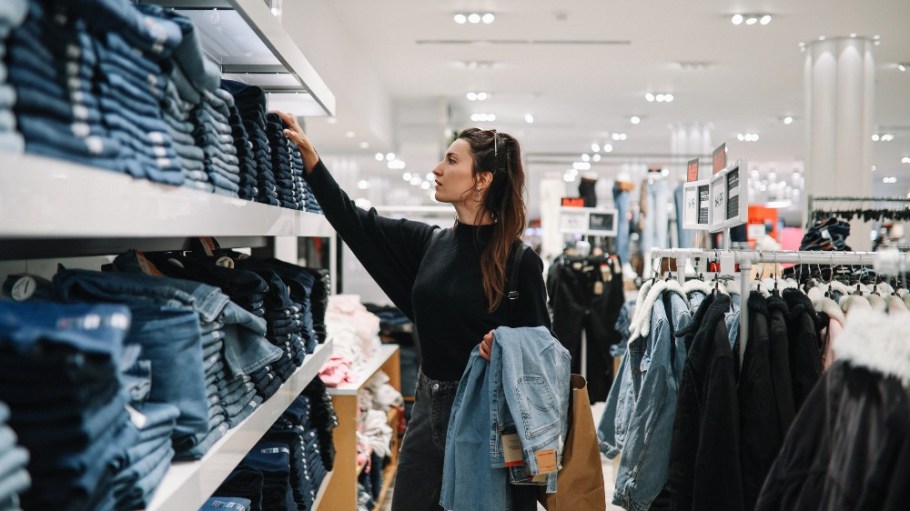
Rising income pressures that have shifted consumer preferences toward affordability and sustainability.
Consumers spent less money on clothing, shoes and accessories last year compared to 2023, according to data from research firm Consumer Edge. The consumer insights group released its 2024 Apparel, Accessories and Footwear Report this week, revealing a 3-percent year-over-year drop in spending on fashion categories.
Middle-income earners making $60,000-$150,000 per year pushed the largest cuts in spending on apparel, accessories and footwear. That contingent also spent less on athletic apparel and footwear in particular, with those categories falling by 6 percent year-over-year. Consumer Edge noted established brands such as Nike and Adidas struggled more compared to emerging labels such as Hoka and Alo Yoga, which gained market share.
Related Stories
While athletic wear was down, intimate apparel reached new heights, improving from -6 percent in the first quarter of 2024 to +1 percent in the fourth quarter. Honeylove and Skims led the growth, with Victoria’s Secret also seeing positive gains.
Among Consumer Edge’s ranking of the 25 largest luxury brands, exclusive brands like Gucci and Louis Vuitton fell significantly, while mid-range labels such as Ralph Lauren, Coach and Tommy Hilfiger maintained stronger numbers.
“While ultra-high-end brands like Hermès maintained their strong standing, low- to mid-tier luxury names such as Ralph Lauren, Hugo Boss and Coach performed better in rankings, reflecting a shift among cash-strapped consumers reevaluating their willingness to invest in expensive items,” the report said. “Conversely, more exclusive brands struggled, with Gucci notably falling lower in the rankings. The brand’s flashy logos and trendy collaborations appear misaligned with shifting consumer preferences for ‘quiet luxury,’ compounded by market saturation after its prior surge in popularity.”
Fast fashion saw a 1-percent decline in year-over-year spending, but the category saw a fairly significant boost in the fourth quarter of 2024 after a soft Q3. Shein led growth in the category, with its market share now exceeding the combined spend on items from H&M and Zara.
Fashion resale maintained strength in 2024, with a 1-percent increase in spending at consignment and thrift stores. Both brick-and-mortar and online establishments such as Depop, Grailed and Goodwill benefited. The category closed the fourth quarter of 2024 up 4 percent—its highest level of the year.
Quince took the top spot in Consumer Edge’s list of apparel brands with the largest direct-to-consumer growth, followed by Depop and Alo Yoga.
And when it comes to where consumers shop, physical retail seems to be having a resurgence. Consumer Edge reported that in-person sales of apparel and footwear grew faster than online spend year-over-year in the last two quarters of 2024.
“While e-commerce growth has generally outpaced that of brick-and-mortar shops over the past decade, online penetration may be approaching saturation levels, with many consumers still preferring the hands-on experience of trying on clothes in-store (particularly as some online-first clothing retailers have begun charging customers fees for returns),” the report said.
While overall spending on fashion declined in 2024, Consumer Edge said the gains made in a number of categories in the fourth quarter bodes well for the year ahead.
“Despite broader spending declines, brands implementing affordability, sustainability and direct consumer engagement are winning consumer loyalty,” said Michael Gunther, vice president and head of insights at Consumer Edge. “Navigating these evolving trends will be essential for companies aiming to adapt and excel in the coming year.”


