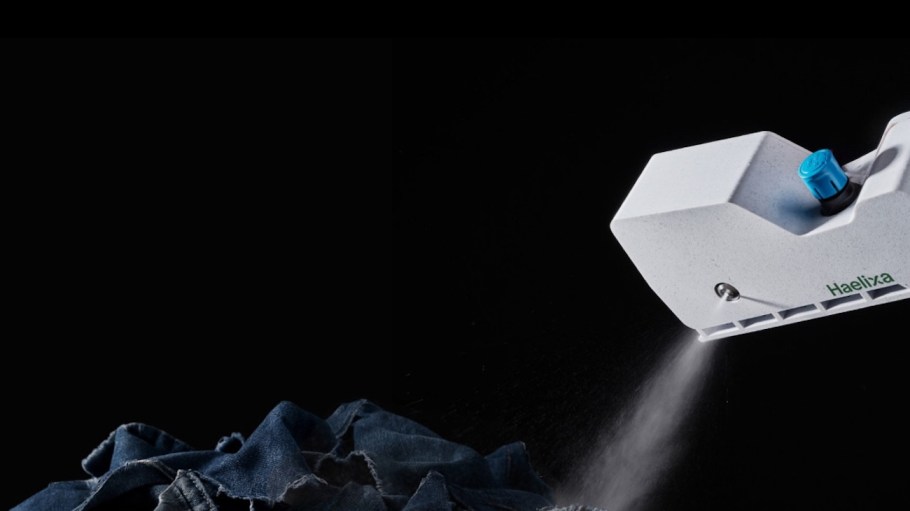
Swiss traceability firm Haelixa is delivering deliver forensic-level proof of recycled cotton” across New Focus Textiles’ textile-to-textile operations.
The Hong Kong-based manufacturer produces GRS-certified recycled cotton fabrics does post-industrial and post-consumer feedstock under its trademarked “T2T” program. Now, New Focus Textiles will apply Haelixa’s DNA-marking technology—which is, notably, derived from Swiss mountain herbs—to “mark” cotton waste, at scale, during the pre-shredding stage.
Related Stories
In doing so, the partners said that brands gain access to “scientific, temper-proof verification” that recycled material(s) was “genuinely incorporated” into its products—what the collaborators said is “closing the credibility gap in material-sourcing.”
“Recycled claims need solid evidence,” said Patrick Strumpf, Haelixa CEO. That evidence begins with the Haelixa solution, solved in liquid and applied to fibers as a fine spray. Spot checks are completed after spraying to determine the presence of the DNA and identify the product, the Swiss product traceability outfitter said. The test itself uses PCR analysis—similar to how some COVID-19 testing solutions work—to confirm origin and content.
“By marking textile waste, manufacturers can scientifically prove the presence of recycled content in new fibers, yarns or garments and secure customers’ trust,” Strumpf said. And since the DNA marker is applied directly to post-industrial and post-consumer cotton waste before it gets shredded, it stays intact throughout the mechanical recycling process.
The result, per the partners, provides physical and factual proof of recycled fiber identity—what Haelixa called “going beyond certification schemes that rely solely on documentation or chain-of-custody declarations.”
“Scientific verification strengthens customers’ trust,” said Jennie Peterson, a partner at New Focus Textiles. “Our buyers no longer need to rely on claims alone; we can verify the recycled origin of their fabrics with forensic evidence.”