Cotton produced under voluntary sustainability standards is continuing to climb, according to research that found production for this kind of fiber has, essentially, doubled every two-and-a-half years since 2008. But what about all the other responsible materials?
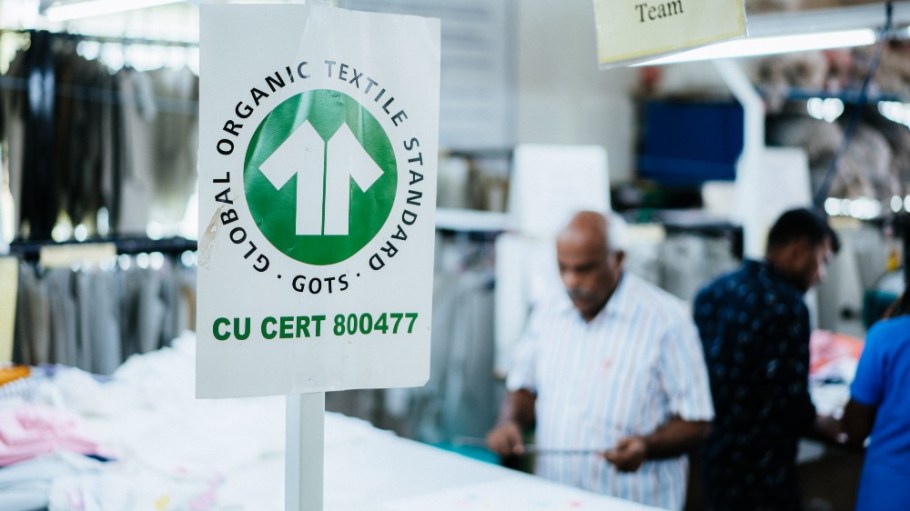
Global Standard, the nonprofit behind the Global Organic Textile Standard (GOTS), has launched a public consultation period for its new voluntary sustainability standard: the Global Responsible Textile Standard (GRTS).
Related Stories
“This expansion of the Global Standard portfolio empowers us to maintain minimal fees in our nonprofit setup, as we are dedicated to avoiding additional burdens on the industry’s sustainability measures,” Global Standard managing directors Rahul Bhajekar and Claudia Kersten said in a statement. “On the one hand, the GOTS framework will now serve as a foundation for broader application while on the other, it continues to stand as the leading voluntary sustainability standard in the organic textile sector.”
Intended to broaden the scope of sustainable practices behind organic textiles, GRTS casts a larger net for the nonprofit’s “principles of health, ecology and fairness.” Ideally, companies can use GOTS in tandem with GRTS (among other credibility schemes) to “demonstrate both environmental and social performance under the same trusted system.”
It’s likely why the voluntary standard is “rooted in the same robust criteria and processes” as GOTS, Global Standard said. And its intended purpose of supporting, promoting and allowing certified entities to produce GOTS-certified organic goods.
“While GRTS is set up for the purposes of offering a ‘clean’ processing criteria for sustainable fibers other than organic fibers within the jurisdiction of GOTS, it also aims at being an instrument for organizations that need to comply with supply chain regulations in many countries,” reads GRTS Section 6 of the drafted manual for implementation.
The drafted standard itself, meanwhile, defined the standard as defining the requirements for the sustainable processing of textiles made with specific responsible fibers. Certified organic or organic-in-conversion fibers (at least 70 percent of the total fiber content) are generally permitted. So are natural fibers—from both plant and animal origins—as well as regenerated cellulosic fibers and recycled natural and synthetic fibers, biopolymers and a small scope (up to 10 percent) of synthetics. That scope is specifically limited to virgin synthetic (polymer) fibers, only: polyamide, polypropylene, elastomultiester (elasterell-p) and polyurethane (elastane), provided they’re essential for the end product’s functionality.
“Fibers entering into GRTS supply chains shall not be associated with projects that do not adhere to ecological protection,” the drafted manual reads, “including animal welfare principles (e.g., no), biodiversity habitat and non-deforestation.”
To that end, any and all of the GRTS-entered fibers cannot be associated with projects that fall outside of the nonprofit’s adherence(s). Conventional cotton—virgin, recycled and/or non-GMO—is explicitly prohibited. So is traditional angora hair fiber, mulesing wool, virgin polyester, acrylic, asbestos, carbon and silver fibers and any other fibers not expressly permitted. Global Standard has some pretty strict rules about where those fibers come from, too, especially around how people are treated and how land is acquired. Furthermore, if fibers come from high-risk areas, GRTS might require extra steps to make sure everything is above board.
“The aim of the GRTS …from the production of the raw materials, through environmentally and socially responsible manufacturing up to labelling in order to provide a credible assurance to the end consumer,” the drafted public consultation reads. “While the current [GRTS] document confines itself to GOTS version 8.0, it shall be understood that should there be changes in that version, the references in this document shall be taken in context by the users of GRTS.”
Those shared, core principles include human rights adherence with strict prohibition of child and forced labor, discrimination and safe working conditions as well as environmental protection through mandatory “environmentally sound” processes and “rigorous chemical restrictions.” Due diligence overlaps include the systematic implementation of responsible business conduct, like risk assessment and mitigation procedures, while transparency tackles tracking and volume reconciliation across the value chain. Third-party certifications are independently assured by GOTS-approved certification bodies with a comprehensive scope that starts with raw material sourcing through to the finished textile product.
“All fibers used under GRTS must originate from independently verified, non-GMO sources and are certified to meet stringent environmental and social standards,” the German organization said. “To uphold this standard of integrity, GRTS requires all fiber inputs to be registered in the Global Fiber Registry (GFR), a traceability tool developed by Global Standard to track and verify the origins of all fibers entering the GRTS and GOTS systems.”
Think of GFR as a bouncer. After the first processors receive fibers, the registry “checks the list” to confirm they’re coming from platform-registered producers. The idea is to bolster traceability and maintain compliance with non-deforestation regulations, per the drafted manual.
Now, Global Standard invites NGOs, certification bodies, consumers and companies alike as part of the standard’s consultation period—which began July 14—to ensure the GRTS is rooted in reality and reflects sincere needs and expectations. GRTS’s development is through a transparent, multi-stakeholder process and aligned with the International Social and Environmental Accreditation and Labelling Alliance’s (ISEAL) best practices.
Global Standard said the GRTS is envisaged to be revised every three years, with the subsequent scheduled adjustment slated for 2029.