Gildan Activewear Inc. has a cloud over its head that won’t go away.
The apparel manufacturer on Wednesday posted an 82.7 percent jump in fourth-quarter net income to $153.3 million, or 89 cents a diluted share, on an 8.7 percent increase in net sales to $782.7 million. For the year ended Dec. 31, 2023, net income slipped 1.5 percent to $533.6 million, or $3.03 a diluted share, on a net sales decline of 1.4 percent to $3.2 billion. Adjusted diluted earnings per share (EPS) were 75 cents in the quarter and $2.57 for the year.
Related Stories
“As the company celebrates its 40th anniversary this year, I see a bright future ahead, where we can leverage our strengths and continue to enhance value for all stakeholders,” new chief executive Vince Tyra, who took over the CEO reins last month, said in a statement.
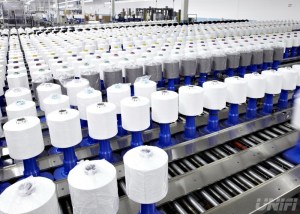
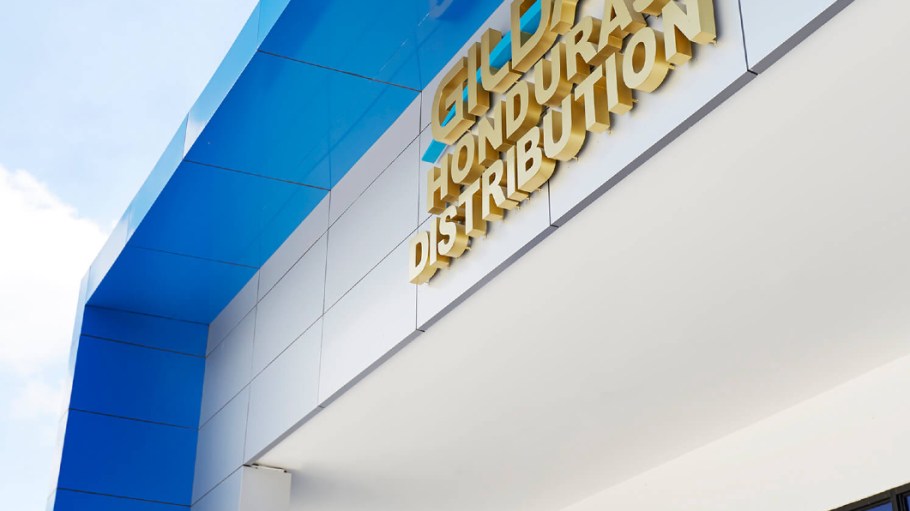
During the conference call with investors, Tyra spoke about visiting Gildan’s Honduras facility and seeing “how much innovation is going on inside the plant and what it avails us in long-term opportunities.”
He also said that Gildan’s “DNA is to be a low-cost producer” and that the firm’s Bangladesh investment will be important, particularly as it gives the firm “opportunities in Europe and international that maybe strengthens our opportunity to expand there.”
Tyra also touched upon opportunity for growth with ring spun and fleece. “So, I think there’s opportunity still within the Gildan brand, but also in the ancillary brand of American Apparel and as we continue to enhance that and re-energize it,” he said. “And then with Comfort Colors, it’s still got a great place in resortwear.”
While the company had a history of acquisitions from 2013 to 2017, Tyra said the current capital focus in on organic growth, noting that allocation is geared toward Bangladesh, “more towards innovation and organic play, not in the inorganic area.”
For 2024, Gildan is forecasting adjusted diluted EPS in the range of $2.92 to $3.07, up between 13.5 percent and 19.5 percent year-over-year, on revenue growth projected at flat to up low-single digits.
But how those forecasts shake out will depend on who wins the upcoming proxy battle.
Browning West is leading a proxy fight that will see it nominate its slate of board nominees at Gildan’s annual meeting of shareholders on May 28. The investment firm is joined by eight other investors—Turtle Creek Asset Management, Jarislowsky Fraser Ltd., Cooke & Bieler LP, Pzena Investment Management, LLC, Janus Henderson, Anson Funds Management LP and Anson Advisors Inc., Oakcliff Capital and Cardinal Capital Management—seeking board change. The investors together control 35 percent of Gildan’s outstanding shares, and their aim is the ouster of Tyra and the reinstatement of former CEO Glenn Chamandy.
The brouhaha began in December when Gildan dumped Chamandy as CEO and named Tyra to the post. That didn’t sit well with the institutional investors. Since then, there’s been back and forth finger pointing on who did what. Gildan alleged Chamady went back on his word after agreeing to a succession plan, and even disclosed examples of how Chamandy allegedly became a disengaged CEO. The investors believe the current board is more focused on entrenchment than following proper corporate governance procedures.
Browning West has also alleged due diligence failures in the procedures connected with its CEO search. Earlier this month, it met with Tyra and Maryse Bertrand, chair of the Gildan board’s corporate governance and social responsibility committee. The meeting failed to assuage Browning West’s concerns, and it still feels that Tyra is the wrong person to lead the company.
“We ultimately left the meeting with more questions than answers due to Mr. Tyra’s and Ms. Bertrand’s inability to address our concerns pertaining to poor financial results at Fruit of the Loom and Broder Bros. while Mr. Tyra served in leadership roles at each company,” Browning West said.
Fourth-quarter and full-year 2023 results reflect operations under Chamandy’s tenure. The current 2024 projections may change should Browning West succeed in overthrowing the board and ousting Tyra as CEO.
UBS softlines analyst Jay Sole has a “neutral” rating on shares of Gildan’s stock. Sole said Gildan’s low-cost manufacturing advantage will allow it to take share from competitors. But three factors are of primary concern. One is the uncertainty around Gildan’s long-term growth potential due to the paucity of information in Gildan’s fourth-quarter report on potential opportunities. The second centers on Gildan’s CEO situation. Another involves whether Gildan can raise its Fiscal Year 2024 guidance over the course of the year.
Separately in the Gildan conference call, executive vice president and chief financial and administrative officer Rhodri J. Harries said activewear sales were up 8 percent in the quarter to $644 million, while hosiery and underwear sales rose 11 percent to $139 million.
“The increase in activewear sales was fueled by higher volumes driven by [point-of-sale] as well as higher levels of customer replenishment than the prior year,” Harries said, noting that fleece and ring-spun T-shirts were key growth categories. But international sales were down 24 percent due to difficult macroeconomic conditions. The company is in the process of soliciting bids for its Champion business.
Harries also said that hosiery and underwear sales were fueled by higher volumes driven by point-of-sale with strength in global lifestyle brands and by continued rollout programs in the mass retail channel. He added that the company achieved “solid performance” despite continued weak demand for men’s underwear and socks.
Harries said Gildan’s sock license with Under Armour will expire in late March, which will result in minimal impact on the company’s profitability.