When brands buy five-star praise or nudge customers only to gush, they’re not just boosting ratings—they’re rigging the market. Consumers get misled, honest competitors get smothered and digital “word of mouth” starts to smell like payola.
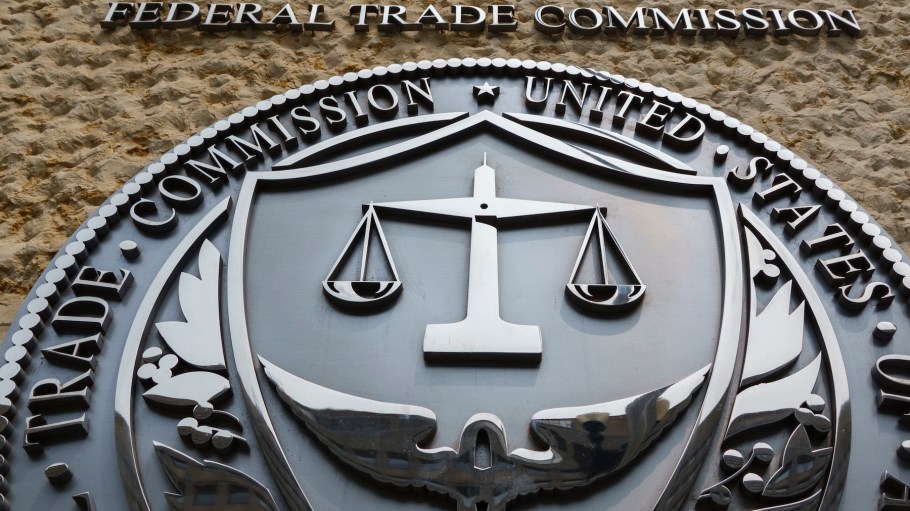
That’s why the Federal Trade Commission (FTC) issued warnings to potential violators—a quiet shot across the bow for anyone still gaming the system.
On Dec. 22, the bipartisan federal agency’s Division of Advertising Practices sent warning letters to 10 companies, putting them on notice of potential violations, based on information reviewed by FTC staff, including consumer complaints.
Related Stories
“Fake or false consumer reviews are detrimental to consumers’ ability to make accurate and informed choices about the products they are buying—something of particular importance during the holiday season,” said Christopher Mufarrige, director of the FTC’s Bureau of Consumer Protection. “As consumers increasingly depend on online reviews, the FTC is committed to ensuring companies comply with this Rule.”
To note, the FTC isn’t saying these companies have definitively broken the Consumer Review Rule—but the agency is making the stakes clear. Citing customer complaints and information the companies themselves provided, the letters remind recipients of what the law requires—and warn that continued violations could trigger federal enforcement. That includes lawsuits or other legal action, plus civil penalties that can hit roughly $53,000 per violation.
While the FTC could not share details about the 10 companies, the organization said the warning letters help level the competitive playing field by prompting companies to clean up practices that generate fake and deceptive reviews and remove fake reviews that may give them an unfair advantage.
Following an “advance notice of proposed rulemaking and a notice of proposed rulemaking,” announced in November 2022 and June 2023, respectively, the FTC established the Consumer Review Rule to prohibit the use of fake reviews and misleading testimonials in digital marketing. The Trade Regulation Rule on the Use of Consumer Reviews and Testimonials—Code of Federal Regulations 16, section 465—became fully effective last October and has the “full force and effect of federal law,” according to the FTC.
The Consumer Review Rule also prohibits providing compensation or other incentives—both expressly or implicitly—as “conditioned on the writing of consumer reviews expressing a particular sentiment, either positive or negative,” the warning letter reads.
The rule, finalized in 2024, was created to combat deceptive practices in online reviews and ensure consumers get honest feedback and understand the relationships behind endorsements. Its key provisions target specific deceptive tactics businesses use, broken down into several sections.
Fake reviews (section 465.2) prohibit creating or using fake positive or negative reviews, including those bought or generated by companies. Incentivized reviews (section 456.4) prevent conditioning incentives (such as discounts) on specific positive or negative review sentiment. According to international law firm Crowell & Moring, the FTC views this conditional approach as inherently misleading because it warps a review’s independence and distorts the ratings signal that buyers rely on.
Insider review (section 465.5) requires clear disclosure for reviews from employees, managers, or relatives; prohibits soliciting them without disclosure. Crowell & Moring flagged these provisions as critical guardrails against curated review feeds that mislead consumers.
The FTC’s Dec. 22 letter shared the example of “providing compensation to your employees in exchange for the employee obtaining 5-star reviews from friends and family or otherwise obtaining reviews from individuals who did not have actual experience with the company’s products or services.”
Company-controlled sites (section 465.6) forbid misrepresenting company-owned review sites as independent. Review suppression (section 465.7) bans businesses from hiding or selectively displaying reviews based on negative ratings. Fake indicators (section 465.8) stop the use of fake social media followers or views to inflate influence.
“While this letter does not constitute a final determination, you are advised to cease any non-compliant conduct immediately and take remedial action,” reads the letter, signed by Janice Kopec, acting associate director of the FTC’s Division of Advertising Practices. “Continued violations may result in legal action, including civil penalties of up to $53,088 per violation.”
The FTC’s first real enforcement under its new Consumer Review Rule shows the agency is serious about cleaning up the internet’s ratings ecosystem, according to Crowell & Moring. The commission’s warning letters may underscore that the era of lax review and moderation practices is ending.
“In conjunction with [this] announcement, FTC staff published blogs to educate consumers and businesses about the Consumer Reviews and Testimonials Rule,” the FTC told Sourcing Journal. “We will continue to monitor for compliance with the Rule and bring enforcement actions where appropriate.”