France is trying to make ultra-fast fashion pay up—and it’s doing it the French way: using the tools it already has.
The nation’s Ministry of Ecological Transition has directed its textile recycling body, Refashion, to propose a stricter penalty framework for ultra-fast-fashion platforms like Shein and Temu.
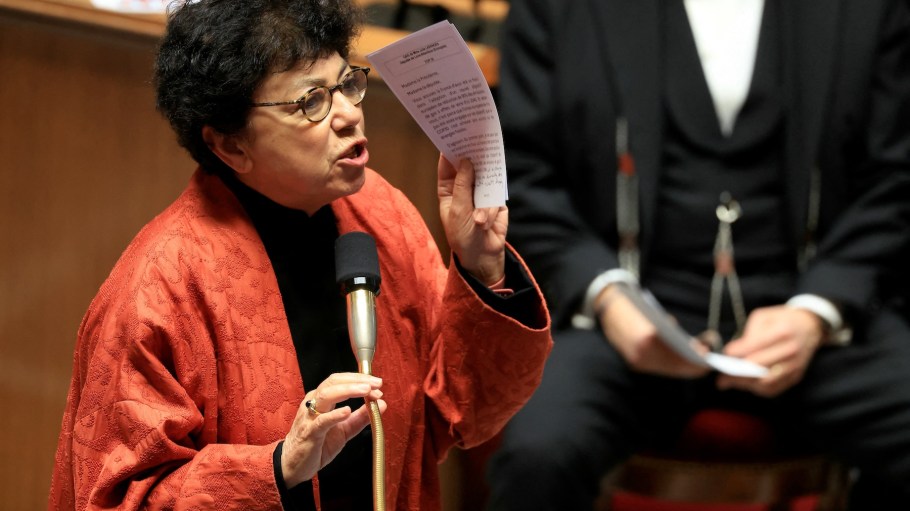
Minister Monique Barbut said the government formally instructed France’s textile extended producer responsibility (EPR) eco-organisme to return within 10 days with concrete proposals for “eco-modulation.” This would effectively impose a targeted malus on ultra-fast fashion. She said the request was sent to the Parisian producer responsibility organization (PRO) in a ministry letter.
As an accredited agency, Refashion collects eco-contributions from companies placing textiles on the French market. It can adjust what brands pay through its eco-modulation grid—creating a fast-track pathway to penalize high-volume, low-durability models. This happens even as France’s broader legislative push against ultra-fast fashion continues in parallel. It’s a way to change the economics upstream before garments become a public-sector waste problem.
In essence, they’re trying to raise EPR fees for ultra-fast fashion through fee modulation to make the worst actors pay more—and fast. The phrase Barbut used was à droit constant—tighten the screws without rewriting the law.
“The objective is clear: to ensure that ultra-fast fashion pays more for the true impact of its business model,” Barbut said in a recent LinkedIn post. “Refashion must submit concrete proposals for eco-modulation within 10 days.”
Through eco-modulation, Refashion can adjust what brands pay—up or down—based on criteria tied to product and business-model signals the scheme wants to reward or discourage: think durability, repairability and recycled content, though the exact grid depends on the individual eco-organization’s rulebook.
“Ultra-fast fashion costs us a lot of money, ecologically and socially, and profoundly unbalances our reuse and recycling sectors,” her post reads. “This is no longer acceptable.”
The move sits under France’s broader crackdown—including the anti–ultra-fast fashion bill the Senate backed last June which could eventually bring per-garment penalties (up to 10 euros by 2030) and an ad ban—though it still needs further procedural steps. The Refashion route is the faster lane; the bill is the structural one.
Related Stories
In January 2024, the French Ministry of Ecological Transition, which sets the directive for the Refashion recycling scheme, upped its budget to about 1 billion euros over six years to improve collection and sortation, reuse and recycling.
France is one of the only countries with an active and relatively mature textiles EPR program. The first market to adopt such a scheme in 2008, the program currently applies to clothing, footwear and household linens. While both collective and individual participation is permitted—some large firms like H&M have created their own take-back programs—95 percent of the French fashion community (about 4,000 entities) are registered with the Refashion collective compliance program.