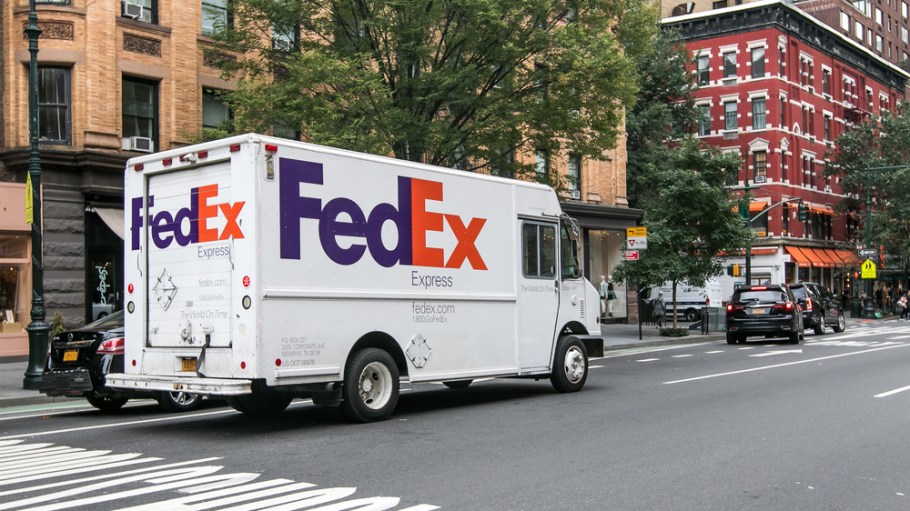
As one of the newest members of Hyperledger, FedEx is signaling its commitment to investigating the implications of blockchain technology in the logistics industry.
Hyperledger is a global open-source collaborative initiative designed to foster cross-industry blockchain technologies and counts among its members top companies in finance and banking, manufacturing, supply chain, Internet of Things and technology.
Blockchain is a decentralized digital database technology composed of tamper-proof nodes of data secured cryptographically. Because data stored in a blockchain is visible to all stakeholders, but unalterable without consensus, the decentralized database technology is widely seen as a boon to the highly complex operations that power logistics, supply chain, finance, retail and other industries.
Related Stories
“We believe that blockchain has big implications in supply chain, transportation and logistics,” Kevin Humphries, senior vice president, IT, FedEx Services, said in a statement announcing the news. “We are excited for the opportunity to collaborate with the Hyperledger community as we continue to explore the applications and help set the standards for wide-scale blockchain adoption in our industry and others.”
This latest development comes on the heels of FedEx’s Q1 2019 earnings call, during which CIO Rob Carter discussed blockchain’s potential to “usher in pretty fundamental changes in [the] logistics chain.” In addition to blockchain’s usefulness in demonstrating a package’s provenance and status upon delivery—which can be critical for sensitive industries like pharmaceuticals—the technology also enables so-called “smart contracts.”
“Blockchains have the ability to embed contractual notions into that custody chain—things like specific delivery commitments, dispute resolution, all of those things can be embedded into a blockchain to help satisfy the additional transactions that go on around the space of a shipment,” Carter explained during the Sept. 17 call with analysts.
Carter’s comments echo remarks CEO Fred Smith made during a panel discussion at May’s Consensus blockchain conference in New York City. “We’re quite confident that it has big, big implications in supply chain, transportation and logistics,” Smith was quoted as saying in Bloomberg. “It’s the next frontier that’s going to completely change worldwide supply chains.”
The logistics firm previously has linked up with blockchain-focused groups including Canada’s Blockchain Research Institute as well as the Blockchain in Trucking Alliance (BiTA), which rival UPS also joined. BiTA members run the gamut from Target and Google to Manhattan Associates and JD Logistics.
FedEx’s Hyperledger membership is significant in large part because blockchain is most widely beneficial and enables the greatest efficiency gains when its user base increases. According to the Blockchain in Logistics report published by DHL and Accenture earlier this year, “A powerful network effect is triggered in the supply chain when stakeholder adoption reaches a critical mass. As more and more supply chain stakeholders participate, blockchain becomes more valuable, evolving into an industry practice.”
Though blockchain’s promise of efficiency gains, reduced redundancy and elimination of manual paperwork—to name just a few upsides—is tantalizing, there are obstacles standing in the way of the decentralized database technology’s widespread adoption, especially in the logistics industry. The DHL and Accenture report noted the “differing levels of digital readiness” preventing some firms from moving forward with blockchain activities, whether that’s an exploratory pilot or more robust deployment.