Investors had mixed reactions to the Federal Open Market Committee’s (FOMC) decision on Wednesday to pause interest rate hikes.
While the pause was welcome news, what didn’t sit well was the FOMC signaling the need for possibly two more increases later this year to bring short-term rates to 5.6 percent from the current range of 5-5.25 percent.
Stocks initially slid in trading as investors reacted to the possibility of more rate hikes down the road to tame inflation. The news that short-term rates would remain where they are left some retail and fashion stocks in the red, although some saw some gains.
Related Stories
Among the biggest losers were Stitch Fix Inc., falling 12.1 percent to $4.20; Qurate Retail Inc., down 9.2 percent to $0.88; Chico’s FAS, Inc., down 5.6 percent to $5.22, and Farfetch Ltd., down nearly 5 percent to $5.75. Department store retailer Dillard’s Inc. fell 3.1 percent to $337.15, while Nordstrom Inc. fell 2.4 percent to $19.39 and Macy’s Inc. was down 2 percent to $15.87.
Among the gainers were Nike Inc., up 5.7 percent to $112.91; Target Corp., up 3.5 percent to $133.23; Deckers Outdoor Corp., up 3.3 percent to $506.81; Lululemon Athletica Inc., up 2.4 percent to $377.21; Wolverine World Wide Inc., up 1.8 percent to $14.80, and Abercrombie & Fitch Co., up 1.7 percent to $35.59.
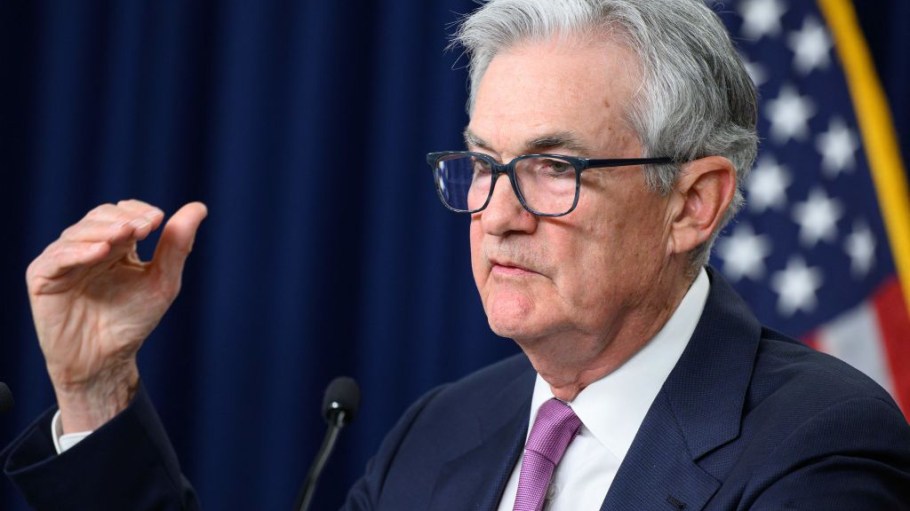
Federal Reserve chairman Jerome Powell said in his press conference Wednesday that the Fed was making progress in its inflation fight. He noted that the conditions needed to get inflation down “are coming into place.”
“My colleagues and I remain squarely focused on our dual mandate to promote maximum employment and stable prices for the American people. We understand the hardship that high inflation is causing, and we remain strongly committed to bringing inflation back down to our 2 percent goal,” Powell said.
He said the “full effects of our tightening have yet to be felt,” noting the lag between monetary policy and its impact on the economy as the reason for the pause. He added that FOMC members believe that “some further rate increases” will be needed to bring inflation down to 2 percent. Powell said there are signs that the “very tight” labor market could ease up as supply and demand are “coming into better balance.” A pause now would give the FOMC time to assess additional information and its implications for monetary policy, he said.
While short-term rates are projected to reach 5.6 percent at the end of the year, Powell also said rates could fall to 4.6 percent at the end of 2024 and to 3.4 percent at the end of 2025.
Jay H. Bryson, chief economist at Wells Fargo, wrote in a research note Wednesday that while inflation doesn’t need to be at precisely 2 percent for the FOMC to ease policy, the Committee “does need to see evidence that it is heading back toward 2 percent on a sustained basis.” Bryson added that his team doesn’t believe “evidence will be forthcoming this year.”
There are already concerns in retail that consumers could be changing course again, according to a study from Jefferies. And because 72 percent of respondents said they were concerned about their financial position, the study suggested that apparel, footwear and home furnishings could be in for a rocky ride if people stop spending in these categories.