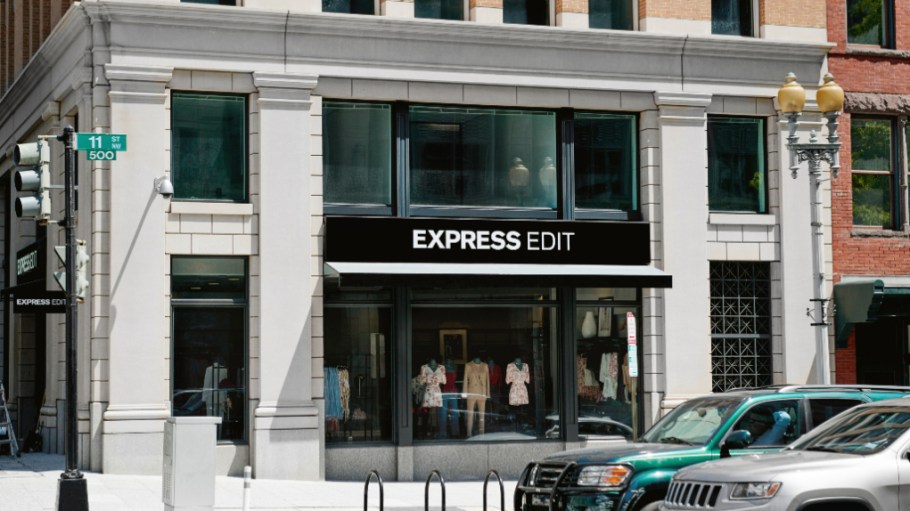
Express Inc. suppliers who want to keep doing business with the bankrupt retailer now are forced to shoulder more of the financial burdens.
A purported missive sent to “team” members from Express seen by Sourcing Journal told vendors they have to agree to a 20 percent discount on open purchase orders, including goods ready for summer, and a 10 percent invoice reduction on all future purchase orders. Vendors were also told they have to agree to extended payment terms. All suppliers are to participate, including mills and trim suppliers. Existing vendors were also told to share the requirements with their mill and raw material partners, as well as confirm agreement with the new terms.
Related Stories
The missive also noted that the changes in terms were at the behest of WHP Global, Simon Property Group and Brookfield Properties, the buying group that is the “stalking horse” in the Express bankruptcy proceedings. It also said that the change in terms was to “facilitate this sale process and enable [Express] to obtain additional financing.”
Executives at Express did not respond to a request for comment. Executives at WHP, who leads the buying consortium, also did not respond to a request for comment.
Suppliers are often referred to as “partners” by retailers, but they’re also the first to get leaned on when there’s financial distress.
When the COVID pandemic hit in 2020 and non-essential retailers were told to temporarily close their doors as the federal government mandated sheltering-in-place, fashion retailers were left scrambling to protect their liquidity. Off-pricer TJX Cos. Inc. unilaterally extended payment terms to vendors, but also faced some supplier backlash. A few weeks later, standard 60-day terms were reinstated. Other retailers, such as Macy’s Inc. and the former J.C. Penney Co. Inc. operation did the same, impacting their vendors and jeopardizing their vendor’s upstream suppliers.
When British e-tailer Asos determined it could no longer absorb the effects of inflation, the fashion firm in February 2022 requested a 2 percent discount from some of its suppliers. In exchange for the agreement, Asos was expected to shorten the timeframe for when it would make its payment by 15 days. Asos had also asked suppliers for a discount in 2019 as well.
And when trade credit insurers pulled back on coverage levels for Asos and its competitor Boohoo Group in July 2023 due to concerns over their financial distress from weak sales, Boohoo had already asked for vendor supplier discounts twice that year.
The first was in May when the e-tailer pushed for a 10 percent discount on orders for both goods already shipped and those that were still undelivered. A month later, Boohoo pushed again for 10 percent discount from some suppliers.
Those instances weren’t the first time Boohoo leaned on its suppler base for help. The e-tailer in 2022 pushed out payment terms from 30 days to 60 days, and it also implemented a supplier fee the same year to deal with a new plastic packaging rule.
In the case of Express, the retailer is still hoping to effect a purchase of its operations so it won’t have to pivot to a liquidation.
Express filed its Chapter 11 petition for bankruptcy court protection in a Delaware bankruptcy court in April. The filing wasn’t unexpected. Sourcing Journal reported in February that it was in talks with lenders about restructuring options. And one month later, a cash crunch resulted in payment delays to vendors as the retailer sought to preserve liquidity.
WHP was always seen as having the upper hand, even as other potential buyers—private equity firm Sycamore Partners is one example—are said to be circling around the retailer. The New York brand management firm has held a 7.4 percent investment stake in the company since January 2023. That investment includes a 60 percent interest in a joint venture licensing agreement valued at $400 million, which includes $235 million investment from WHP. The joint venture went on to acquire menswear brand Bonobos in April 2023 for $75 million from Walmart.
An initial deadline of May 23 was set for a determination of Express Inc.‘s future, whether a sale or a pivot to liquidation. That deadline was moved to May 30, but has been delayed again until later this week, according to a source.
At the start of the bankruptcy, Express operated 530 stores under the nameplates Express, Express Edit and Express Factory Outlet, as well as 60 Bonobos Guideshops, across the U.S. and Puerto Rico. It also operates 12 UpWest stores.
While the initial plan was the closure of 95 Express doors and all 12 UpWest locations, it was later disclosed in court documents that an additional 162 stores could shutter if the company is sold as a a going-concern business. The current plan indicates that the company plans to keep in operation all Bonobos showroom doors.