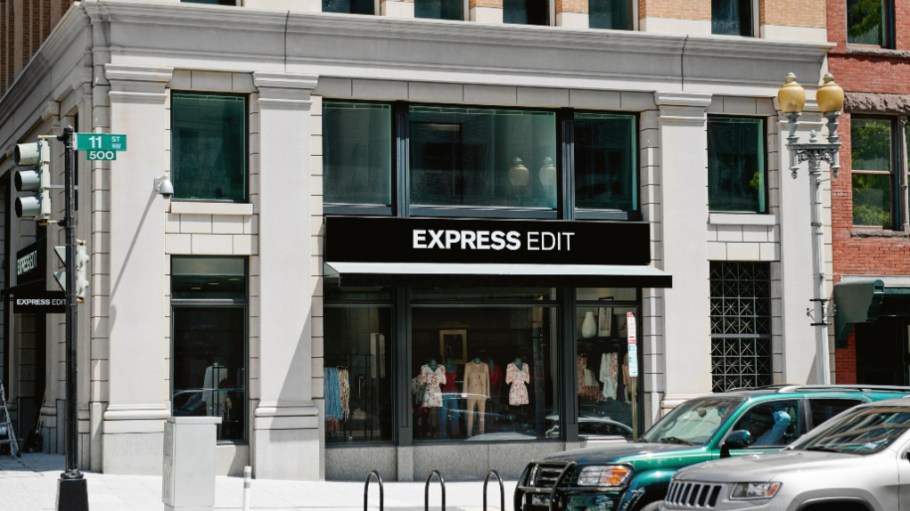
A minimum valuation for bankrupt Express Stores Inc. is set at $10 million, but there’s a chance 162 additional stores could shutter if the company is sold as a going-concern business.
Clarification on the future of Express Inc. stores is expected on May 23, provided there is a stalking horse agreement filed with the bankruptcy court. If not, liquidation firms who want to oversee going-out-of-business sales are expected to file their bids on May 24.
Express, which filed its Chapter 11 petition for bankruptcy court protection on Monday in Delaware, is in talks with a WHP-led consortium dubbed Phoenix Joint Venture that includes Express’ two largest landlords, Simon Property Group and Brookfield Property, referred to as BRP Acquisitions in the joint venture (JV).
Related Stories
At the time of the Chapter 11 filing, Express operated 530 Express stores, 12 UpWest locations and about 60 Bonobos Showroom doors. The company is closing 95 Express stores and all 12 UpWest doors. That leaves 435 Express stores in operation, and the 60 Bonobos Showrooms.
But according to court documents, the Phoenix JV is slated to assume the leases on a minimum of just 273 stores per the consortium’s nonbinding letter of intent. That potentially leaves 162 doors that could be up for closure. Which additional locations the mall landlords might want to pick up remains unclear. They’ll need to do an analysis of each store, and the lease requirements connected to retail store adjacencies.
For now, the Phoenix JV is setting the amount of $10 million plus 100 percent of the net orderly liquidation value of existing inventory as the baseline value for Express’ assets. That value could go up if other potential acquirers step up to the plate and submit competing bids.
While offers that would split up the assets might bring in a higher aggregate dollar recoupment for creditors, bankruptcy courts tend to favor going-concern offers since that would give retailers a chance to restructure operations and balance sheets, as well as keep their staff employed.
That was evident in the 2018 Sears Holdings Corp. bankruptcy. By January 2019, unsecured creditors were pushing for a liquidation in the view they would get more value from a liquidation of the retailer’s assets than later on if the reorganized Sears should fail a second time. In approving the $5.2 billion going-concern offer from Transform Holdco LLC, led by its CEO and former Sears chairman Edward S. Lampert, the bankruptcy judge gave Sears a second chance, and saved nearly 50,000 jobs in the process.
There’s no indication that creditors in the Express bankruptcy share the same rancor stated in Sears. Sears was unique because Lampert had long been accused of financial engineering that stripped the company of assets beyond the reach of creditors., allegedly via the transfer of $2 billion of company assets in the years leading up to the Chapter 11 filing.
In the case of Express, the bankruptcy filing was expected since the specialty chain had been struggling. The retailer initially was hard hit by the COVID pandemic. In the years post-COVID, it also had to deal with changing consumer preferences, including intense competition from fast-fashion brands Shein and Temu. In a court document filed by Express CEO Stewart Glendinning, he said the plan is to spinoff and sell the UpWest brand while in Chapter 11. And if the chain can’t find a buyer, the banner would wind-down operations.