Heightened tariffs on the United States’ trading partners are reshaping the country’s online shopping habits—adding a rough $12 billion annually to national spending, according to consumer data insights Omnisend released earlier this week.
The e-commerce marketing automation platform reported that the average stateside shopper is already spending $47 more per month; one in seven households reported monthly budget hikes beyond a Benjamin Franklin.
“You won’t see a ‘tariff’ line at checkout; the impact comes in waves as new shipments arrive, which is why many people felt it first on the big [online] marketplaces and will likely feel it later on at local stores,” said Omnisend executive Marty Bauer. “For most families, it just means less breathing room at the end of the month.”
Related Stories
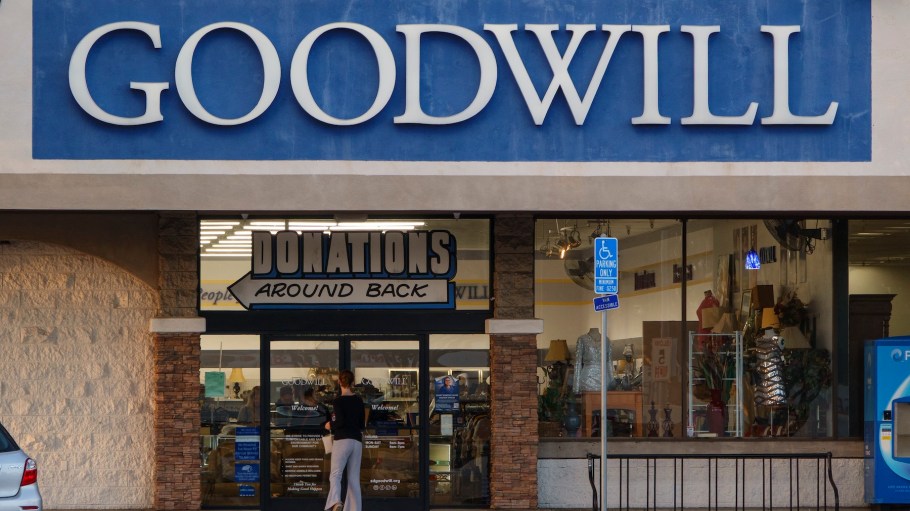
For the growing majority of shoppers looking to stretch budgets and avoid the squeeze, Evergreen Goodwill of Northwest Washington, for one, would like to throw its hat into the ring.
“Goodwill’s prices have increased by an average of 14 cents over the last three years; I mean, that’s less than inflation, right? It’s not that Goodwill is getting more expensive—that’s China,” said Micha Goebig, Evergreen Goodwill’s communications strategist. “Stuff is just getting cheaper and cheaper, and people are getting used to that, which might be the silver lining.”
Some quick stats: Founded in 1923, Evergreen operates five job training centers, 23 nonprofit thrift stores and 30 donation sites across five counties in northwest Washington. The nonprofit’s Seattle HQ is the largest Goodwill in the world. The 65,000-square-foot flagship comprises a 31,000-square-foot retail floor and a donation sorting area where employees sort through donations and price over 57,000 items every week.
The operator’s flagship store attracts roughly 16,000 visitors a week, with traffic up 9 percent compared to last year. Since the beginning of March, the 100-year-old regional nonprofit has seen weekly foot traffic steadily increase by about 6 percent, compared to the usual yearly 3-3.5 percent.
Some 45 million items are processed annually at Evergreen’s donation centers, translating to around 1.8 sellable items stocked per month. The nonprofit’s donated goods business is still labor-intensive and (also still) heavily manual despite being the “engine that powers its mission.” The country’s sixth-largest Goodwill organization sorts some 45 million donated goods—by hand—every year, though an artificial intelligence project is underway to automate that engine.
“We’ve been using the same manual sorting process since the 1960s; our team members have been making hundreds of decisions a day without data to guide them,” Goebig said. “We’re missing opportunities to capture the full value of the secondhand items we receive.”
In May, Evergreen was selected as a recipient for the Microsoft’s AI for Good Award. The multinational technology giant celebrated its semicentennial with an open call to support the state’s innovative AI-based projects. Microsoft will invest $5 million over the next two years into the awardees, with Evergreen planning to leverage AI (primarily MS Azure) to process donations—in other words, classify, sort and price donated items.
“This is not just about modernizing our operations,” Evergreen’s president and CEO, former Amazon executive Libby Johnson McKee, said. “It’s about supercharging our impact—keeping more items out of landfills and providing more people in our communities with the training and education to thrive in today’s workforce.”