Despite their promised benefits, driverless trucks have yet to see wide adoption throughout the logistics industry. Startups and truck manufacturers want to change that.
Research from McKinsey & Co.suggests that driverless trucks could help logistics players overcome driver shortages; according to the American Journal of Transportation, there could be as many as 160,000 vacant driver jobs available by 2030, which is mismatched against consumer demand.
Still, scaling autonomous trucks on the road has been an arduous task in many areas of the United States; while some states, particularly in the Midwest and the South, have regulations that more freely allow the proliferation of—and piloting associated with—driverless trucks, others have been less laissez faire about the technology. California legislators, for instance, are currently considering a bill that would “prohibit delivery of commercial goods, as defined, directly to a residence or to a business for its use or retail sale through the operation of an autonomous vehicle without a human safety operator on any highway within the State of California.”
Related Stories
That bill has been celebrated by the International Brotherhood of Teamsters, which has, for its part, maintained that technology that fully replaces the work of humans should largely be protected. Other organizations, though, have advocated against laws like the one pending in California, saying they would stymie innovation and the progress technology continues to make.
Autonomous freight continues to chug along, with many companies hoping to see it scale commercially in the coming years despite the hurdles associated with the technology.
Several companies announced this week that they’ve been working with partners to make that potential future a nearer reality.
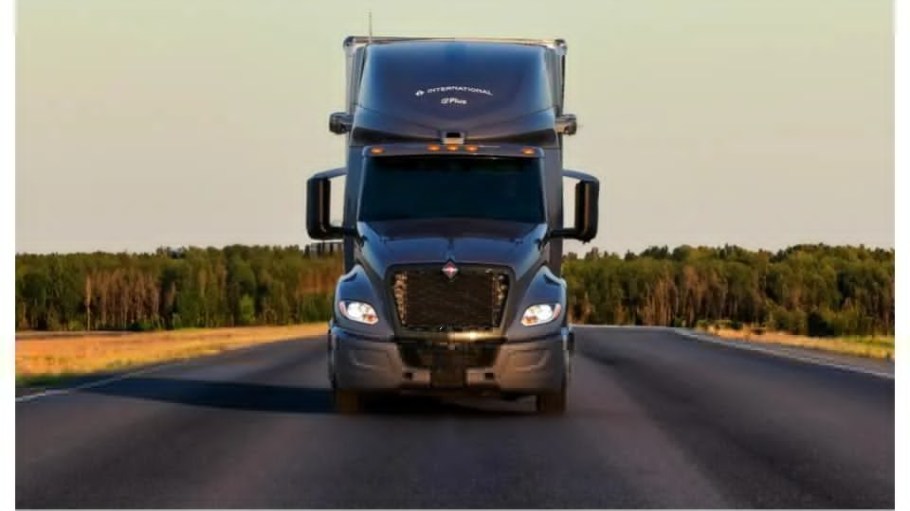
International Motors announced Monday that it has started piloting autonomous tractors on Texas highways with customers. The trucks leverage PlusAI’s SuperDrive technology, which uses data ingested by sensors and a computer embedded in the truck to help it better navigate roads, handle changing driving conditions and obstacles that it may encounter.
International said the trucks partners have put on the road will be controlled from an autonomous technology hub in San Antonio, Tex., while the trucks drive on Interstate 35 between Dallas and Laredo, Tex.
James Cooper, director, autonomous business development at International, said participation from the company’s clients will help continue to fast track the general availability of autonomous vehicles in the freight world.
“Deep customer collaboration is essential to understanding how autonomous systems can optimize freight routes, enhance safety and lower operating costs,” Cooper said in a statement. “This shared learning will guide the roadmap for scaling autonomy across major freight hubs, beginning with key corridors like I-35.”
Other companies have also linked together with the goal of general availability for driverless trucks.
Kodiak Robotics, which creates AI systems that allow autonomous vehicles to operate safely and efficiently, announced Wednesday that its partner Roush Industries had delivered the first autonomous truck equipped with Kodiak’s proprietary technology, Kodiak Driver, off the production line. The company said Atlas Energy Solutions received the truck.
Roush and Kodiak announced their partnership in June; Roush now has a production line specifically allocated to manufacturing trucks fitted with hardware created by Kodiak.
Don Burnette, founder and CEO of Kodiak, said the partnership has proven successful already and said the outlook for the future of trucking is bright with driverless vehicles in sight.
“Taking delivery of the first Roush-upfitted truck is another example of how the future of freight is arriving,” Burnette said in a statement. “The speed and quality of Roush’s work confirm why we are confident they’re the right partner to help us transform the freight and logistics market at scale. Together, we believe we are well positioned to transform the trucking industry.”
The technology company’s proprietary system, Kodiak Drive, uses the company’s hardware, SensorPods, to leverage light detection and ranging (LiDAR) and cameras that provide the AI driver a full understanding of the road and environment around the vehicle.
Data from the SensorPods helps the AI system controlling the Kodiak Driver to change lanes, avoid obstacles and understand real-world cues a human driver would otherwise be equipped to handle.
The SensorPods that power the Kodiak Driver are modular, so they can be attached to existing vehicles as needed, but the partnership with Roush now sees trucks coming off the production line with Kodiak’s hardware already implemented. Atlas, the first customer for the collaboration between Roush and Kodiak, has already started using eight other Kodiak-enabled driverless trucks to handle its operations and has placed an initial order of 100 Kodiak-equipped trucks, which Roush will help to fulfill from here on out.
Brad Rzetelny, vice president of manufacturing at Roush, said the physical realization of the partnership marks a major step forward in the companies’ scaling aspirations.
“Delivering the first Roush-upfit truck shows how our contract manufacturing process can meet Kodiak’s high standards while supporting its ability to scale,” Rzetelny said in a statement. “We’re playing an important role in putting this technology where it belongs: into commercial service.”