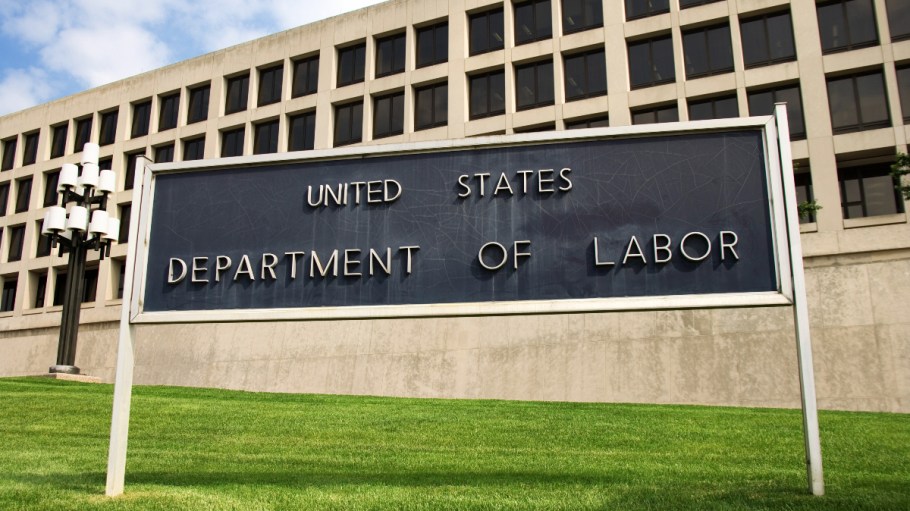
Two federal agencies have taken action to shift labor expectations in the U.S.
The U.S. Department of Labor (DOL) announced Tuesday a new rule it said that will bring overtime pay to millions of lower-paid salaried workers nationwide.
As of July 1, the salary threshold will increase from $35,568 to $43,888. On January 1, 2025, that threshold will be raised to $58,656.
The overtime rule will be reevaluated every three years, using new wage data to determine updated salary thresholds each time. Because the rule goes into effect on July 1, the next update to the threshold will come in July 2027.
Related Stories
Julie Su, acting secretary of the DOL, said the increases will help adequately compensate employees who could be using their time in other ways.
“This rule will restore the promise to workers that if you work more than 40 hours in a week, you should be paid more for that time,” Su said in a statement. “Too often, lower-paid salaried workers are doing the same job as their hourly counterparts but are spending more time away from their families for no additional pay. That is unacceptable.”
The DOL put forth its proposed rule in September 2023, which skeptics met with criticism over the timeline for the rule’s implementation. Those rallying against the rule certainly haven’t disappeared.
And some of the rule’s most stark opponents have a track record for resisting threshold increases.
The last time a Democratic administration’s DOL attempted to hike the threshold, the National Retail Federation (NRF) and other business groups worked to block the increase, which was slated to bring the eligibility level up to $47,476 in 2016 under the Obama administration.
A court greenlit the legal efforts, and the NRF subsequently “successfully encouraged the Trump administration to set a more reasonable level, resulting in the current regulations,” according to its website.
If $47,476 was too rich for the NRF’s blood, it certainly isn’t happy about the increase Biden’s DOL has put in its rule. This time around, its main complaints center around the implementation timeline and the potential ramifications to retail workers.
The trade organization said that while it recognizes the DOL’s two-pronged increase approach, it has concerns as July 1 looms. David French, the NRF’s vice president of government relations, said the organization has urged the DOL to extend the effective date to at least September 1.
French also said the new rule stands to harm both employers and workers.
“Even with the phased-in implementation timeline, the new rules will cause employers to reexamine compensation packages for millions of workers nationwide,” French said in a statement. “Some workers may lose the status of a managerial position. Some may lose much-desired flexibility as to when, how and where they work, including the ability to work from home. Some may lose the capability to travel on the employer’s behalf. Some may lose valuable educational and training experiences.”
A study commissioned by the NRF and carried out by Oxford Economics notes that the regulation would affect about 1.7 percent of retail and restaurant workers nationwide and that the highest share of affected workers would be in the South, where wages are statistically lower.
The study goes on to say that the new eligibility level could lead to “hollowing out of middle-level employees, and a loss of lower-paid salaried positions as employers will shift their management structures to rely on a smaller number of high-paid exempt employees using increasingly sophisticated tools to manage a large number of hourly employees.”
French said that could impact employers’ willingness to dole out benefits could waver as a result of the new rule.
“We remain concerned…that the new rules curtail retailers’ ability to offer the most flexible, generous and tailored benefits packages to lower-level exempt employees across the industry,” he said in a statement.
While the NRF and other trade groups have mixed feelings about the rule, some policy wonks said it has a direct positive benefit on over four million workers nationally.
Heidi Shierholz, the president of the Economic Policy Institute, voiced her support for the rule in a Tuesday statement.
“We are thrilled to see the final rule issued to update overtime protections under the Fair Labor Standards Act,” she said. “The rule is an important step toward correctly valuing one of the most precious resources workers have—their time. This rule is an essential milestone in creating a stronger, fairer economy.
The new overtime rule wasn’t the only announcement Biden’s administration had for workers Tuesday. The Federal Trade Commission (FTC) also issued a final rule to ban noncompetes for most employers nationwide.
The agency expects that the new rule will increase workers’ earnings, drive innovation and cause higher rates of startup formation.
Already, the U.S. Chamber of Commerce has challenged the rule in court, as have business trade groups.
But Lina Khan, the FTC’s chair, said the rule will benefit workers and the economy simultaneously.
“Noncompete clauses keep wages low, suppress new ideas and rob the American economy of dynamism,” she said in a statement. “The FTC’s final rule to ban noncompetes will ensure Americans have the freedom to pursue a new job, start a new business or bring a new idea to market.”